Carnegie Moscow Center

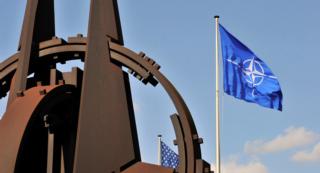
The Wales summit will be NATO’s most difficult test in a generation, but in the wake of the Ukraine crisis, NATO is finally treating the issue of enlargement with the seriousness it deserves.
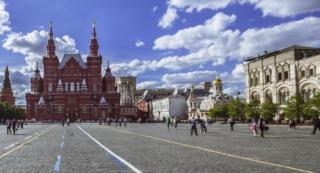
Russia could use the U.S.-led sanctions to begin its long-delayed re-industrialization and to start building a modern economy.

If Russia wants to stay in the game of global competition, it has no choice but to work toward becoming a civic nation, a rules-based polity, and a modern economy.
Does liberal democracy depend on the existence of ideological and civilizational rivals to spur it into cycles of reinvention and renewal?
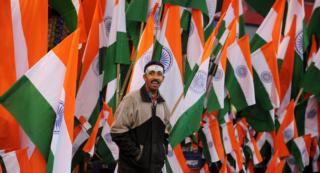
With Prime Minister Narendra Modi coming to power in India, both Russia and the United States are hopeful that they can influence the new foreign policy agenda in India.

Mass protests forced the president of the Georgian breakaway republic from power last week. Will Moscow use this chance to annex another pro-Russian area?

Barack Obama’s recent remarks at West Point show that he doesn’t understand the rules of the game he’s playing with Vladimir Putin in Ukraine.

Russia’s policy toward Ukraine has nothing to do with Russian expansionism or imperial nostalgia and little with the need to win domestic political support for Putin. The Kremlin’s main strategic goal in Ukraine is to keep this country out of NATO.

The Ukraine crisis has opened up a period of intense geopolitical competition, rivalry, and even confrontation between Russia and the West. The area of competition is again Eastern Europe; only this time, further to the east of its Cold War namesake.

The elections in Ukraine demonstrate that Ukrainians have decisively chosen to turn toward Europe.

Even as relations sour between Russia and Ukraine, Russian-Ukrainian defense-industrial cooperation remains very important for both countries. They both stand to lose if it wanes.

The Sino-Russian gas deal emphasizes and accelerates the fading of Russia’s until-now special relationship with the EU. The partnership between Russia and China is acquiring truly strategic depth.

Russian Culture Minister Vladimir Medinsky’s primary motive is to curry favor with Vladimir Putin. As Putin has shifted gears to a more conservative, anti-Western, and isolationist outlook, scores of his aggressive loyalists have followed the new trend.
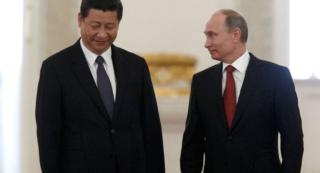
Vladimir Putin’s first visit outside the former Soviet Union since the beginning of the Ukraine crisis is to China. The vector of Russian foreign policy has changed dramatically, and Russia has been seeking ways to strengthen ties with leading non-Western powers.
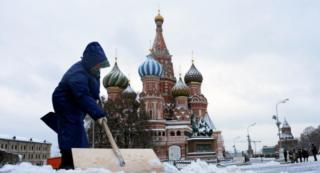
Putin looks like he will continue to ride the tide he has set into motion for the time being. But amidst his tactical successes the signs of a looming strategic defeat can be already seen.
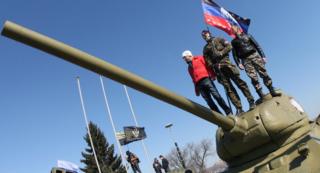
Russia may be the only side that can achieve its goals in Ukraine because it actually has a clear objective: federalization of the country.

Putin not only seeks to revisit the results of the end of the Cold War, he also wants a final say in establishing the new world order and Western consent to his interpretation of the rules of the game.

Putin’s current conciliatory tone and his support of the Ukrainian “dialogue” should be interpreted not as a change of his doctrine but a change of tactics.
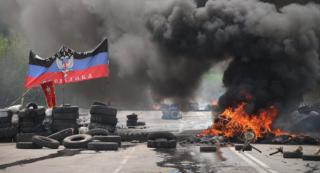
Neither Russia nor the West is going to be able secure its goals for Ukraine all by itself or without serious bloodshed. Any attempt to “win” Ukraine will almost certainly lead to the country’s collapse and de facto partition.
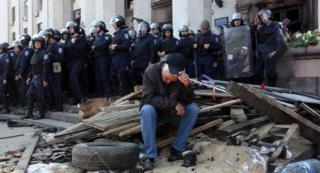
There are many Ukrainians, even in the southeast, who have grown accustomed to Ukrainian independence and would resist efforts to fragment Ukraine and force the annexation or creation of quasi-independent republics.