Carnegie Moscow Center

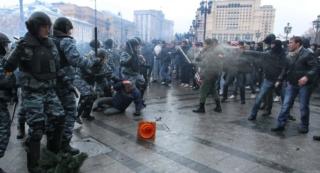
The recent unrest in Moscow, responding to the lack of investigation into the murder of football fan Yegor Sviridov, demonstrates the serious problems that exist in the relationship between the Russian public and the authorities.
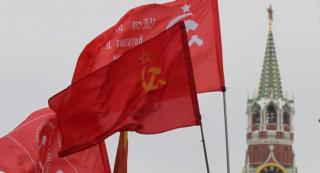
For Russia to truly break free of Stalin’s legacy, it must not only recognize Stalin’s crimes but also end the historical and political immunity of state security and reinvent Russian national identity.
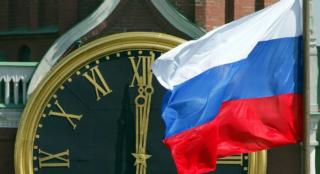
By seeking to reduce the number of time zones in Russia, the Kremlin is implementing a superficial and problematic change instead of tackling the serious reforms that the country needs.
Achieving a genuinely collaborative approach to missile defense would address a common threat to the Euro-Atlantic region and help remove the misgivings that are blocking progress toward a common security space.
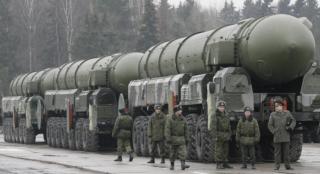
The civil nuclear cooperation deal, or 123 agreement, will greatly improve the ability of both Russia and the United States to prevent proliferation and it will advance mutual interests, improve relations, and deliver on the promise of the reset.
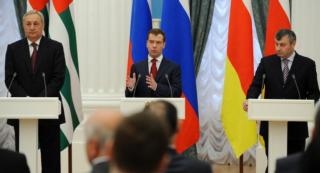
Abkhazia’s relationship with Russia and the larger international community is shaped both by its disputed status as an independent state and by a sharp historical memory of its equally disputed past.

If the European debt crisis, which is straining the ties that bind the continent together, brings about the end of European integration, the economic, political, and social repercussions will impact the entire world.
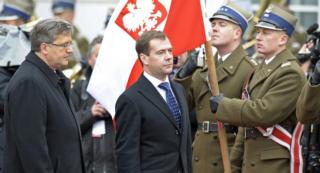
Since 2008, Russo-Polish relations have seen a positive transformation that has the potential to make this relationship one of the key pillars of stability and security in Europe.
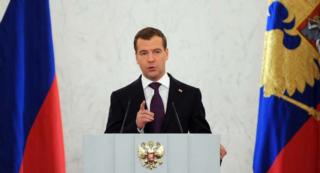
President Dmitry Medvedev’s annual state-of-the-nation address lacked any analysis of the real challenges facing the country and was not the address of the leader of a country but rather a report by a deputy prime minister responsible for the government’s priority national projects.

The release of thousands of diplomatic cables by the website Wikileaks may have sparked official protests, but they have also exposed some interesting information about the inner workings of U.S. diplomacy.
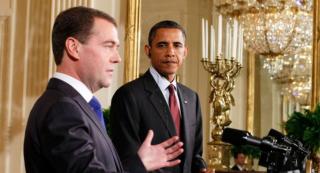
As it negotiates the fate of New START, Washington should not lose sight of the importance of continued cooperation with Russia across a broad range of issues.
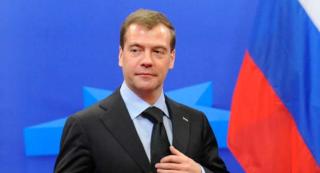
While political modernization remains unrealized under President Medvedev, as the Russian situation becomes increasingly complex, the Kremlin will likely be forced to embrace modernization as the only path to political survival.
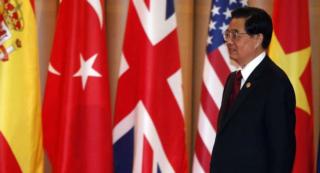
A troubling perception gap exists between Chinese citizens, who feel their country is discriminated against in the international arena, and Western observers, who harbor suspicions of Beijing’s intentions.

Beijing should exercise its unique and major influence with North Korea in order to return peace and stability to the region and to protect China’s own interests.

While war is not likely to break out over Nagorno-Karabakh in the near future, there is a growing possibility that escalation in the tension between Azerbaijan and Armenia could kill the peace process.

Joint efforts by Russia and the EU, or Russia and NATO, to mediate specific regional conflicts could help build up the trust necessary to form a solid foundation for a new European security architecture.

The results of the NATO summit in Lisbon, aimed at promoting cooperation between NATO and Russia, are a strong and useful platform for the continued transformation of the Russian-Western strategic relationship.

Georgian President Mikheil Saakashvili’s central role in the country’s governance may leave Georgia ill-equipped to handle the growing economic challenges ahead.
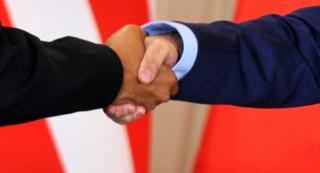
A failure by the U.S. Senate to ratify New START before the end of the year may cause Moscow to doubt the U.S. commitment to improving ties with Russia and could put the reset in bilateral relations on hold.
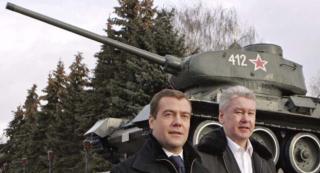
The new mayor of Moscow, Sergei Sobyanin, has already introduced a host of initiatives, and while it remains to be seen whether he will be an effective manager, he seems unlikely to be satisfied with merely preserving the status quo.