Carnegie Moscow Center

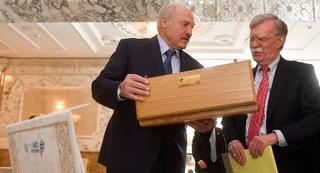
Both Belarusian officials and U.S. presidential adviser John Bolton were quick to put out the message that the visit was more about form than content. Bolton said openly that no issues had been resolved at the meeting, but that he had not expected otherwise. Belarusian Foreign Minister Vladimir Makei said that no one was enticing Minsk over to any side, and that the two sides had simply agreed to keep communicating.
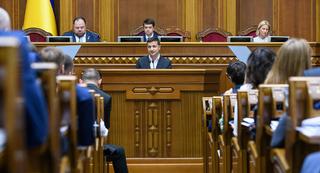
The new Ukrainian government’s main problem is the harsh reality awaiting it. The majority of the new ministers—progressive young idealists who have studied at Western universities, founders of successful startups—may not be sufficiently familiar with the conditions of everyday life in the country away from the post-industrial digital economy clusters. A collision with that reality could be a shock, both for the reformers themselves and for Ukrainian society, which is desperate for immediate change.
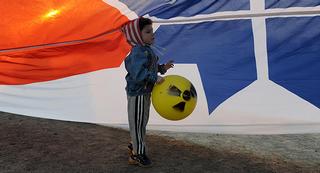
In Russia, any information can be classified without discussion, from genuinely secret data about military developments to information that is in the public interest, such as the level of radiation in cities, and the names of those killed or injured as the result of an accident. Official recognition of these deaths, by naming the victims and according them full honors, could have become a source of pride and a good precedent, but the authorities still have not done this following the explosion near Severodvinsk: it’s not even known exactly how many people were injured.

Today it makes sense to examine Putin’s legacy in practical regard, through the prism of certain questions: What is of abiding importance and should be preserved for the next generation of Russian leaders? What needs to be changed and developed? What should be best avoided in the future?
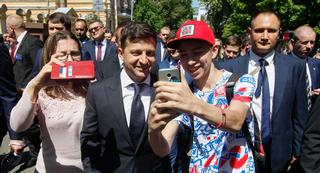
Under President Zelensky, the decisionmaking center is being dislodged to make way for the president himself and the circle of people close to him. The role of the government will be reduced to that of technical implementation, while the new parliament, with its single-party majority and weak opposition, will also lose a lot of its former influence. This style of ruling is more akin to a super-presidential republic than the parliamentary-presidential model customary for Ukraine.

Sergei Chemezov’s comments on the public mood in Russia testify not to the specter of a thaw, but, on the contrary, to the fact that the clampdown is in full swing, and only individual members of the inner circle are apprehensive of the authorities’ new radical strategy of repression, which will provoke a new spiral in the war that is already de facto raging between the state and civil society.

Unlike in Russia and Kazakhstan, an effort in Kyrgyzstan to carefully orchestrate the transition of power backfired.
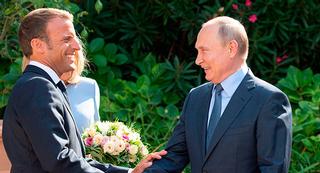
It’s impossible for Russia to return to the G7, but it’s also impossible for the group to solve many problems important to it without Russia. France’s relationship of trust with the Russian leadership, and the opportunity to represent Russia behind the scenes at the group’s gatherings, are an important diplomatic asset that France would hate to lose.

A new experiment in the use of artificial intelligence will be monopolized by the Kremlin. It could have major political consequences in Russia.

While many in the West wring their hands over the plight of the postwar rules-based international order, it is often assumed that Russia would welcome a new era of unilateralism and great-power politics. But in reality, the Russian leadership's perspective on multilateralism is more complicated than that.

Elections in Belarus are traditionally administrative rituals. However, amid growing tensions with Russia and increased discussion of a future presidential transition in Minsk, the upcoming Belarusian parliamentary and presidential votes may be the start of cautious political change in the country.

Russia’s government agencies are so busy competing with one another and presenting themselves in a good light to the Kremlin that they are failing to deal with the new street protests.

In recent months, Russia has launched a new attack on web-based companies. Often, these measures are presented as efforts to combat terrorism. However, behind them lies a union of bureaucrats and security agents, the business aspirations of state capitalists, and the Russian authorities’ desire to control the internet.

By agreeing to the brutal suppression of peaceful protests about Moscow city elections, Mayor Sobyanin has submitted to collective responsibility. For Putin and the Kremlin, it is impermissible that elections can be lost. This is a message for Russia’s next parliamentary and presidential polls.
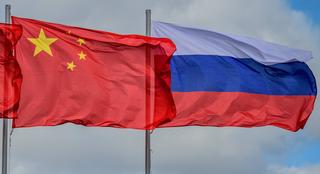
The China-Russian military cooperation with its underlying strategic calculus is clearly aimed at countering US moves and capabilities in the region.

The obstacles hindering growth are well known, and it would seem that the government has every opportunity to tackle these problems. It could easily resist lobbying by state capitalists: both the law and regulations would allow that. Instead of embarking on a path of empowerment, however, the government has turned into a place of ceremonial meetings for people with influential positions who are manipulated by officials from the presidential administration and by state capitalists.
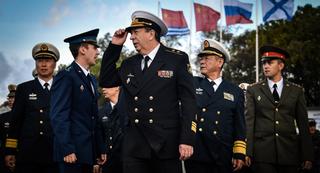
In taking its military cooperation with China to a new level, Moscow will strive to preserve its anti-American slant. Russia clearly wants to stay out of Beijing’s numerous disputes with Asian countries over islands and historical grievances. In addition, the current nature of Russian-U.S. and Chinese-U.S. relations means Russia and China’s military cooperation will inevitably have an anti-United States focus.
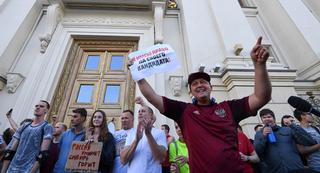
This month’s protests in Moscow over city parliament elections are proof that Russia’s non-systemic opposition has taken its struggle to be recognized by the Kremlin as a major political player to a new level. Faced with a foe that has seized the initiative, set the agenda, and brought people into the streets, the Kremlin is at a loss. Its brightest idea, it seems, is to forcibly disperse the protests and prosecute the demonstrators: an approach that risks the state’s takeover by the siloviki.
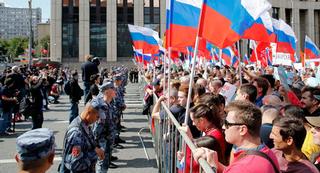
By minimizing the risks of opposition candidates running for the Moscow city parliament, the Moscow mayor’s office and the Kremlin have brought about a political crisis. The decision to refuse to register opposition candidates has turned into a symbolic event and joined the ranks of controversial plans to build a new cathedral in Yekaterinburg and a landfill site in Russia’s north, which also elicited fierce protest.
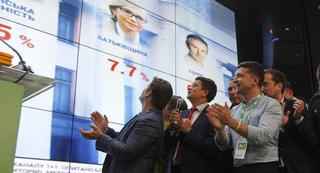
No other president in the history of Ukraine has had such resources under his control while facing such a weak and fragmented opposition and enjoying such enormous popularity among his compatriots. In this new reality, a “velvet usurpation” with the consent of most of the population no longer seems like an impossible outcome, nor does the expression “comic dictator” seem like such an oxymoron.