Carnegie Moscow Center

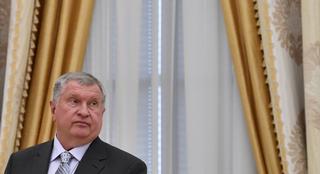
Reuters was right to publish information showing that Rosneft head Igor Sechin repeatedly used corporate aircraft for personal purposes.
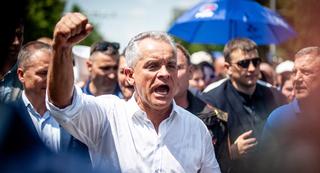
The collapse of oligarch Vladimir Plahotniuc’s regime in Moldova has brought this small, impoverished former Soviet nation to global attention. The bomb planted by Plahotniuc was removed jointly by Russia, the United States, and the EU. The Kremlin and the West agreed to work together, demonstrating that outside interference can be a positive thing.
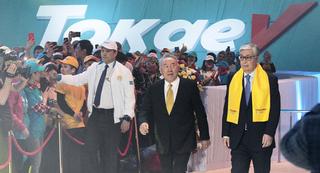
While civic activity in Kazakhstan remains the purview of young people in the city of Almaty, the country’s new ruling tandem has a chance to conduct political modernization from above. This would be in line with the vision of former president Nursultan Nazarbayev, who considers himself the father of independence. Successful political reforms would also bestow upon him the status of father of Kazakh democracy, and preserve his legacy unchallenged in the decades to come, when Kazakh institutions become fully operational.
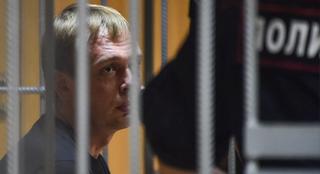
The arrest of Ivan Golunov on bogus drug charges sparked intense protests against the menace of the corrupt security state.
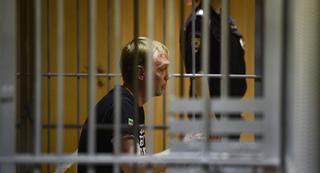
No one denies that drug lords really exist, but so long as everyone is busy fabricating cases against innocent people and battling to meet crime targets, the real ones go about their business undisturbed. After all, their cases would need proper investigation: real criminals are clever and cautious.
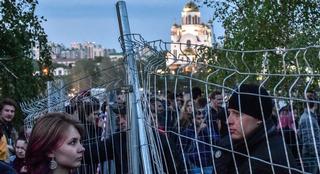
Orthodox Christianity—and Vladimir Putin—are at the center of the country’s newest culture war.
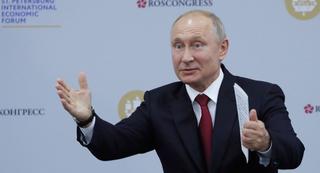
While the authorities used the St. Petersburg International Economic Forum to blame the United States for Russia’s problems, the forum’s main unofficial topic was the lawlessness and impunity of the security services, or siloviki. Faced with the question of what is preventing business and investors from developing in Russia, the authorities and the business elite had contradictory answers.
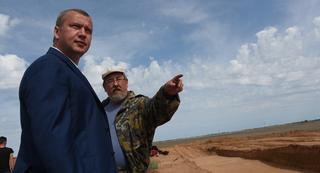
We are unlikely to see any more Federal Protective Service officers as governors following the resignation of Astrakhan’s acting governor, Sergei Morozov. This doesn’t mean that security service officials will no longer hold high-ranking government positions, but they won’t have the special status afforded by proximity to the president. It no longer suits Putin to have regional leaders hinting at their closeness to him as a method of government: now they must do some work for themselves.
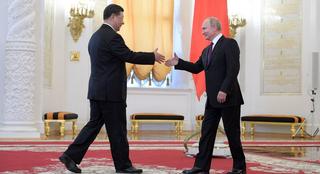
China and Russia have learned lessons from history: great powers lead or abstain, they don’t jump on the bandwagons of others, and in bilateral relations, great powers seek to maintain equilibrium-they may come close to each other if interests or circumstances demand, but not so close as to become followers.
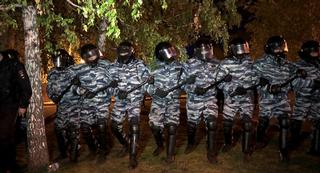
Russians, once cowed by the potential consequences of taking to the streets, are increasingly willing to protest over nonpolitical and local issues. Having failed to suppress these protests using force, authorities—federal, regional, and local—have resorted to accommodation, offering token concessions and sometimes even meeting protesters’ demands. But they have mistaken the symbolic reasons for these protests for the real drivers of unrest in Russia. In the meantime, protesters will become further radicalized and may eventually become courageous enough to issue overtly political demands.
When media outlets and their owners are accountable to the political regime instead of to their audiences, they cannot be both professional and manageable.
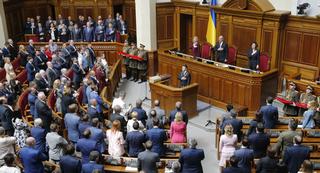
In calling early parliamentary elections, Ukraine’s new president is clearly hoping for yet another round of voting against the current authorities, in which the party system of the last five years will be defeated. But in destroying the system of checks and balances based on the “corrupt consensus” of oligarchic groups, Zelenskiy risks getting carried away and crossing the line into usurping power.
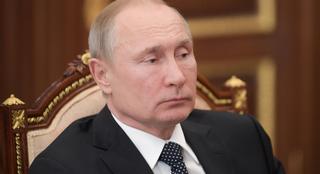
Moscow hopes the new European Parliament will take a softer line on rules and values that clash with Russian interests.

The Russian regime is less and less like a well-tuned orchestra with a confident conductor, and more and more like a cacophony in which every musician is trying to play louder and get more attention than everyone else. No one is focusing on the harmonious sound of the symphony. Instead, institutional and corporate priorities take precedence over national priorities, and are carried out at the latter’s expense. This political divergence has been provoked by Putin’s political absence, and fueled by a general fear of an uncertain future and lack of clarity regarding Putin’s plans.
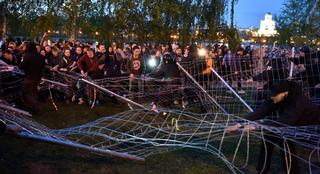
The confrontations between society and the authorities which are spreading across the country shouldn't be taken lightly.
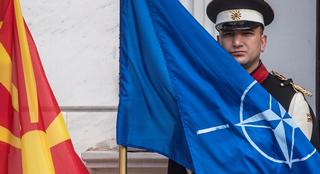
The Kremlin’s attempt to prevent North Macedonia joining NATO created some difficulties but proved to be rather clumsy and damaging to Russia’s own interests. With the accession appearing to be a done deal, Russia is now likely to lose interest in North Macedonia.
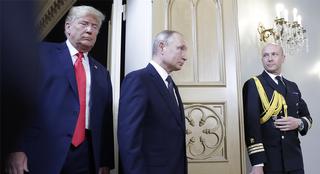
It will be a long time before the U.S. and Russia will reach a new normal in their relationship. The most important thing is that they keep their current confrontation cold, just as they managed with the previous one.
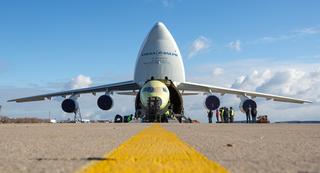
The Sukhoi Superjet 100 has long stopped being just another aircraft, and has become a sociopolitical symbol of hope and disappointment. The project launched almost 20 years ago as a dream of conquering the world has turned into a thorn in everyone’s side. It seems that everyone, from government officials to airlines and passengers, is tired of the Superjet, which raises the question of whether the plane should continue to exist.
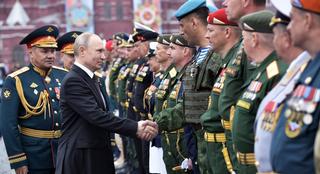
Military pomp is drowning out a meaningful reflection on the horrors of the war.
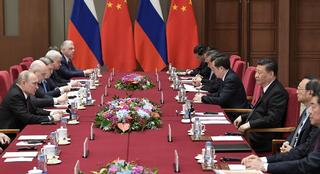
Moscow and Beijing will continue to have their differences, and they are not entirely free from reciprocal phobias, but the chances of a China–Russia collision over those differences are being minimised by the US policy of dual containment.