Carnegie Moscow Center

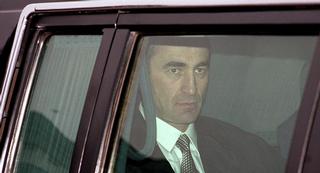
The case against ex-president Robert Kocharyan has become the most explosive episode in Armenian politics since this past spring’s Velvet Revolution. It has unnerved Moscow, as well as Kocharyan’s allies in Yerevan, with the former fearing that Armenia is pivoting to the West and the latter accusing the Nikol Pashinyan government of political persecution. But the case against Kocharyan is neither geopolitical nor the beginning of a campaign of terror—it is all about the March 1 affair, Armenia’s Bloody Sunday.
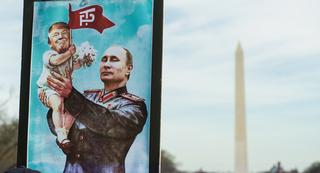
Vladimir Putin is widely viewed as the winner of the Helsinki summit. But reality may be more complicated. Despite optics in Putin’s favor, the Russian government is unsure how to further relate to Trump: should it view him as a full-fledged partner who can normalize relations between Russia and the United States, or should it use him as a tool for disrupting U.S. foreign policy?
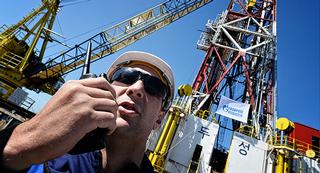
Don’t be misled by Western sanctions’ limited impact on Russia. In reality, they operate with an accumulating effect: the more time passes, the greater the potential technological backlog, financing gap, and negative consequences will be. In the long run, sanctions may jeopardize Russia’s oil and gas production volumes and the development of pipeline infrastructure, gradually squeezing the country out of foreign markets, limiting its export revenues, and undermining the stability of the Russian economy.
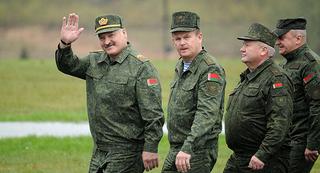
In the past few years, Minsk has started citing Russia as its main threat—but only as a theory intended primarily for external consumption. Now it has been dangled before domestic audiences.
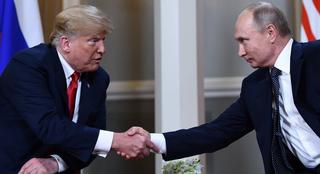
Having publicly entered internal U.S. politics, Russia must be prepared for various unpleasant surprises.

The first détente in the hybrid war between Russia and the West was nipped in the bud by Trump’s behavior and the vehemence of his domestic critics. So be it.
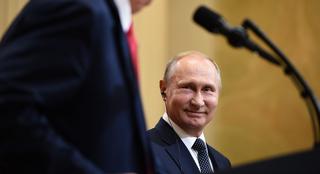
Vladimir Putin achieved his goal of embarrassing the United States. But Russians are already bracing for the backlash.
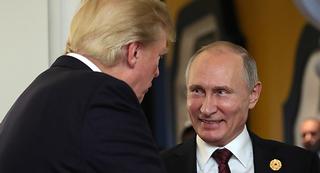
Any agreement that results in rapprochement with the West may provide some economic growth from sanctions relief, but it may also shift balance of power within the Russian political establishment from the powerful hawks to the system’s liberals.
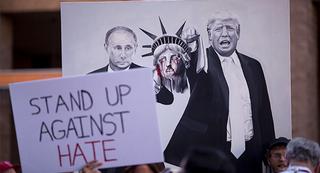
As Trump prepares to meet Vladimir Putin, there is no sign that he has absorbed the lessons of multiple rounds of Western sanctions against Russia since 2014.
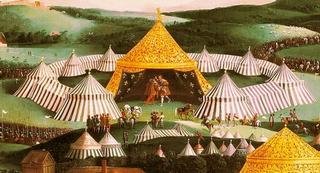
The Kremlin is seeking ways of de-escalating tensions with the West without making major concessions. It sees the isolationist unpredictable Trump as a partner in this endeavor.
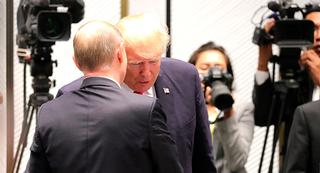
Helsinki will mark the first détente in the four-year-old Hybrid War between Russia and the United States. But there will be no major breakthrough. President Putin regards a meeting with the U.S. president not as a reward but as a resumption of normal business.
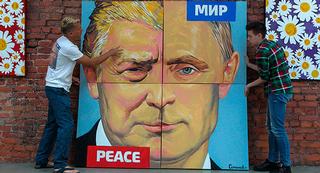
Opinion polls and focus groups show that, despite intense anti-American feelings in Russia, Russians do pin hopes on the Putin-Trump summit. They want to see a de-escalation in confrontation and a re-focus away from foreign affairs by Putin, and they want Washington to show respect for Russia.
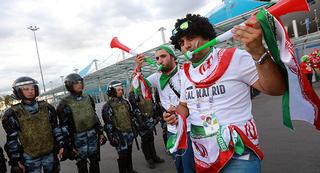
Russia has opened its doors to thousands of foreigners for the World Cup, but the realities of Putin’s Russia are bigger than the feel-good spirit provided by the football.
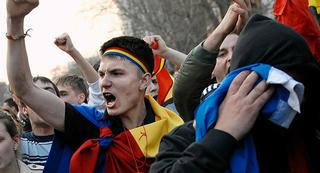
The decision to annul the opposition’s victory in Chi?inau’s mayoral election is among the most confrontational taken by Moldova’s self-avowedly pro-European authorities. But the convergence of internal and external factors that the anti-government protests need to succeed has not yet occurred. The defeat of anti-government forces shortly before decisive parliamentary elections will leave Moldovan society even more apathetic.
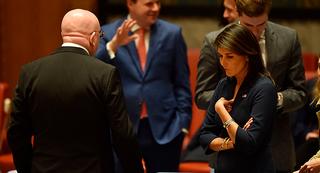
Since 2014, Russia and the US have been engaged in a hybrid war, characterized by conflict in financial, technological, and ideological spheres. Regardless of the results of the summit, this hybrid war is likely to continue for the foreseeable future. However, the relationship can and must be stabilized through clear understanding by both parties of the other side’s behavior and motivations
The events of the last four years in Russia show that its fabled stability and lack of change have stopped being the top political value. Today, the Russian regime is more ready than ever for transformation. Before, any decisions had to be approved by the president and were made at a snail’s pace because Putin had no time. Now, it’s the other way around: decisions are made quickly precisely because Putin has no time.
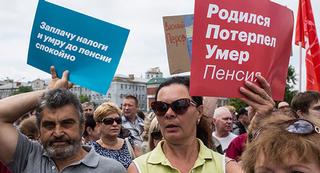
Opposition forces are competing for the spotlight in Russia.
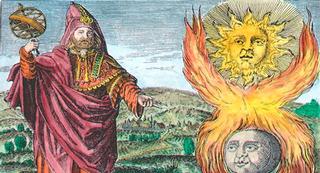
Vladimir Putin learned the art of political survival in the Kremlin of the 1990s. Little wonder that he has decided to keep on his former co-conspirator from that era, Valentin Yumashev.
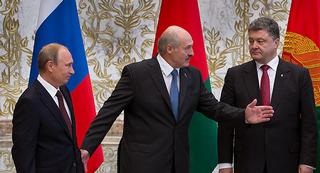
Belarus’s newfound role as a peacemaker has helped Minsk gain previously unimaginable freedom of maneuver with both the West and Russia. Minsk will likely continue to defend and uphold its status as a mediator, even if warring parties do not want to negotiate.

The Prague Spring was the nobler and more enduring face of 1968. The Western protests were mostly about middle-class counterculture and were subsumed by a culture of consumerism, while the Eastern European tradition of anti-totalitarian dissent has endured.