Carnegie Moscow Center

Even if Moscow wisely avoids a bid for the mediator role in South Asia, behind the scenes it could facilitate dialogue between India and Pakistan on bilateral issues.

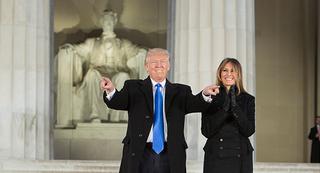
If Vladimir Putin and Donald Trump are able to find a common language of respective national interests, then in spite of the fundamental differences and the unavoidable rivalry, Russian-US adversity may become more manageable. Under the current circumstances, one could call this an achievement.
Dmitri Trenin speaks to the International Relations Committee of the House of Lords on the transformations of power and new developments in the whole Middle East region.
Recent developments in Russia-Pakistan relations seem to create a false impression of solid cooperation, which simultaneously irritates a few third countries. This is why Russia needs to rethink not only its policy towards Islamabad, but the region as a whole.
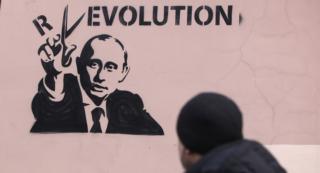
For most of Russian history, the country’s leaders have employed a top-down political system. When Crimea was annexed in 2014, the Kremlin temporarily allowed more decentralized patriotic activism to rally support, but they soon saw the potential risks and reverted to more centralized political control.

The president embodies the ambitions of a country that is proud of its history and means to retain its role within the international community.
Today Russia and the West perceive each other as political opponents, in fact. And one should treat one’s opponent very seriously. After all, if you don’t take your adversary very seriously, it might lead to underestimating your opposing side’s potential and overestimating your own capabilities.
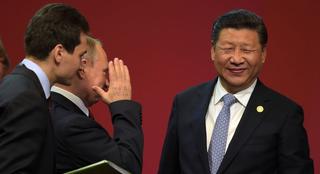
Both China and Russia are led by leaders acting out of the national interest, which should mean that even if President Xi or President Putin will not be able to resolve their differences with President Trump, they will at least speak the same language.

A quarter-century after the dissolution of the Soviet Union Russia has moved away from Europe. Russian leaders regard their country as a self-sustained civilization related to Europe yet clearly separate from it.

For centuries, Russian history has glorified the state and those who sacrifice themselves for the state. It’s time to commemorate a different kind of hero.
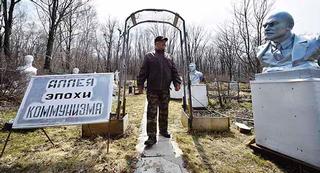
Any ideology, not just communist, is a poor guide for foreign policy. Foreign military misadventures result in disappointment at home and loss of prestige abroad.

There are multiple indications that public support for the ruling regime in Russia is provisional and the country is entering a period of post-Putin transition. Neither the authorities nor the opposition is prepared for it.
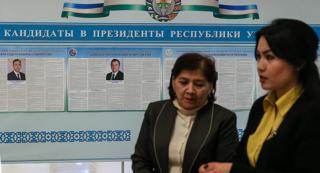
It will be difficult for Uzbekistan’s new president to bring about foundational change without moving toward some kind of glasnost. Though Uzbekistan’s tightly controlled political system has its limits, Mirziyoyev will have to loosen the reins in one way or another.
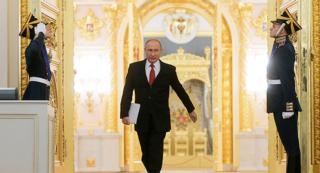
Vladimir Putin’s annual address to the Federation Council typically lets him map out the country’s foreign and domestic policy course for the coming year. Yet Putin’s speech this time—one of his longest and strangest ever—was essentially an admission that he has little sense of what the events of the coming months will bring or how he plans to deal with them.

The budget clearly illustrates its authors’ thinking. They fear popular discontent and so don’t want to risk taking unpopular steps. The regime’s main goal is short-term stability, so it keeps supporting the paternalistic governing model, which is increasingly trapped in the cycle of social spending.

I was able to read the secret police files of my grandfather, who died in the Russian gulag in 1946, and then cross-reference the names of the men who persecuted him in the new database published by Memorial. Russia’s grandsons need to confront the truth about what their grandfathers did—but the Russian state would prefer its people to live with historical amnesia.
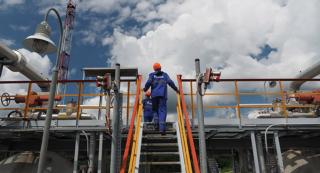
The main obstacle to energy negotiations between Russia and the EU is the clash between their perceptions of energy security. Moscow claims that the biggest threat to European energy security is Ukraine’s unreliability as a gas transit country, while Brussels believes the construction of new Russian pipelines circumventing Ukraine will do nothing to improve the EU’s energy security.
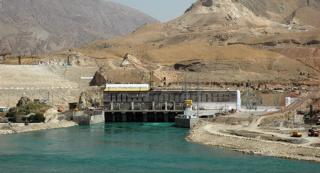
Tajikistan, plagued by frequent widespread blackouts, has begun construction of an ambitious dam project that could significantly ease the country’s perennial energy shortages. However, in a region notorious for water disputes, neighboring Uzbekistan is staunchly opposed to the dam. A long-term solution is essential to maintaining peace in the region.
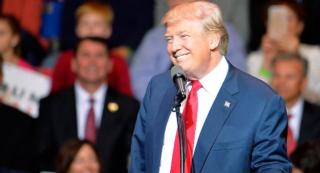
To Putin, Trump is a person who has not exactly had anything good to say about Russia, but has at least refrained from attacking or blaming Russia, which has become the norm in America today.

Following Donald Trump’s victory, asked three experts, one in Russia, one in Ukraine, and one in the United States, to comment on the question: “What impact will Trump’s victory have on Ukraine?”