Carnegie Moscow Center

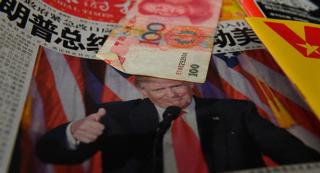
Speculations about the U.S. policy in South Asia may be right or wrong. But at least one thing is clear. In his policy toward South Asia, Trump will follow his understanding of pragmatic and realistic interests of the United States, and not seek how to please leaders of South Asian countries and beyond, including Russia.
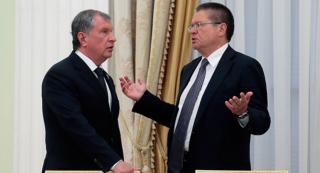
Since this spring, it has become clear that Russia’s political system of managed chaos is devolving into a free-for-all in which Rosneft chief Igor Sechin and his small cadre of current and former FSB officers have the upper hand.
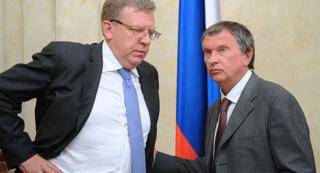
Putin is creating the environment that can provide him with security and insurance and control the wars with the Kremlin’s inner circle. Russia’s political elites have already received a lot of signals from him: If somebody behaves in a wrong way, he will be either dismissed or accused of corruption.
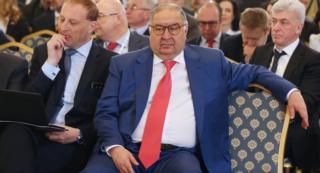
The Kremlin has tried to use billionaires to do its bidding in post-Soviet states before—with mixed success. When it comes to Alisher Usmanov, the hurdles to a successful partnership are particularly high.
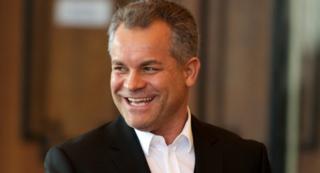
The election of the pro-Russian socialist Igor Dodon as Moldova’s new president obscures the fact that the country’s main nominally pro-European oligarch won most from the outcome.
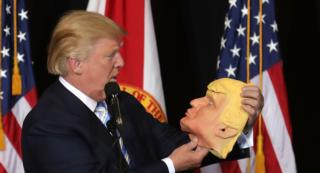
Russians’ high expectations of Donald Trump may be disappointed. Trump and Putin have a lot in common, and Trump’s victory has dashed the hopes of those Russians who believe in American democracy. But the new American president-elect’s unpredictable personality could also make for a stormy relationship.

Russia’s propaganda masters didn’t expect Trump to win. State media outlets praised him every which way and painted him as a good friend to Russia, unofficially backed by the Kremlin. But the idea was that Trump would be cheated of his victory in yet another example of how great a role Putin plays on the world stage and how unscrupulous the American elite is.
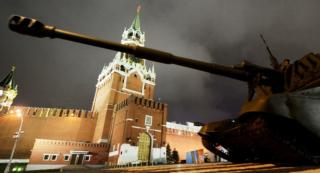
The Cold War analogy is misleading. Relations between the West and Russia are certainly bad and dangerous now but they are bad and dangerous in new ways.
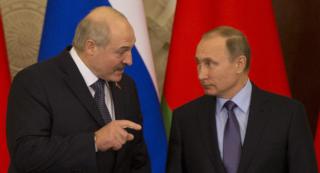
Russia and the West are less and less willing to compromise with Belarus. Both know that Belarus is in a weak negotiating position and are demanding more of Minsk than ever before.
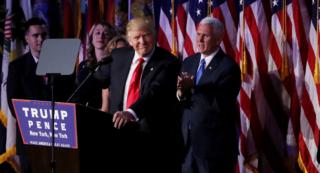
The world reacts to the election of Donald Trump and its potential implications.

It’s not surprising that the members of the EAEU are struggling to adopt a Customs Code. In many ways, the problem stems from Kyrgyzstan’s accession to the EAEU, which mostly benefits Chinese exporters to Russia, who now have less red tape to deal with and more contraband routes available. The Russian budget, which may miss out on about $340 million a year, is the biggest loser.
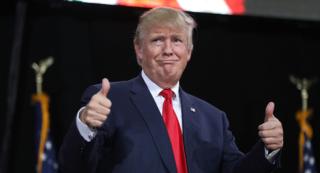
Nobody in the U.S. believes that relations with Russia will be improved until the kremlin changes its foreign policy course and stops its political rebellion against the system of international relations, established by the United States.
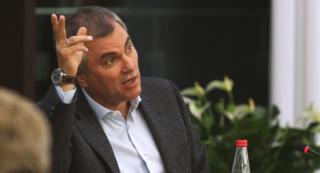
The political system Volodin leaves behind—that is, a system without any real politics—allows the regime the illusion of control. But the system’s domain has been all but reduced to the tiny world of politicians who agree to the Kremlin’s rules. Activists, ambitious players, and most importantly Russian citizens find themselves outside the bounds of politics.

If Putin tried to use the figures of Stalin and Ivan the Terrible in the same way, he would be regarded as an impostor. That’s why he is far more comfortable with Vladimir the Great. Besides sharing a name, Putin, like Vladimir, who baptized Russia, believes he is saving Russia’s Orthodox soul.
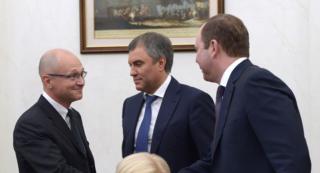
What will the two recently appointed behind-the-scenes technocrats, Sergei Kiriyenko and Anton Vaino, do in the Kremlin? They will have no say in foreign policy, and even in domestic politics they cannot change course unless the president desires it. It seems that both are awaiting orders. They must have a mission of some sort, a specific project to carry out. But what is it?
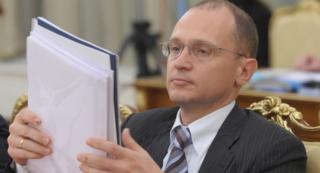
Many say Sergei Kiriyenko, the new deputy chief of staff of the presidential administration, is a technocrat who was brought in to manage a well-established political system. But there’s more to Kiriyenko: like other disciples of the philosopher Georgy Shchedrovitsky, Kiriyenko believes that reality can be altered and society programmed.
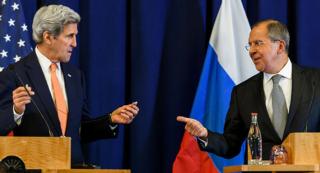
As the U.S. presidential election approaches on November 8, asked three experts, one in Russia, one in the United States, and one in Europe, to comment on the question: “Is the break between the Putin administration and the West permanent?”
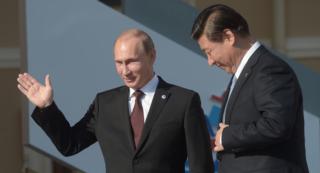
Going forward, Xi, Putin and the next US President will be largely responsible for the state of the world. China's and Russia's leaders will not only work closely with each other, but also learn from each other, in economics as well as in politics.
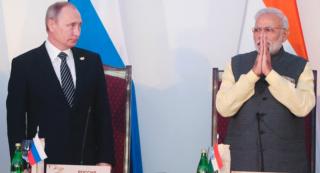
India and Russia need to undertake a fresh and frank appraisal of each other if their strategic partnership is to deepen and endure beyond high-level weapons and energy cooperation.

Despite Ramzan Kadyrov’s attempts to retain his special status, the old ways of doing business between Grozny and Moscow are over—and the new contract is here to stay.