Carnegie Moscow Center

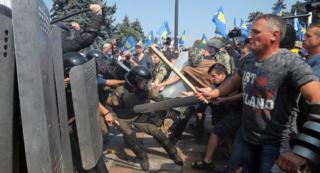
The Ukrainian capital Kiev saw a return to violent political protest this week after a long period of quiet. How widespread are the sentiments of the radical protestors and how popular is President Poroshenko's strategy of decentralization?
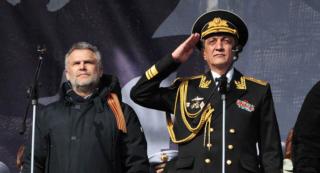
The clash between Governor Meniaylo and Speaker Chaliy has brought Sevastopol to the brink of mass public protests. The Kremlin is working hard to try and manage local political struggles in Crimea
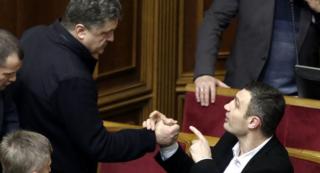
The merger of President Poroshenko’s party with the UDAR party of Kiev mayor Vitali Klitschko is another step in the consolidation of power by the Ukrainian leader. Arseniy Yatsenyuk’s People’s Front may be the next in line for absorption. But recent Ukrainian history shows that these big united parties have all ended in failure.

Contemporary Russia has developed into an autocracy without some of its most overt elements, relying on a secretive "nod-and-wink" collusion between rulers and ruled. It is a personalist regime but one that still takes care to follow procedural niceties
Three organizing principles to guide the use of American power in a fragmented world.
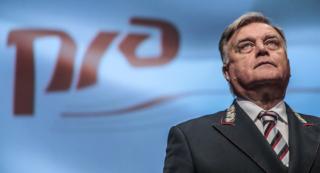
Russian Railways Chief Vladimir Yakunin relied on his personal friendship with President Vladimir Putin to keep his job for a decade. But the political realities of 2015 require a different kind of personality for that job.
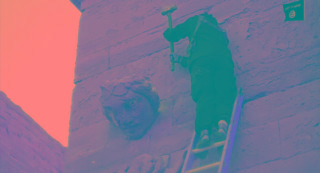
A brazen attack by Christian conservatives on an art exhibition in central Moscow evoked measured criticism from the Russian authorities. But their appeal of the attackers to archaic and anti-modern values is only an extreme form of current Russian state ideology.

Excessive intrusions by the Chinese state to shore up confidence in the country’s financial markets are precisely what led to overheating.

The Russian government provoked controversy with mass destruction of European food. The government could not allow its counter-sanctions policy to be seen to be failing and is exploiting different attitudes to banned Western products amongst the opposition and the general public.
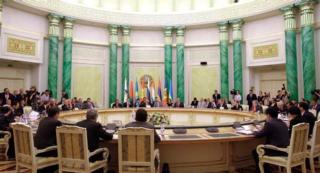
Issues such as the Iran deal, the rise of the self-styled Islamic State, and the spread of Russian military and economic influence continue to highlight the importance of the Caucasus region on the world stage.
The Russian elite and public are propagating certain myths that Western sanctions are not hurting or are even helping Russia's economy. The reality is much bleaker: sanctions are here to stay for a long time and there can be no healthy economic development while they are in place.
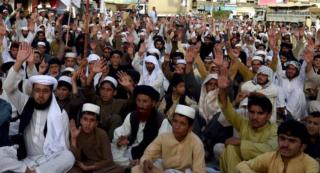
The appointment of Mullah Akhtar Mohammad Mansour as leader of the Taliban in Afghanistan can be viewed in two ways: as a victory for Pakistan (which clearly supports Mansour) or as the strengthening of radical tendencies within the Taliban.
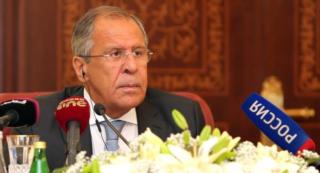
Chaos in the Arab world has offered the Kremlin a convenient opportunity to shape public opinion at home on such issues as the legitimacy of the regime, its confrontation with the West, and the situation in Ukraine.
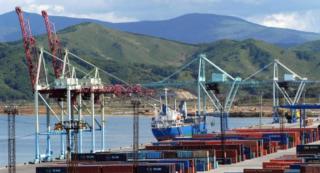
Following an initially cool reception, many former USSR republics have been lured by the sheer size of China’s investment in the One Belt One Road project, eager to capitalize on the wider initiative in line with their own domestic interests.
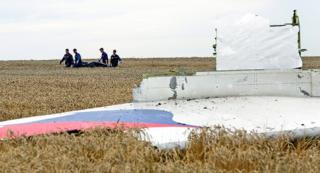
The MH-17 catastrophe has been a major factor in the current state of relations between Russia and the West for more than a year already. Paradoxically, the establishment of an international tribunal is unlikely to sour relations further, even though Moscow fears that protracted legal proceedings might stand in the way of a future détente with the West
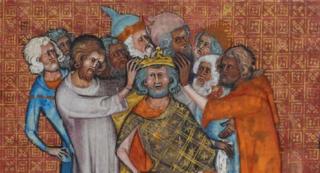
If you look at the entire 15 years that Putin has been in power, rather than just the last year and a half, you can see that this is the fourth time his popularity has soared this high. Furthermore, there are simultaneous changes in various indicators, which makes for a more complicated picture than what most observers see
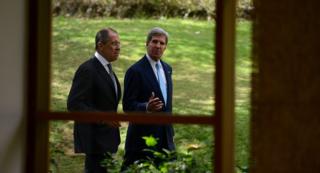
The Iran nuclear deal and the restoration of diplomatic relations between the United States and Cuba are victories achieved through informal or semi-informal diplomacy. As for the Russian-American relations, this diplomacy successfully worked even during the Cold War—but not now.
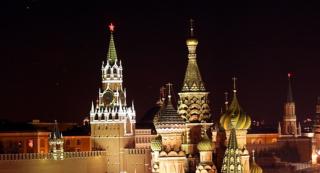
Russia is a superpower in decline, and the challenge it poses to the United States is very different from that posed by the Soviet Union.
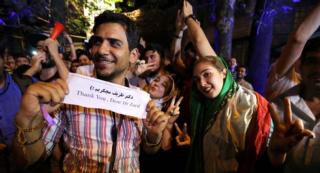
Iranians are rejoicing, expecting that their new “peace with the world” will help them solve economic problems and improve living standards. After decades of isolation, the taste of hope is unbelievably sweet. But above all, the Iranians believe that the world powers have finally shown their country due respect
In assessing this compromise agreement, we should consider all the possible alternatives. There are three: a new Gulf War with airstrikes against Iran. The second option is a nuclear-armed Iran. The third possibility: a strike against Iran, followed by an Iran with nuclear weapons, and then followed by another regional war—only this time, a nuclear one