Carnegie Moscow Center

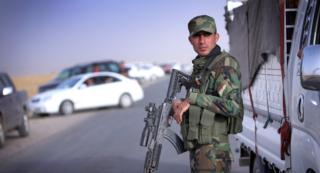
The events in the Middle East in the last few months have muddled the primitive black-and-white picture painted by the advocates for the new Cold War. The modern world presents us with an incredibly complex, conflicting and at times somewhat bizarre picture.
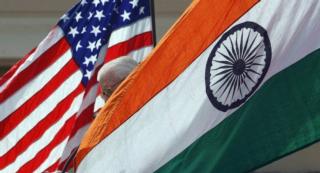
Indian and U.S. leaders recently discussed military-technological cooperation. Time will tell whether the countries will be ready to transform their cooperation by translating words into actions.

Although the relationship between India and the United States should be viewed indifferently by Russia, Moscow needs to pay attention in order to learn from and not repeat mistakes made by New Delhi and Washington.

The list of countries wanting to take advantage of Western sanctions to boost their food exports to Russia has nothing in common but the desire to gain a new market.
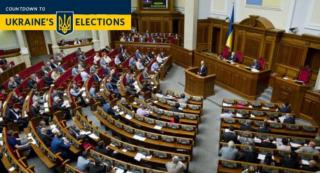
Facing economic collapse, a winter without Russian natural gas, and a frozen conflict in the Donbas, a divisive election may be the last thing Ukraine needs. But on October 26, Ukrainians will head to the polls to elect a new parliament.

By turning Russia into a war state, President Putin has unleashed a process he cannot stop and made himself hostage to suicidal statecraft.
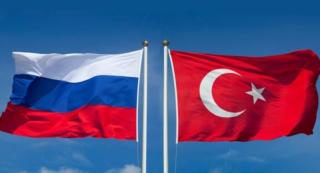
Even though tensions over Ukraine will inevitably cast a shadow over the bilateral relationship, Russia and Turkey—a NATO member—continue to share a range of important interests.
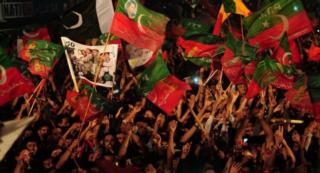
Pakistan has been in turmoil for more than 40 days: protests headed by Imran Khan and Tahir-ul-Qadri have taken the country by storm. Yet the protest movement seems to be running out of steam. The weakening of the protest movement has much to do with Prime Minister Sharif’s decision not to crack down on the protests.
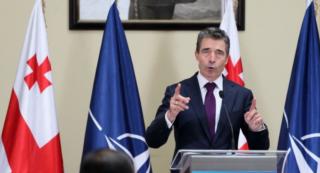
Georgia continues to try to prove itself a de facto ally of the United States, even without a formal alliance. This is the policy that Georgia needed all along: a stronger security relationship with the United States that makes it feel safer, without raising a red flag of NATO.

Ukraine needs more than the current level of Western assistance. But the Ukrainian government also needs to pull its weight, promising (and delivering) transparency.

The failed unipolar world is being replaced with a polycentric world order based on several major centers of power. Russia can become a full-fledged global center of power only if it moves to a high-tech economy and implements democratic reforms.

Islam-state relations embody a range of political and ideological issues that are inseparable from factors of ethnic tradition, culture, and migration.

Israel will maintain its relations with the United States and the European Union, but it will also continue to develop its relations with Russia.
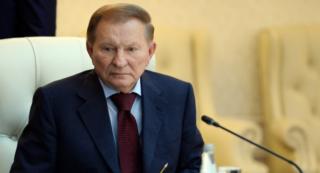
Leonid Kuchma deserves credit for stepping forward at a moment of national peril. A realist and truth-teller of Kuchma’s calibre is a strikingly rare commodity in Kyiv and the West these days.
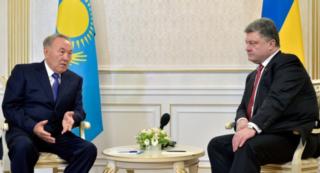
The Ukraine crisis has betrayed fissures in the Russo-Kazakh relationship. It is difficult to predict a post-Nazarbayev Kazakh policy toward Russia, but developments in Ukraine suggest that future Kazakh leaders will have to deal with a new source of friction with the Kremlin.
This summer’s crisis in eastern Ukraine has made the European Union and Belarus keen to develop a more constructive relationship with each other.
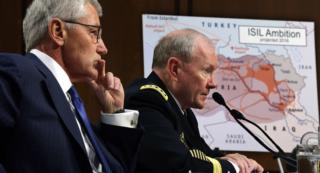
As an international coalition gears up to confront the Islamic State, there is a rare opportunity to try to get the Syrian regime and rebels to stop fighting each other.

Separatists across Europe are hailing Scotland's referendum, but they also know that breaking up is a traumatic process.

The growing hostility between the Russian and American societies accompanies the tensions in state bilateral relations.

Even a threat like Islamic terrorism won’t force Russia and the Unites States to make security collaboration a higher priority than geopolitical rivalry over Ukraine.