Carnegie Moscow Center


Now Tbilisi should concentrate on the main issue that preoccupies most Georgians: how to get the economy back on track.
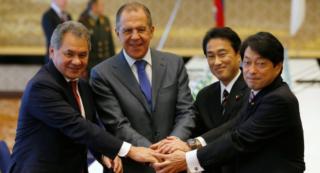
As Russia and Japan are carefully embarking on a fresh attempt to fully normalize their relations, closer and more regular contacts in the foreign and security field, including military exercises, may be useful as confidence-building.

Now that Saakashvili is finally history, the chances that Russia will soon take an active interest in Georgia are going up. This would concern the settlement of the main issue in Georgian-Russian relations—the status of Abkhazia and South Ossetia.
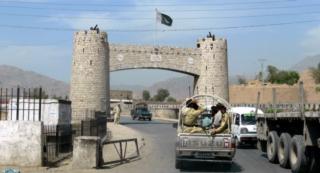
The nomination of Mullah Fazlullah as the new head of the Tehrik-e-Taliban Pakistan (TTP) does not seem to dramatically change prospects for an agreement between the TTP and Islamabad. Yet if signed, this agreement will not be able to stop violence in the tribal area of Pakistan and neighbor regions.
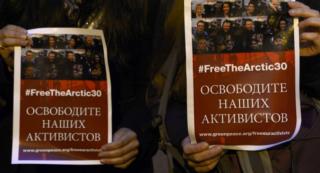
The Netherlands filed a claim against Russia in the International Tribunal for the Law of the Sea, in connection with detaining the activists and crew of Greenpeace’s Arctic Sunrise. Acting by challenging the state that no one wants to irritate, the Dutch decided to take a principled stand and stick to it to the very end.
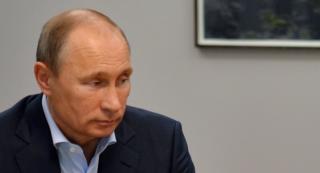
Putin has always flirted with the new Russian nationalism, never embracing it outright. Now he faces a dilemma as the phenomenon he helped create weakens the basis of his Eurasian Union project.
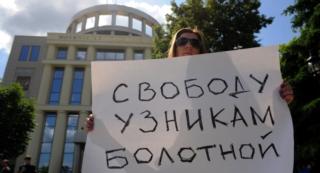
In May 2012, the arrest of ordinary demonstrators on Bolotnaya Square and the riot charges pressed against them signalled the authorities’ shift from soft authoritarianism that tolerates limited discontent to a more repressive style of government.
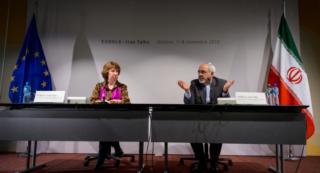
The dramatic developments in Geneva last week demonstrate that the Iranian nuclear issue can be resolved. The details of the future accord are very important, and they may become sticking points for international diplomacy.
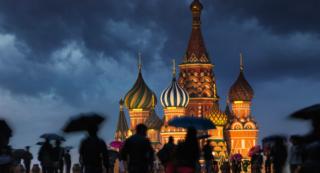
There is no need to invent a special day like the National Unity Day for strengthening national identity, because one day in a year cannot change people's vision of their nation. This is an everyday job for the citizens at all levels of Russian society.
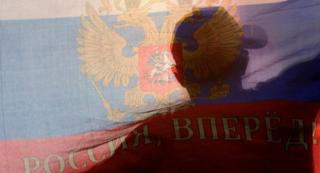
“National identity” and “nationalism”—there is nothing permanent about them. They vary, depending upon who speaks about them, and they change as time goes by. Those who resort to ultra-nationalism now in Russia had better hurry, because the nation states are losing efficacy, and values transform as economy and society change.
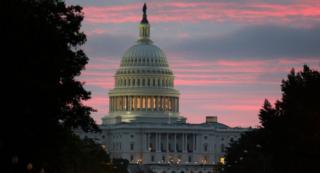
Title VIII, also known as the Program for Research and Training on Eastern Europe and Eurasia did not receive funding for the 2013 fiscal year. It has been a proven success in the past. If given the proper funding, Title VIII may continue to be so in the future.
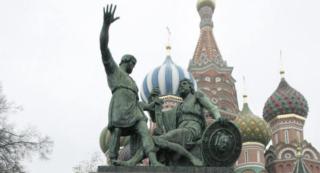
On November 4, President Putin spoke in the Kremlin about cohesion, consolidation, and indissoluble unity of the people of Russia. Government policies, in contrast, do more to deepen the xenophobic sentiments than to temper them. If the Day of National Unity was established as a step toward consolidating the Russian nation, today it sounds at best as a celebration of wishful thinking.
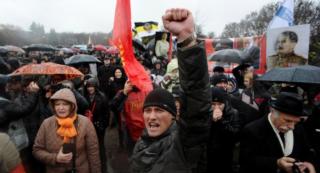
Russia does not have and will probably never have a specific event that can become a symbol of national consolidation. Still, something specific that consolidates everyone at once is necessary and the Kremlin wants people to nationally unite against the external enemies.

Ilham Aliyev is attempting modernization without wholesale political reform. Most of the veterans of the Azerbaijani elite remain in their jobs, including the elderly prime minister and presidential chief of staff. The skyline is changing in Baku, but so far the street-plan remains the same.

The experiment of a peaceful power transfer in Georgia, if successful, will determine more than just the country’s future. It will reveal the possible trajectory of other post-Soviet states that will attempt to move toward an open society.

The problem with the nation-building effort in Russia is that a nation cannot be built from above. Unless people begin treating their state as their own, Russia will continue to be a country and a state, but no nation.

In the modern world, the problems of information security do not only become pivotal on the national level but also emerge as strategically important for the entire international relations system.

Ukraine’s trajectory in the coming months and years will serve as a test of Russia’s global role and how far the West is prepared to expand its influence.

The simple axiom is: as far as you have a sufficient economic growth, you can be generous to the immigrants, but if the economy goes wrong, you should limit the inflow of foreign workers. The Russian economy is now ill, with a growth rate at slightly above one percent. And the more frustrated the Russians become, the more acute the ethnic problem becomes.

As outbursts of ethnic violence grow more frequent, the Russian government relies first and foremost on police measures, such as roundups, detentions, or tightened migration policy. The rhetoric of administrators of various levels increasingly caters to xenophobic sentiments which risks to incite such sentiments even further and lead to new ethnic clashes.