Carnegie Moscow Center

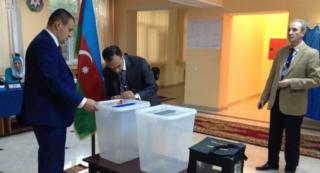
The presidential election results in Azerbaijan should be no surprise. However, they were a real test for the regime as it was the first time it was confronted with a serious opposition. But most importantly these elections also became a test for the Azerbaijani opposition itself.
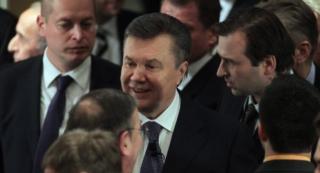
Ukraine will most probably sign an association agreement with the European Union. This is good news for Russia, including Vladimir Putin—although he would emphatically disagree.
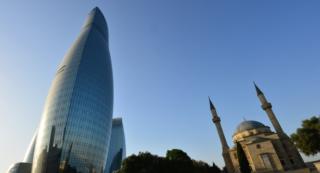
Everyone actually knows the result of Azerbaijan’s presidential election—that President Ilham Aliyev will be elected for a third term. But today’s vote is most important as a test on the state of the country’s opposition.
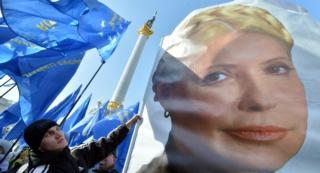
The Ukrainian elite has reached consensus on what it does not want—it does not want to be suffocated by the Kremlin’s embrace. For Putin the growing readiness of Ukraine to turn to Europe despite the formidable costs of this decision is a real disaster: his Eurasian Union cannot be a serious entity without the second large Slavic state limping along.
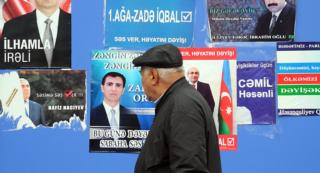
The result of Azerbaijan’s upcoming presidential election is not in doubt. But the incumbent president will face a new set of challenges during his next five-year term.

Putin aims for a world order in which the Security Council’s five permanent members, not the United States—alone or with its allies—decide on major issues pertaining to war and peace.
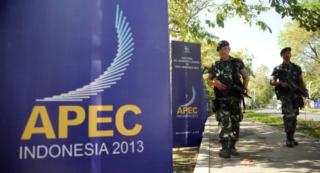
Connectivity in Asia and the Pacific, one of the main themes of the Asia-Pacific Economic Cooperation summit, held on October 7 and 8 in Bali, is certainly growing.
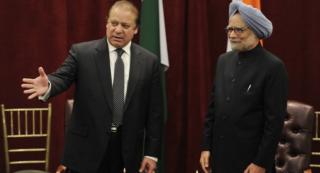
After 1998 nuclear tests, India and Pakistan experienced several crises, including the 1999, 2002, and 2008 events. They have already agreed on some confidence-building measures, though unverified. Do India and Pakistan need a more dangerous crisis to start arms control talks and negotiations on verification mechanisms?

Both Russia and the European Union are at a stage when setting out their own domestic priorities and defining their respective global roles are more important than achieving an alliance.

There is still a window of opportunity for cooperation between the United States and Russia on conventional prompt global strike weapons.
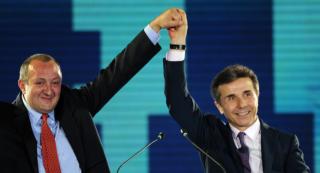
The predictability of the election outcomes contrasts with unpredictability of Georgia’s further development.
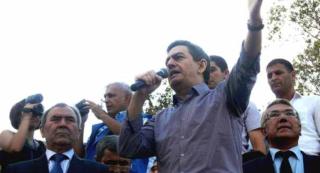
Azerbaijan’s opposition has united around a set of democratic ideals and is making the most of the limited opportunities for campaigning. Will they be able to overcome the apathy of the voters who have never seen a fair election?
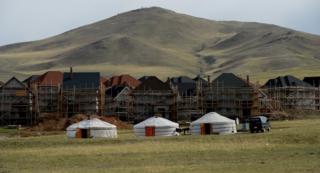
Next to maintaining a strict balance between two former overlords, Beijing and Moscow, Ulan Bator seeks to balance its both physical neighbors with a third—virtual—one.

Any Conventional Prompt Global Strike acquisition decision should be preceded by an in-depth and detailed debate about the costs, risks, and benefits of all potential CPGS alternatives. Their military utility is a natural starting point for such a debate.
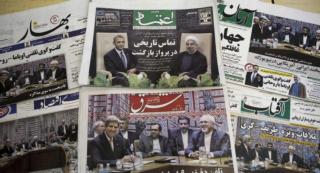
The improvement in the U.S.-Iran relations was quite expected after Hassan Rowhani came to power. The main question today is that of mutual confidence and the genuineness of the intentions of the new Iranian president.
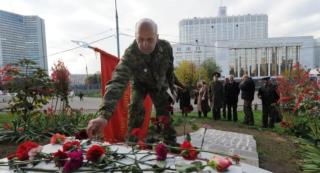
If 1991 opened opportunities for Russia, including a path toward a rule-of-law state and an open society, 1993 closed all options except one: a new system of personalized power.

Russia’s position on Syria is not primarily about Syria. It is about the world order: who has the right to decide on a military intervention?
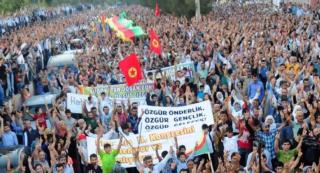
The long-awaited “democratic package” of proposals offered by Turkish Prime Minister Erdogan is small for the Kurds. By doing something but not everything, he is clearly playing for time.
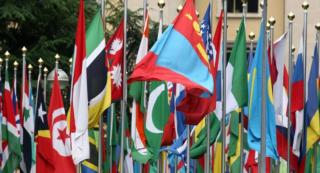
A special arrangement may be devised for the Eastern Partnership countries so that they can associate with both Russia and the EU. It would effectively serve to form a loose economic alliance between the EU and the Eurasian Union tied together by the common denominator: the Eastern Partnership nations.
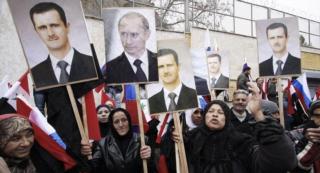
With revolutions across the Arab world, Russia’s chances for strengthening its position in the region look increasingly slim. The Kremlin must change course and ensure that its approach to the Middle East and Islamists reflects post–Arab Spring realities.