Carnegie Moscow Center

Pyongyang needs to be drawn out of its self-made shell, not cornered there.
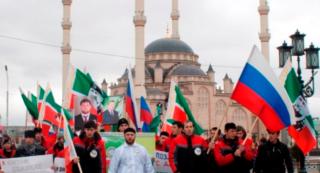
The way forward in the North Caucasus will only be possible in case of major institutional changes within the Russian Federation. Trying to solve its problems by means of expulsion is an illusion.

Snowden did not create the security-privacy dilemma, but he did illuminate a deeply rooted problem that Western leaders have long tried to obscure.
Putin will make it clear again that Russian domestic politics is off limits to Washington. By the time Obama arrives for his scheduled visit to Moscow, Snowden will have left the airport, and be silent.

Owing to the mayor elections and the Navalny case, the political life in Russia has exploded in midsummer. The paradox is that the opposition has done nothing for this. The decisions of the government have been the main reason for these developments which benefit rather the opposition than the government.
Hosting the Olympics in close proximity to the restive North Caucasus is not just a test of Russia’s athletic prowess but also—and more importantly—of the Kremlin’s prestige and its ability to ensure security in the most challenging of situations.

The decision to host the Olympics in Sochi imposes an artificial deadline to the North Caucasus problem. But after the Games are over and there is no longer a “deadline” to meet, Russia’s government will inevitably pay less attention to this region.
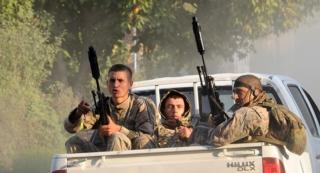
Can Russia and Georgia work together to thwart any security threat? The best evidence suggests that they are each planning for a quiet trouble-free Winter Olympics—but independently of one another.
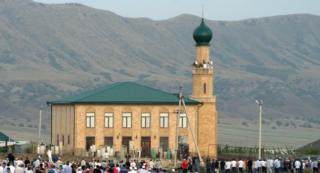
The Kremlin pays the price to pacify and accommodate the North Caucasus which is evidence of the Russian state’s fragility.

The very idea to separate the Caucasus from Russia which seemed exotic a while ago, gets increasingly more supporters, not as much in the Caucasus as in the rest of the country.

The Sochi Olympics are special in many ways. First, the North Caucasus where they are to be held is still restless. Second, Sochi lies close to Abkhazia, which broke away from Georgia at the time of the Soviet collapse, and whose independence Moscow recognized after the brief war against Tbilisi almost five years ago. Third, Sochi is the favorite residence of President Putin.
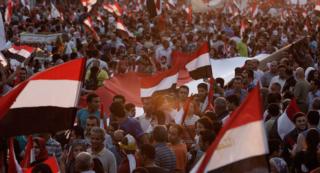
Both Islamists and secularists are wrong if they think they can build a new Egypt on their own. There is no way the country can be successful if only one party rules.

In the situation where no country can be an island, the best way forward for the democrats is to organize the more modern sections of the elites; to reach out to the broader publics on the issues that matter to the ordinary citizens; and to develop a set of credible policy alternatives—so that when the time comes, they can be ready.
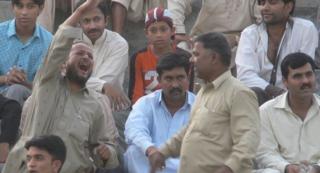
Democracy is the process, passing through ups and downs. And a political leader is not a key factor here, even if he looks like a powerful figure. The main factor is the people, who can accept or reject this figure despite his power.
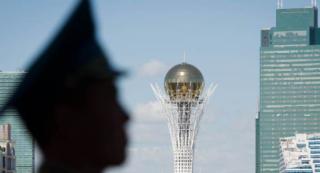
Paradoxically, as the Central Asian authorities cite the Arab Spring to discredit democracy and justify the existence of authoritarian systems in the region, the events in the Middle East also made the local elites realize that changes are indeed necessary.

Still struggling to impose change from the top with the Association Agreement in Ukraine, the EU should complement it with reaching out to the Ukrainian population beyond the small group of pro-European NGOs.
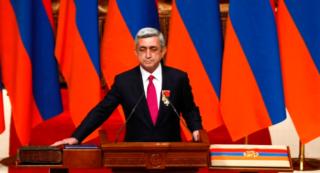
Sometimes doing nothing can look like the smartest political move. In Armenia, it seems to be the favorite political tactic of President Serzh Sargsyan.
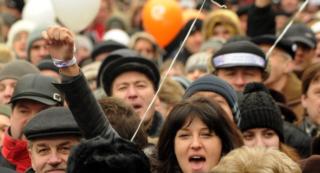
There are two kinds of lessons that revolutions can teach: either you democratize to avoid a revolution in the conditions when the public sees no other way to attain liberty, or revolutions will open a way to it.
In such a milieu, where the elite are occupied only with their own well-being, the “democracy” propagated by the Western NPOs loses its proper target—the ordinary people.

Edward Snowden’s stay in Moscow’s Sheremetyevo airport has contributed to the already charged atmosphere of U.S.-Russia relations.