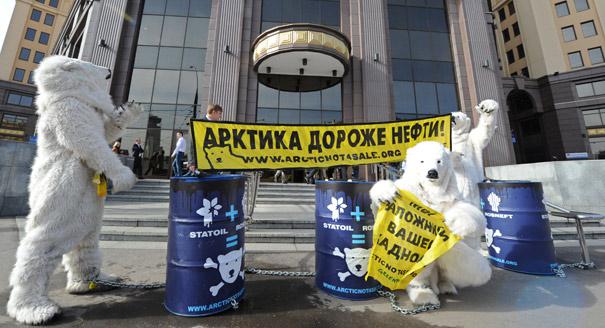
Photo / А. Starikov
The Carnegie Moscow Center was established as a subdivision of the Carnegie Endowment for International Peace (Washington, DC) and started its activities in 1994. Beyond the Moscow Center, the Carnegie Endowment maintains offices in Beijing, Beirut and Brussels, making it the world’s first global research organization.
Specialists at the Carnegie Moscow Center produce expert research and nonpartisan analysis independent of government or commercial interests. Committed to the principles of international scholarship and objectivity, the Center pursues a three-fold mission:
The Center organizes roundtables, presentations, seminars and conferences on key issues in domestic and foreign policy, international relations, international security and the economy. These events draw participants from across the Russian political spectrum and from Moscow’s media and diplomatic communities. The Center has become a recognized leader in nonpartisan political analysis, its staff of Russian and international experts enhanced by the support of the Carnegie Endowment’s Russia and Eurasia Program in Washington.
“It would be hard to imagine intellectual life in Moscow without the Carnegie Moscow Center. This is one of a very few organizations that bring together the political and intellectual elites of America, Europe and Russia to discuss the problems facing today’s world and Russia’s place in it. The Carnegie Moscow Center has played an invaluable part in Russia’s transition to a free and civil society”. Yelena Nemirovskaya, director, Moscow School of Political Studies.
The Carnegie Moscow Center publishes articles, monographs, reference works, periodicals and brochures – up to 30 titles per year in all. The Center also publishes the quarterly Pro et Contra, a series of Working Papers and regular Briefings. Center publications appear in Russian, English or both and are widely distributed in Russia and abroad.
“The Carnegie Moscow Center’s publications have made an important contribution to Russin intellectual life. They have had a positive influence on the political decision-making process and public administration. They also serve the wider international community of experts studying modern Russia and the other states of the former Soviet Union.” Valery Tishkov, director, Institute of Ethnology, Russian Academy of Sciences.
The Carnegie Moscow Center's work is greatly enhanced by a distinguished Advisory Council comprised of leaders in key public policy disciplines:
Absent a good education environment, there is little room for the Arab world’s youth to turn into responsible citizens who can consolidate and stimulate social transformation to bring about more prosperous and free societies.
An increasing trade deficit with China, coupled with Chinese purchases of large tracts of Latin American farmland, could cause strain between China and Latin American nations.
The obvious and often painful mismatch between aspiration and reality in European foreign policy has plagued discourse on European integration during the last decade.
President Obama has praised Georgian President Mikheil Saakashvili for his track record of reform and reaffirmed U.S. support for Georgia’s future membership in NATO, but he also hinted that Saakashvili should step down once his term ends.
Sign up for Carnegie Moscow Center announcements and publications—including Carnegie Moscow Center Newsletter and Pro et Contra—by filling out the form below. Note—fields marked with an asterisk (*) are required.