Carnegie Moscow Center

The program is dedicated to Russia’s increasingly important relationships with countries in the Asia-Pacific—a region which is a locomotive of the global economy—and places special emphasis on China. The program focuses on such issues as the development of Russia’s Far East, the rapprochement between Russia and China, the roles of the two countries in the process of energy and economic integration in the region, and the influence and impact of China’s rising profile.
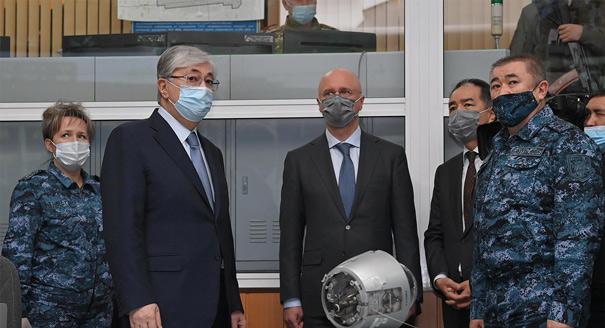
The rest of President Tokayev’s years in power are unlikely to be uneventful. The new Kazakh president has yet to establish his authority and to surround himself with trusted elites. Most importantly of all, he cannot rely on the loyalty of the security services.
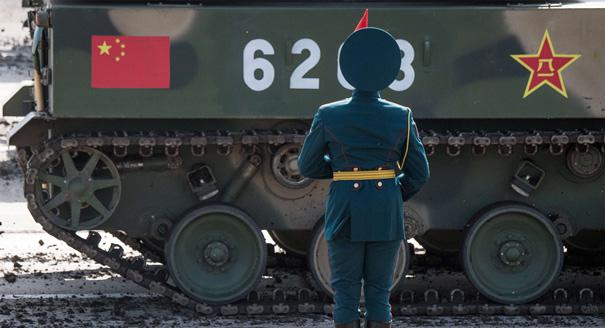
Over the course of the last thirty years, China and Russia have demonstrated that their partnership is resilient and expanding. Any pragmatic leadership in the Kremlin—even a democratic one that seeks to improve ties with the West—will try to maintain stable and friendly relations with China, just as any pragmatic Chinese leadership will do with Russia.

How deep is the security partnership between China and Russia really, beyond the curated images projected by the two propaganda machines? What sources of potential tension are there between Moscow and Beijing, and is the situation in Central Asia following the U.S. withdrawal from Afghanistan one of them? Please join Alexander Gabuev, Janka Oertel and Raffaello Pantucci to discuss these issues.

What are the key drivers and obstacles in Sino-Russian economic cooperation? How badly does China need Russian commodities exports? Is Russia concerned about China’s growing geoeconomic clout, and does it have any alternatives? Join Alexander Gabuev, Vita Spivak and Jiayi Zhou to explore these issues and more.

Moscow has much leverage over Europe as a gas supplier, but an over-reliance on Beijing carries long-term strategic risks
With expectations low in Moscow, the Kremlin is looking for limited deescalation.

Chinese and Russian online propagandists share broadly similar goals and tactics, but they still tend to work separately. Any efforts at greater coordination would have to surmount considerable barriers.

How does Japan view the evolution of U.S.-China relations? Is this an opportunity to strengthen the U.S.-Japan alliance? How likely are changes in China's behavior toward its neighbors, including Japan, India, and Australia? These questions and much more will be on the agenda in a discussion featuring Akio Takahara and Alexander Gabuev.