Carnegie Moscow Center

Nuclear-weapon states should commission their defense ministries and think tanks to perform serious analysis on the practical steps of moving towards zero nuclear weapons.
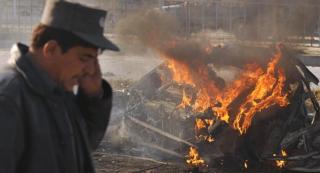
The absence of security, law enforcement or effective central government has created a vacuum in Afghanistan. The Taliban are conducting a campaign to eliminate government contact with the population and compel the people to accept Taliban rule.
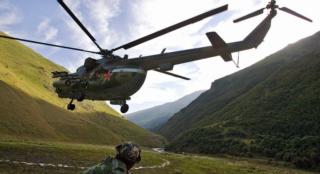
Despite the official end of Russia’s counter-terrorist operation in Chechnya, armed clashes and terrorist attacks continue to plague North Caucasus. Open conflict is on the verge of becoming inevitable.
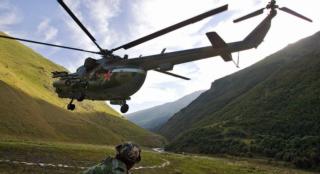
The upsurge of violence in Russia's North Caucasus region is the result of the incompetence of local authorities and the Kremlin’s failure or reluctance to seriously address the issues of the region.
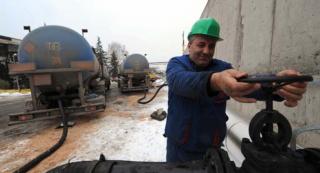
The hydrocarbon industries of the former Soviet Union are undergoing innovative development. In Russia, conditions both enable and inhibit the construction of a new economy focused on incentives for innovation.

From Putin’s staged call-in show to Medvedev’s "citizens vs. officials" program, Russia’s virtual politics provides only the illusion of government transparency and improvement.
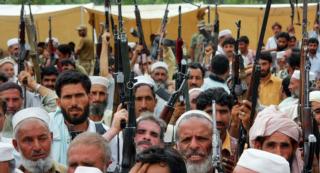
The alienation of ethnic Pashtuns is a major factor in the Taliban’s success in southern Afghanistan, but it could seriously impair the group’s progress in the north.
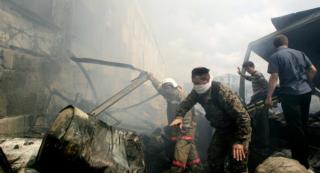
A suicide bomb attack that killed 19 people and wounded at least 58 in Ingushetia was likely intended as retaliation for President Yevkurov’s determination to intensify his fight against Islamic extremists.

Questions remain whether Chechen President Ramzan Kadyrov ordered the recent murders of human rights activists in Chechnya, or whether the crimes were an attempt by his opponents to discredit his leadership.
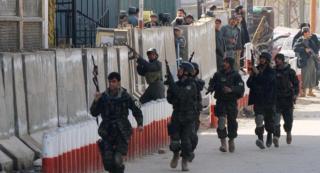
In Kabul many of the issues affecting Afghanistan – ineffective governance, the Taliban's expanding influence, and a massive foreign presence – are on stark display.
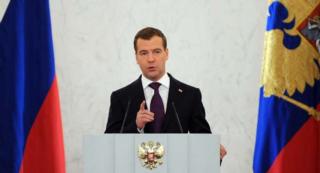
Federal and regional authorities in Russia are abusing new amendments to the federal law on local government to centralize power and dismantle whatever still remains of the separation of powers.

Anders Fogh Rasmussen, NATO's new Secretary-General, must provide transformational leadership, not just status-quo management, for the alliance to bridge the chasm between its ambitions and its capacities.

The recent spike in violence in the North Caucasus undermines the Kremlin's claim that its anti-terrorism policies in the region are succeeding.
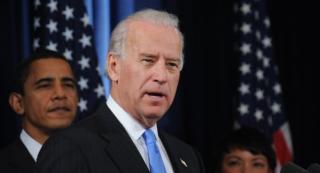
Vice President Joe Biden’s recent controversial remarks on Russia underscore how vulnerable the effort to reset relations will remain so long as it depends more on words and symbols than on concrete actions with tangible results.
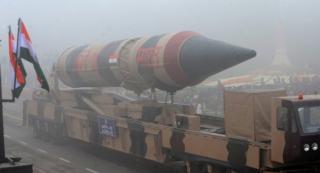
President Obama faces domestic opposition to ratifying the Comprehensive Nuclear Test Ban Treaty (CTBT). Russia can take steps to help the U.S. supporters of the CTBT overcome that resistance.

Chechen leader Ramzan Kadyrov’s consolidation or power, and Moscow’s pre-occupation with Russia’s economic and political crisis will force the Kremlin to reconsider Putin’s policy of appeasing Chechnya.

President Obama spoke brilliantly and powerfully at Russia's New Economic School during his Moscow trip. Unfortunately, few Russians heard his speech or got more than a glimpse of the American president on the television news.
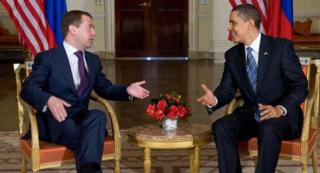
U.S. President Barack Obama made a good start at resetting the relationship with Russia in his first visit to Moscow. He now has to ensure that the American side follows-up on his openings and insist that his colleague in Moscow does the same.
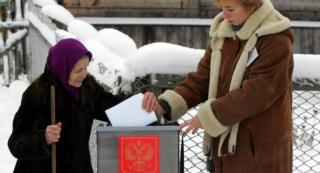
A recent poll showing that 60 percent of Russians support the return of direct elections for regional governors, indicates a growing realization that the authorities are in no condition to fulfill their obligations.

The agreements reached between U.S. President Obama and Russian President Medvedev at the U.S.-Russia summit showcased a great deal of positive rhetoric, but they are unlikely to lead to a substantial improvement in overall relations.