Carnegie Moscow Center

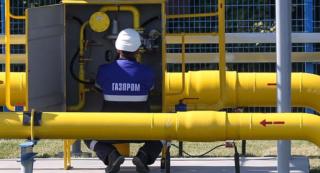
The construction of a new pipeline that will send Caspian natural gas to southern Europe is making Gazprom executives uneasy. Once the pipeline is completed, Gazprom will lose its monopoly in southern Europe and may have to resort to price dumping to stay competitive.
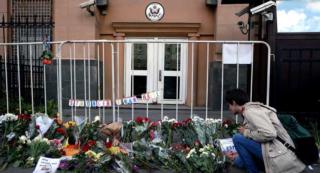
The sympathy expressed by President Putin and the Russian media for the victims of the Orlando attack gives Russia the opportunity to discard its discredited homophobic policies and to attempt a similar offer of rapprochement to the one Putin extended after the September 11 attacks.

The annexation of Crimea in March 2014 fundamentally changed Russia’s political climate: support for Vladimir Putin’s regime rose and remains high, despite a certain cooldown in recent months. Discontent is building but remains far from boiling point, and we are unlikely to see large-scale protest voting or mass rallies in the parliamentary elections this fall.
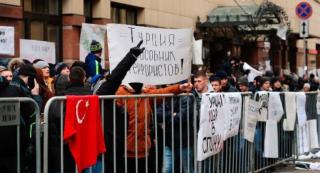
War and terrorism have become increasingly routine facts of life in Russia. Since 2014, this reality has become an essential tool for stimulating popular support for Russian President Vladimir Putin.
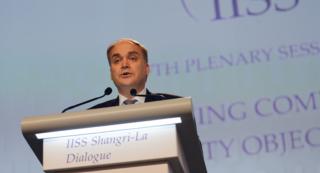
Russia has finally hit on a security agenda of interest to its Asian partners. Buoyed by its success in Syria, Moscow is presenting itself as a standard-bearer in the war on Islamic terrorism and a source of cutting-edge practices for ASEAN countries that are facing this problem. The Syrian campaign is also helping to promote Russian military technology on Asian markets.
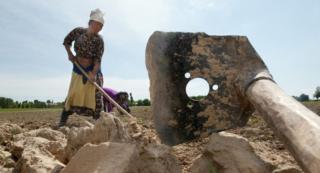
Evidently, most of Uzbekistan’s economic indicators are subject to statistical manipulations, be it a 90 percent voter turnout for presidential elections or refrigerator manufacturing, where a 50-fold increase was reported. In this context, numbers on labor migration out of the country shed more light on the efficiency of Karimov’s economic model than all of his statistical data.
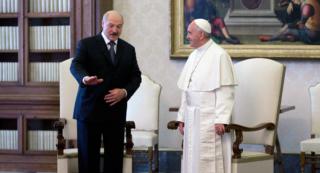
Lukashenko has used a recent audience with the Pope as a way to enhance Belarus’s ties with the West. But the West no longer expects Minsk to be a close ally and to embrace European standards. Instead, it’s expected to be a source of stability. This mismatch in expectations will soon come to a head and the rapprochement will grind to a halt.
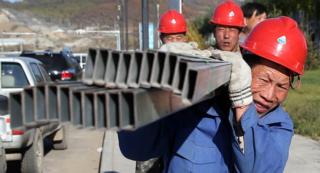
A recent memorandum of cooperation signed by Moscow and Beijing has Russians worried about Chinese “colonization” of the Far East. However, a careful analysis of the situation suggests there is little reason for Russians to fear Chinese industrial expansionism.
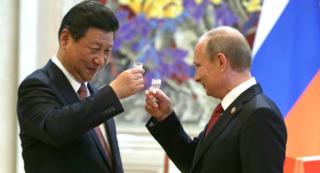
Russia must avoid strictly bilateral relations with Asian countries, even China. All regional relations should be considered part of a broader Asian-Pacific strategy and coordinated to fit that strategy.

The central aim of Vladimir Putin’s visit to Greece was to declare the spiritual unity of two Orthodox nations, Greece and Russia. But Putin’s pilgrimage showed the limitations of that message. Greek Orthodoxy is fully compatible with its democracy and place in Europe.
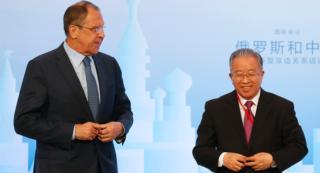
In the last two years the warm friendship between Russian President Vladimir Putin and Chinese President Xi Jinping is perhaps the only reason why large deals are still being made.
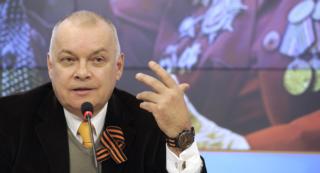
The new propagandists who dominated the Russian media were formed by the experience of the trauma of the 1990s and the loss of the certainties of the Soviet past. Their ideology is a fusion of Soviet and imperial Russian ideas. Its chief intellectual weakness is that it must link Russian success to the failure of the West and democracy.

The primaries have once again highlighted the Kremlin’s domestic policy tactics. First, the administration announces a large project, makes promises, and even begins to deliver on them. Then, fears of failure and loss of control set in, and all work grinds to a halt.
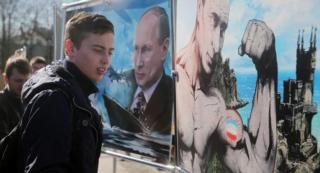
In the absence of open political competition, Putin has built a system of checks and balances within the elite. This system keeps Russia’s elites from pushing for change, as it precludes the possibility of anti-Putin intrigue.
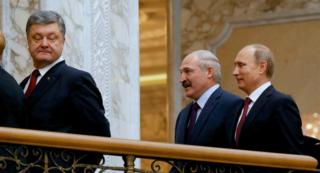
Belarusian leader Alexander Lukashenko has contradicted himself several times on the issue of the status of Crimea. His ambiguities have helped him to maintain good relations with both Russia and Ukraine, and to forge a new relationship with the West.
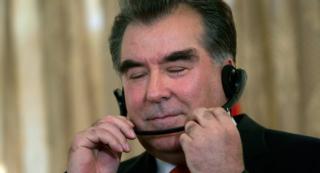
Changes passed in a recent referendum amending Tajikistan’s constitution allow President Emomali Rahmon to run for office an infinite number of times and pave the way for his family to take over the reins of power. The veteran president is adept at protecting his regime and keeping his powerful neighbours at bay.
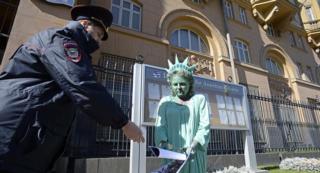
Unlike in the Cold War, the current Russia-United States confrontation is asymmetrical, which carries different dangers. Cooperation will remain limited and Barack Obama’s successor will most likely take a harsher stance on Russia.
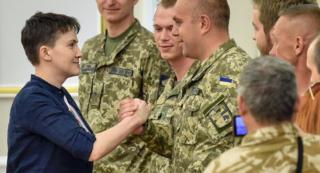
Vladimir Putin’s decision to pardon Nadezhda Savchenko was a purely pragmatic one. Left with no viable alternatives to freeing the Ukrainian pilot, Putin was forced to make a concession that may not sit well with the Russian population, which has come to see Savchenko as a symbol of the “Kiev junta.”
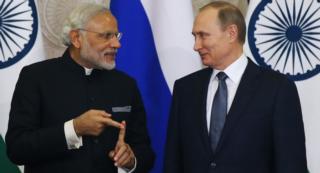
Pakistan cannot replace or even influence Russia’s strategic partnership with India. India will always play a very special role in Russia's foreign policy and Russia is very much interested in keeping the strategic level of its ties with India.
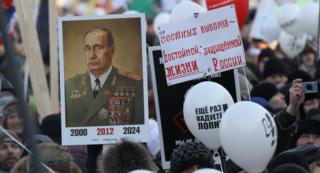
Some Russian experts are predicting that the current Russian regime will last another ten years. Change is inevitable, but no one can forecast what form it will take. In the short term, the trend is for inertia and no change.