Carnegie Moscow Center

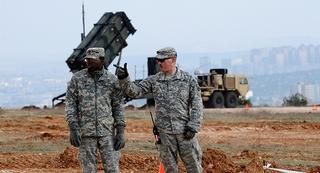
Many of the threats and missions identified in the 2018 National Defense Strategy Summary are similar to those of earlier defense strategies. But the priorities have changed dramatically. The 2018 NDS declares that “interstate strategic competition, not terrorism, is now the primary national security concern,” and the United States is in a “long-term strategic competition” with its main adversaries Russia and China.
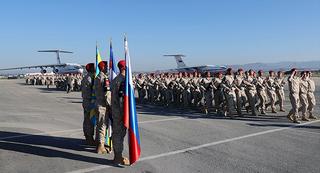
The most memorable developments in Russia’s foreign policy in the past year include a breakthrough in the Middle East; a further escalation of the confrontation with the United States; continued alienation from Europe; and a tactical advance in Asia. Russia has significantly expanded its foreign policy arsenal, but there is still a sharp contrast between the country’s foreign policy ambitions and the limited capabilities of its economy.
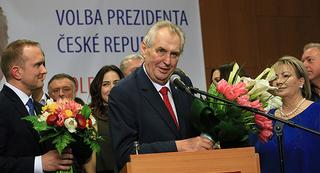
When making pro-Russian statements, the Czech president has domestic policy goals in mind. Zeman wants to demonstrate that he represents ordinary people and is prepared to stand up to the elites. He is indicating that he will put the Czech Republic’s practical interests before abstract universal values, and focus on the national economy rather than empty intellectual discussions.
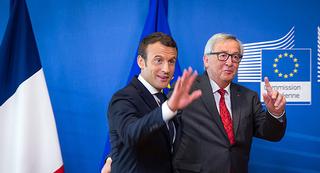
Russia should do its best to stop being one of the threats that the EU takes into account when determining its development trajectory. Long-term modernization and reform programs are long-term specifically because they structure cooperation for decades ahead, building paradigms that are difficult to escape from, even for the mutually beneficial improvement of relations.
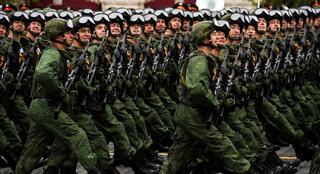
Today, Moscow militates against the global order dominated by a single power – the United States of America.
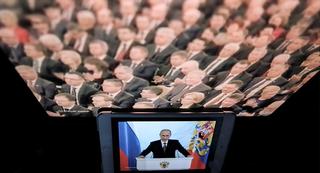
Whatever changes 2018 and 2024 bring to Russia’s leadership, the broader political system will become increasingly depersonalized, making it—rather than the president—the source of stability.
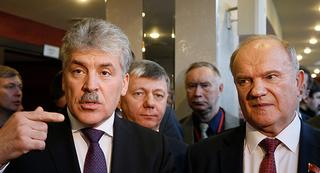
The Communist Party’s new presidential candidate is far from a dull apparatchik. He’s a populist whose criticism of the authorities can appeal to different electoral groups. There has always been a demand for populism in Russia. If Pavel Grudinin can run an effective campaign—and his previous political experience suggests he can—it could lead to serious changes in the Russian political landscape.
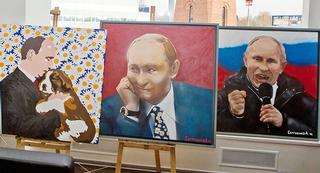
Do not expect modernization after Putin’s 2018 reelection. Instead, the system he built will function on autopilot as the Russian leader continues to lose direct control over events, ideas, and actions. But that doesn’t imply democratization. In essence, the head of state finds himself chained to the galley that he built himself.
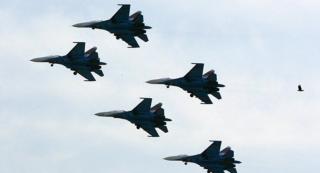
Since February 2014, the Russian leadership has been in a de facto war mode with regard to the United States.
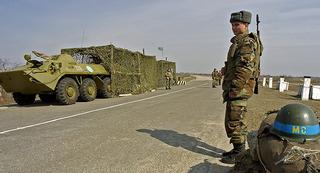
Moldova may appear to choose a geopolitical direction in the 2018 elections. A victory for the Socialists will be interpreted as a win for Moscow. Conversely, victory for either Plahotniuc’s or Sandu and Nastase’s followers will be trumpeted as a win for pro-Western forces. In either case, it is unlikely that the 2018 election will alter the fundamental divisions and balance in the Moldovan population. Only real reform, economic growth, and an end to the endemic corruption are likely to change that enduring reality.
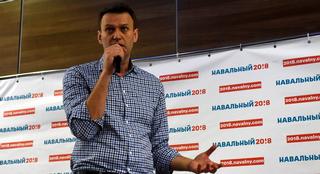
Most of Navalny’s economic proposals are seriously concerning and evocative of left-wing populist slogans. The policy platform contains outright errors, but its greatest problem is that it attacks all vocal parts of society in favor of a mythical “people.” Attracting voters with such a platform will prove to be difficult.

The Russian court system paralyzed itself a long time ago. It doesn’t need outside experience; it doesn’t need experienced lawyers. It needs efficient personnel who know how to follow orders. The average judge renders a not-guilty verdict once every seven years. Judges understand that such a verdict will always be repealed and the repeal of a sentence is a stain on a judge’s record that could lead to penalties and even dismissal.
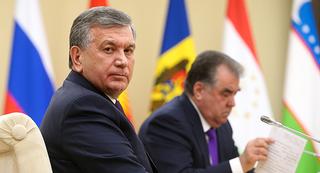
Tashkent is trying to get across the message to its neighbors that economic prosperity is the key to everything, and that this goal is worth forgetting other petty grievances and putting major problematic issues on hold. By proposing the development of unified approaches to the joint exploitation of transboundary rivers, the integration of the national economies of countries in the region, and the development of cross-border trade, Uzbekistan hopes that it can fashion a new format of cooperation with Central Asia’s other republics.
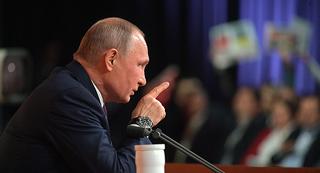
Vladimir Putin is sending out signals about how he sees his fourth presidential term. Domestic initiatives are not a presidential priority and will be dealt with at the technocratic level. In the political sphere, the real threat to Putin’s power comes from the moderate opposition. Above all, there is to be no more democratic window dressing. Preparations are well under way for a new act.
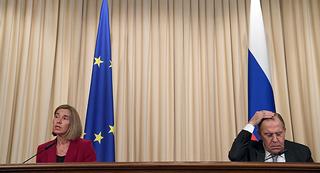
There are signs that the EU and Russia are managing their relations better in their common neighborhood. Neither has achieved its ambitions in countries such as Georgia, Moldova, and Ukraine. Although a “grand bargain” is not possible at the moment, the two sides have a common interest in halting a deterioration in relations.
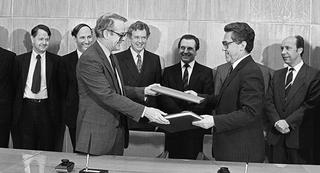
Russia is neither doomed to have adversarial relations with the West nor destined to have friendly ones with it: it is all in the hands of policymakers who need to learn, also from their own mistakes. Anatoly Adamishin’s book provides them with a rich body of experience to work from.
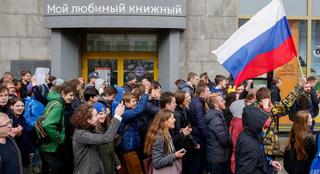
Russians do not express an overwhelming desire for change. Few understand how it could occur in their country. But most recognize that Russia cannot move forward without reform.
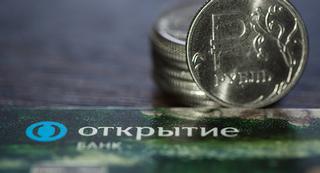
Russian banking system needs a supervisory authority independent of the central bank. Retail banks should be prohibited from investing in non-liquid assets, while the liquid securities market should be saved for investors
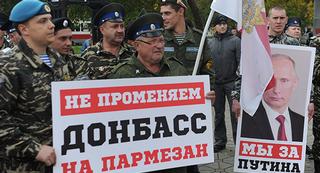
The establishment of independent Ukrainian and Belarusian statehood facilitates the development of Russia’s own national project, which is oriented towards the future, rather than towards the restoration of the past. Its key foreign policy feature is real sovereignty and the freedom of geopolitical maneuvering.
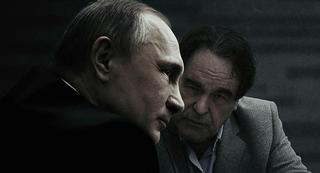
As it aspires to join the elite world club of equal sovereigns, Russia cannot but notice an important fact that no such club actually exists. The simple reason is that the club’s membership is conditioned on mutual transparency and permeability of sovereignties and correlation of sovereign actions with the values understood as the red lines in what one says and does.