Carnegie Moscow Center

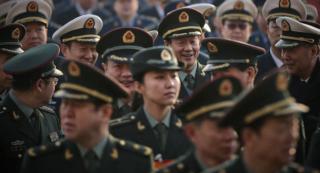
According to Russian military experts, the new S-400 missile system can reach distances of up to 400 km. This range signifies a fundamental change in the rules of the game in Taiwan and the Senkaku Islands, two potential hot spots where China is involved.
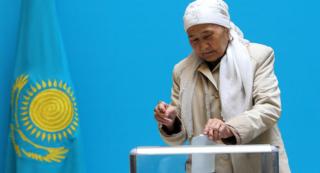
There is no doubt that Nursultan Nazarbayev will win Kazakhstan’s early presidential elections. He will stay in power for an indefinite number of years to come, and the country will implement its planned reforms under his patronage.

In order to keep the ranks closed and to sustain the Stockholm syndrome of the fortress’s defenders there must be constant discoveries of “a fifth column” and “national traitors.” That’s the only sense in which Russian authorities need liberals.
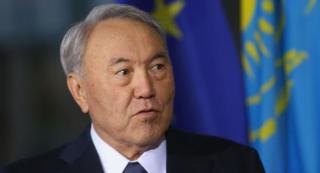
The most pressing threat to Kazakhstan’s stability may turn out to be Nazarbayev himself. He is an elderly man who also reportedly suffers from cancer and he has no clear successor.

Russia’s current president is not planning on staying at the helm forever, since he is not ready to raise the retirement age. His inaction will destroy Russia’s economy, at the very latest by 2030.

The solemn day of April 24 is approaching, when Armenians will mark the centenary of the tragedy that befell their nation in 1915, known as the Armenian Genocide.
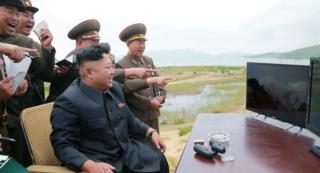
Unlike Tehran, Pyongyang fears external threats more than internal ones and may at most agree to freeze its nuclear program. Though this scenario is arguably the best one imaginable, political considerations in Washington make it all but impossible.
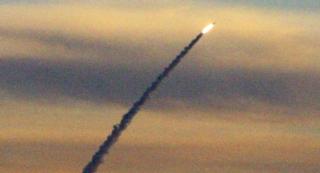
The tensions in Russian-Western relations will not lead to a direct collision between Russia and NATO. The current surge of mutual psychosis has no relation to the military security.
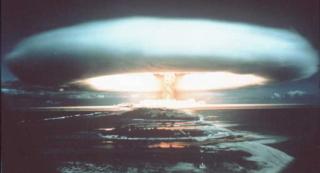
The Ukrainian crisis has threatened the stability of relations between Russia and the West, making it all the more critical for Russia and the United States to talk, to relieve the pressures to “use or lose” nuclear forces during a crisis and minimize the risk of a mistaken launch.
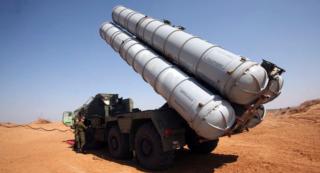
Vladimir Putin’s decision to lift a ban on the exports of the S-300 air defense missile system to Iran has caused shockwaves in the West and Israel. However, the Kremlin’s move was quite predictable with a rather clearly discernible logic behind it.
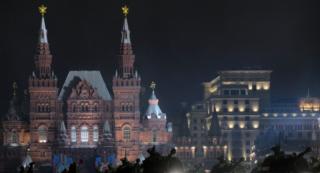
On May 9—the Victory Day—the majority of top-level visitors will come to Moscow from the non-Western countries. Russia’s quest for acceptance in or by the West is finally over, and its foreign policy will require a new identity and new orientation.
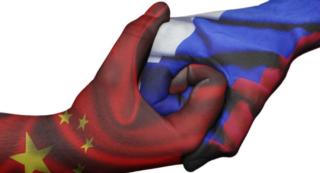
The Sino-Russian entente—with its unstated, but transparent goal of reducing U.S. global dominance—is easily the most important result of the Ukraine crisis and the preceding deterioration of Russian-Western relations. The West needs to take this seriously.
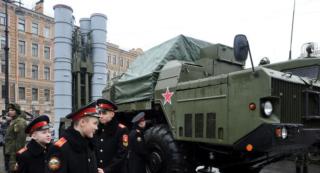
President Putin’s decision to lift the ban on the transfer of the S-300 air defense system to Iran signals a new departure for Moscow’s policy in the Middle East.
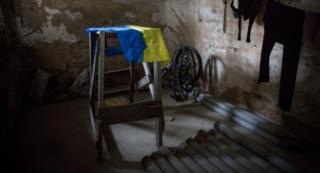
The fact that the process of prisoner exchanges is still incomplete after months of fits and starts volumes about the messiness of the situation in eastern Ukraine.
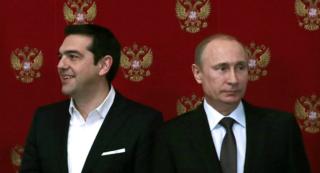
The Ukraine crisis has made Europeans see Greek foreign policy as particularly threatening and divisive. In reality, Greece is simply acting in line with its long-standing political traditions. The question of European unity still lies in the hands of Brussels and Berlin.
Civil society now plays an outsized role in Ukrainian politics.

To avoid a dangerous meltdown in Ukraine, the West must lean hard on Kiev in support of economic and political reform.
Russia is tilting toward China in the face of political and economic pressure from the United States and Europe. This does not presage a new Sino-Russian bloc, but the epoch of post-communist Russia’s integration with the West is over.
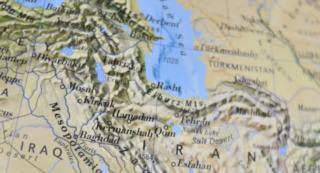
It will take Iran a long time to make up the ground it has lost in the South Caucasus since the end of the Soviet Union.

There is little reason to believe that the Russian middle class will react to the ongoing financial and economic crisis with protests or renewed calls for change. Instead, it seems almost certain that it will opt for strategies of survival and perseverance.