Carnegie Moscow Center

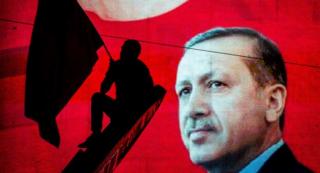
Although Russian officials were initially shocked and concerned about the military coup in Turkey, it has in fact given them a formula for strengthening their gradually declining regime: all they have to do to restore their vanishing legitimacy is declare themselves defenders of democracy.
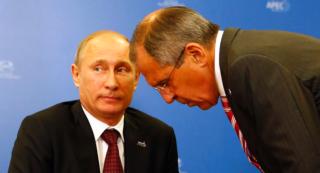
Russian society should pay more attention to the Kremlin’s foreign policy agenda and have a better understanding of the nation’s actions abroad. Russia should identify itself as a Euro-Pacific country rather than a Eurasian country as it seeks out new opportunities to become better integrated in the globalized world.
The Russian electorate has regressed in its demands and gullibility to where it was in the early 1990s, when firebrand politician Vladimir Zhirinovsky had his first success. Russian society has a soft spot for wisecracking politicians who give populist speeches and bash the government, even if they tend to contradict themselves.

The Russian government has ambitious plans to rebuild the country’s aviation industry. Despite state subsidies for manufacturers, leasing companies, and buyers, however, Russian planes aren’t selling abroad—even in countries like Iran, with which Moscow has strong political ties.
In the current Russian political climate, ethical reasoning is no longer a recreation but a necessity. Although the country is stuck in a moral quagmire, a new system of ethics is being born—through contrariness.

The “Yarovaya laws” threaten to undermine the core principles of Russian criminal law. With the Criminal Code stripped bare and the revival of a number of notorious Soviet legal principles—including the ability to hold people criminally responsible for withholding information—legal textbooks will soon have to be rewritten.

Russian foreign policy is so fixated on the idea of equal partnership that it has lost sight of the pragmatic tasks of how to benefit from the partnership with China most effectively and with minimal risks.
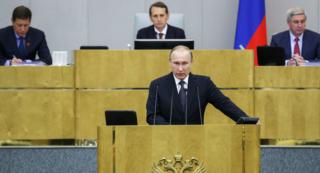
Putin’s address was deeply conservative in content and artfully liberal in rhetoric. He frames being elected to the Duma as being elevated to the ranks of the chosen few. The right to be a Putinist is celebrated, and it’s out of the question that the institution might let in “irresponsible forces”: real threats to power.
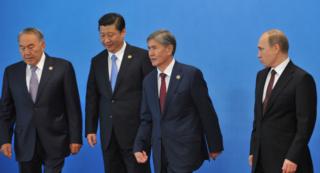
Moscow should stop thinking of the other members of the Eurasian Economic Union as junior partners. Russian and Central Asian weakness vis-à-vis China should inspire consolidation and cooperation rather than competition.

The timing of the very public arrest of Kirov region governor Nikita Belykh for corruption is opportune: the Duma election campaign is about to start, and the fight against corruption will be useful. Belykh—a liberal in government—is a convenient target: he held a prominent position and yet he was extraneous to the overall political system
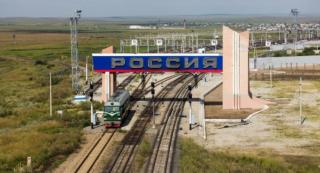
Facing sanctions from the West after the annexation of Crimea, Russia has reoriented its economy toward China. The results of the shift are mixed, but if trends continue, Moscow is likely to drift further into Beijing’s embrace. An asymmetrical interdependence is emerging, with global implications.
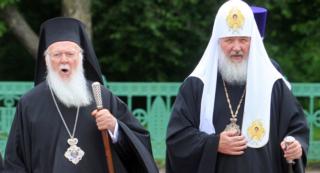
Refusing to participate in the Pan-Orthodox Council is the most hapless and helpless choice possible, and the actions of the four churches are a fairly explicit nod to Orthodox fundamentalists who dismiss the council as iconoclastic and ungodly and say that the main objective of the Greeks is to “codify the heresy.”
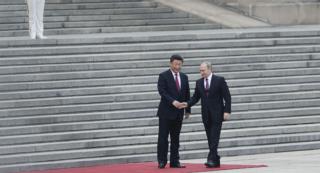
The growing Sino-Russian partnership is spurred not only by growing anti-Americanism, but more importantly by Russia’s quest for external economic support to keep the regime afloat in the wake of Western sanctions.
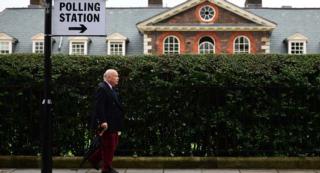
The Kremlin is enjoying the discomfort that Brexit is causing to the European Union. But that does not mean that it wants Europe broken up. It just wants a return to old-fashioned bilateral diplomacy.
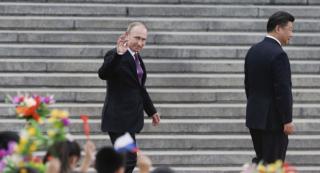
The Moscow-Beijing partnership is stalling. But Xi is winning over the Russian president’s inner circle with favorable loans and sweetheart energy deals.
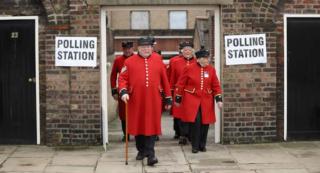
The vote to Leave was mainly a protest vote. It was the vote of people who hated “Brussels” and the European Union, but hated London and the international financial system just as much. The black irony of this is that it is precisely the social category of working-class protest voters who are likely to suffer when Britain loses the privileged access it currently has to the EU’s single market.
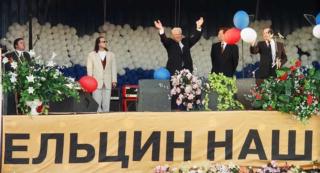
Boris Yeltsin’s reelection in 1996, hailed as a triumph of democracy, now looks like a Pyrrhic victory. The means by which the process was manipulated set a precedent for the Putin era.
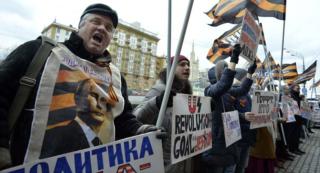
Relations between Russia and the West have deteriorated to levels not seen in a generation. Both Russia and the West accuse each other of making provocative moves, disrupting the balance, and violating each other’s interests.
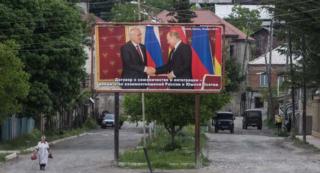
A referendum on South Ossetia’s incorporation into the Russian Federation has been postponed until after the presidential election in the region due in early 2017. This means that there is still a large question mark over the optimum relationship between Russia and South Ossetia.
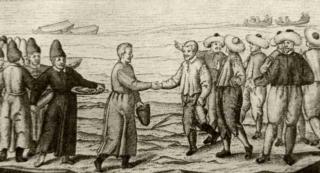
Trade relations between the EU and Russia will likely remain stable for many years, even as the overall volume of bilateral trade gradually contracts. The EU will grow less dependent on Russia for energy security, while Russia will become less reliant on European finance, industry, and infrastructure.