Carnegie Moscow Center


Current political trends could have a significant impact on Russia’s future development. Russia in 2020: Scenarios for the Future analyzes the potential impact of these trends.
Some forecasting models predict that incumbent U.S. President Barack Obama has a good chance of winning the November 2012 presidential election, while other methods predict his defeat.
After the presidential election, which Vladimir Putin won, a significant portion of the population doubts the legitimacy of the election results. These doubts will contribute to the rise of social and political movements in Russia.
As Vladimir Putin prepares to return to the presidency in the 2012 elections, the prospects for Russia’s future are unclear.
On October 31, 2011, the world population reached 7 billion. However, for most of the post-Soviet nations, population levels have been declining.
Putin’s political centralization, a declining economy, and an increasing popular skepticism leaves large questions surrounding Russia’s future direction.
The fall of the Berlin Wall in 1989 ushered in a time of momentous social and political change, including in Russia, but Russia’s development followed a different path than that of many Eastern European countries.
Russia faces a range of challenges as it attempts to modernize and effectively use its power on the global stage in the coming decade.
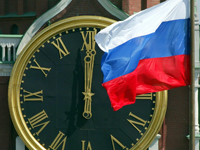
Modernization is one of the Kremlin’s stated priorities, but Russia faces a number of challenges as it seeks to modernize its economic and political processes.
The consequences of the Georgia-Abkhazia, Georgia-South Ossetia, and Georgia-Russia conflicts pose problems for each of the parties involved. There is an obvious need to adopt a plan to strengthen mutual trust and prevent further bloodshed in the region.