Carnegie Moscow Center


The tense relations between the Muslim world and the rest of the world remain one of the biggest problems in global politics today. Moving forward, both sides must work together to recognize the inevitability of conflict and seek avenues for peaceful mitigation.
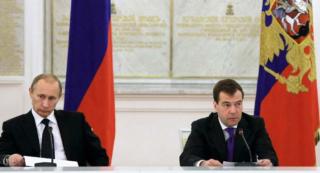
Despite improvements in the March elections, the Kremlin maintains close control over the political process, resulting in elections that were far from truly free and fair.

The Russian authorities succeeded in working with the public to prevent large-scale protests from taking place on the “Day of Anger,” but their newly found willingness to compromise has yet to lead to change at the systemic level.

When the Middle East Quartet meets in Moscow, they will most likely devote their time to looking for ways to influence the parties involved rather than trying to settle the actual conflict.

U.S. Secretary of State Clinton leaves for Moscow for a Quartet meeting on efforts to revive Israeli–Palestinian peace talks. She will also meet with President Medvedev to address the bilateral agenda, not least the successor agreement to START and Iran's nuclear program.

Given the reset in U.S.–Russian relations, the time is ripe for the United States, Europe, and Russia to devise a security architecture for a new century—one capable of maintaining peace and stability on the European continent throughout the years to come.

The individual freedoms and economic freedoms achieved during the perestroika years still exist in modern Russia, but the democracy sought by Gorbachev and his allies has been replaced by a paternalistic state.

The March elections in Russia were more honest and transparent than those held in October, but they were still not open; independent and opposition candidates were once again denied the right to run.

While the coastal states of Asia tend to garner the most attention internationally, developments in the continent’s interior can play a major role in the stability and security of Asia as a whole.
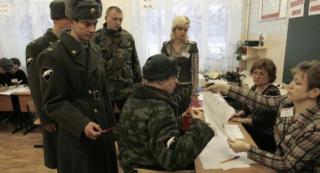
The upcoming Russian regional elections could prove to be a milestone in shaping the nation’s political landscape if voters use the opportunity to voice their concerns over widespread electoral fraud and express their lack of confidence in the Kremlin.

The conditions in Russia and the state of U.S.-Russia relations today are more hopeful for positive cooperation than at any time in the recent past, particularly in the fields of technology and innovation.
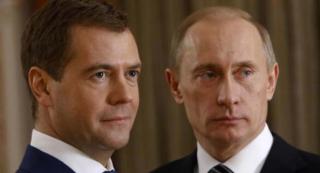
By the beginning of the twenty-first century, Russia had recovered from its domestic crisis, and so had its global ambitions. While Moscow’s principal interests still lie mostly toward the West, the Middle East is back on Moscow’s radar screen and Russia’s withdrawal from the region has been reversed.

While autocratic governments that incorporate elements of democracy may be stable in the short term, such systems cannot be sustained in the long term. In Russia’s case, the system is unlikely to survive Putin himself.
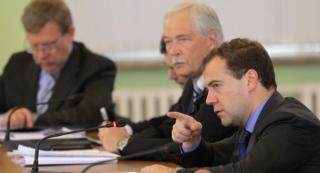
Systemic reform of the Russian Interior Ministry will require more than President Medvedev’s recent order to dismiss eighteen high-ranking police officials and to halve the ministry’s head office. Staff reductions are not enough to address the fundamental flaws that plague the institution.
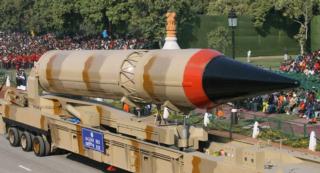
More than ever, preventing nuclear weapons proliferation requires cooperation among the United States, Russia, and China, plus emerging powers. To achieve this cooperation, measures must be crafted to uphold the bargain between disarmament and nonproliferation.
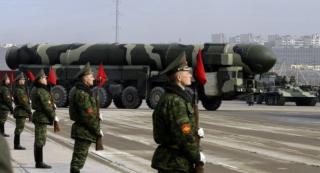
While Russian leaders support the idea of a world free of nuclear weapons in theory, the Russian security community is still committed to the principle of nuclear deterrence.
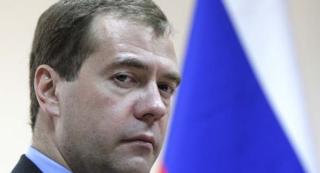
Recently, calls for Prime Minister Vladimir Putin’s resignation were heard at rallies in different parts of Russia. Although unrelated, these gatherings underscore the growing cracks in the Kremlin’s political system of centralized power, opaque decision-making, and unaccountability.

While the U.S. policy on Afghanistan has been accused of inconsistency, recent events suggest a comprehensive policy is taking shape, one that takes into account transformations in the threats the country faces.

Recent arguments against a withdrawal of U.S. nuclear weapons from Germany are based on anachronistic perceptions regarding NATO’s nuclear weapons capacity, but bring up important points concerning broader implications for nuclear disarmament.
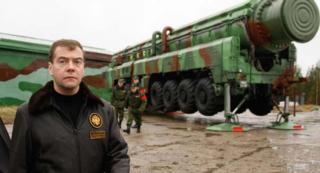
A treaty to replace the expired START agreement is an essential step not only toward global nuclear disarmament, but also toward managing the risks associated with Russia's nuclear arsenal, which still poses the single greatest existential threat to the United States.