Carnegie Moscow Center

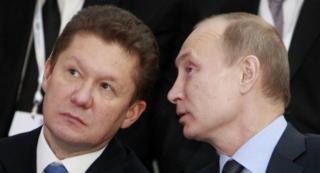
It appears that the playing field may already be shifting dramatically regardless of the status of Ukraine’s relationship with the Customs Union. Who in the Russian and Ukrainian oligarchic structures stands to lose the most after the EU Eastern Partnership summit in November?
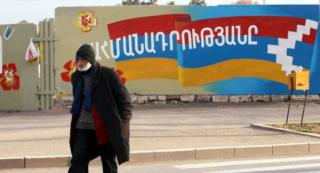
The dispute between Armenia and Azerbaijan over the territory of Nagorno-Karabakh is similar to that in the Middle East in many ways except that it is more likely to be resolved if it is paid some high-level international attention, particularly from the United States.
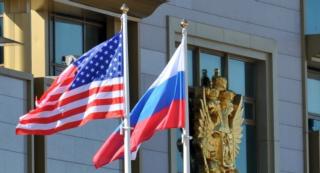
U.S. President Barack Obama’s cancellation of the summit with Vladimir Putin is a turning point in U.S.-Russia relations. Obama, who once told the Russians he would be more flexible after the elections, has proven to be the opposite.

Russia is still a country without a nation. Nation-building from above is reduced to symbolism and will not succeed. Time has come for round tables of representatives of various interest groups and ideologies to start the process of nation-building from below.
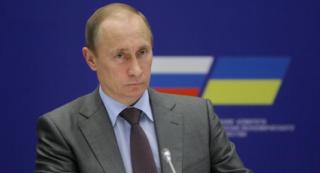
By shifting gears abruptly from professions of eternal brotherhood with the Ukrainian people to what amounts to a trade war, Vladimir Putin effectively works at cross-purposes with himself.
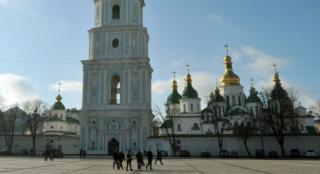
While analysts are trying to predict whether Ukraine will go East or West, the country is standing still. On August 14, 2013 Moscow made Ukraine’s choice easier by starting yet another trade war.
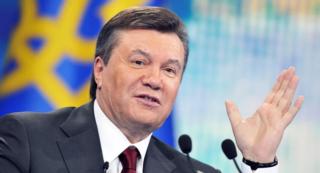
Viktor Yanukovych can be expected to do his best to play with both giants, while Russia will proceed with its combination of pressure, threats, and promises; and Europe will struggle between losing Ukraine to Russia and compromising on its principles.
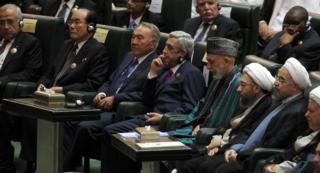
As the U.S. troop withdrawal approaches, Washington should consider how improving U.S.-Iranian relations can further its long-term goals in Afghanistan and the region.
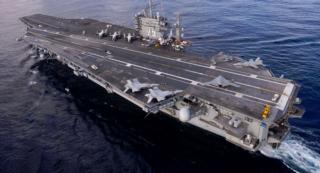
As India celebrates the launch of the Vikrant, the much delayed first indigenous aircraft carrier, Delhi is not the only one in Asia focused on the virtues of airpower at sea.
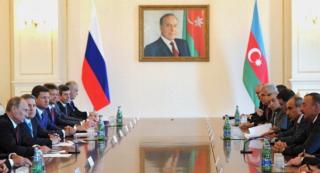
Vladimir Putin’s one-day visit to Baku on August 13 was fertile ground for Kremlinological speculation. The formal part of the negotiations revealed very little. It is more productive to focus on who was not in Baku and what was not said.

FEMEN is one of the most recognized Ukrainian cultural exports of the age. These topless protesters have been making headlines with their unique approach to challenging traditional patriarchal entities.
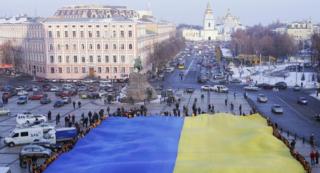
Viktor Yanukovych will try to balance between Moscow and the European Union. Continued hesitation would mean unavoidable crisis in Ukraine’s obsolete economy. Such crisis would be Ukraine’s moment of truth: either go begging to Moscow or start carrying out the painful reforms.

Ukraine is facing a choice: join with Russia, Belarus, and Kazakhstan to form a Eurasian economic union, or associate itself more closely with the European Union. The Eurasian option carries strong emotional overtones of rich shared legacy and promises immediate economic benefits. The European option offers an association and “deep free trade” with the world’s biggest and richest economic entity.
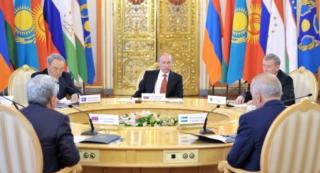
Membership in the Customs Union may be extended to other former Soviet countries: Kyrgyzstan, Tajikistan, and Armenia. The changes resulting from such expansion will be minimal. To make a real difference, the union must include Ukraine and Uzbekistan.
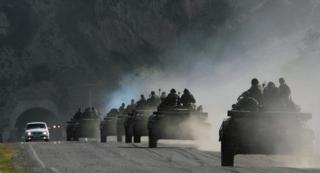
“Returning to Europe” is meaningful for Georgia. The Russian option is but a threat.
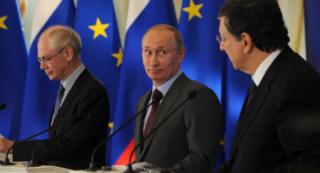
Despite the similarity of their names, the European Union and the Eurasian Union are fundamentally different projects, one based on pooling sovereignty, the other on reasserting Moscow’s economic primacy in its neighborhood.
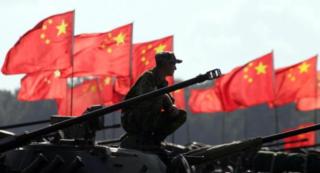
A Eurasian military alliance—even the potential for one—should trigger serious discussion about future armament policies, diplomatic relationships, and even conceptions of the world order.

The cancelation of the U.S.-Russian summit marks the formal end of Barack Obama’s reset policy. The reset may be followed by something which can be called counter-reset: a policy of applying more pressure on Russia.
How realistic are the plans to build the Eurasian Union? Countries unite in order to pursue common aims, and Moscow will come to the point when it has to use the stick and carrot approach to persuade its partners to stay under the common roof.
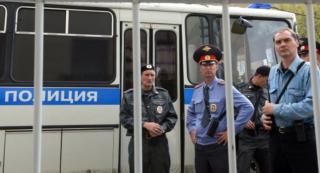
After abandoning the Soviet Union, Russia prolonged and reproduced the same basic system, but without communism. In comparison, Ukraine is on the positive side of the process of taking shape as a state and a nation.