Carnegie Moscow Center

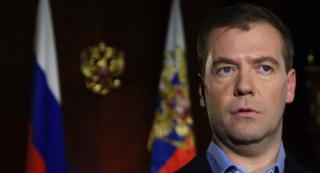
When Prime Minister Vladimir Putin and President Dmitry Medvedev switch places in March, Putin will have the opportunity to consolidate his leadership as president, while the prime minister will be forced to take responsibility for unpopular decisions by the next government.
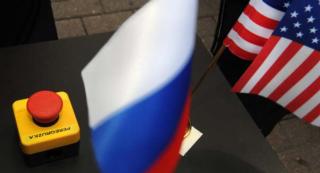
Putin’s return to the Russian presidency will not undo the U.S.-Russia reset, but it will change the dynamics of the relationship between Moscow and Washington.
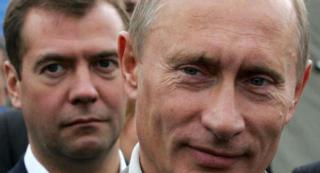
Putin’s new term will largely bring a continuation of the status quo and while his grip on power will arouse anxieties in the West, he will not undo the U.S.-Russia reset.
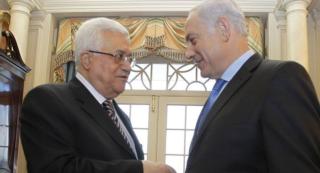
Europe could play a leading role in the Israeli-Palestinian peace process if it musters the political courage to apply its own foreign policy values to the Israeli-Palestinian arena.

Europe must think and act in a unified strategic manner if it wants to save its struggling currency and strengthen its military and government capabilities.
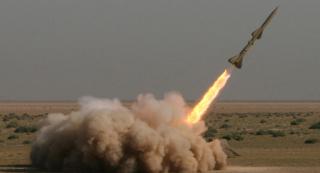
While theoretically terrorists could use missiles stolen from armed forces to target space satellites, the risk of such space terrorism remains small because terrorists don’t have enough resources to carry out such attacks.
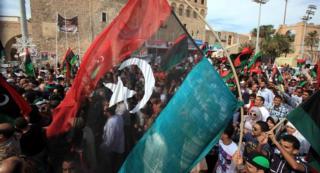
As Libya's new leaders look to consolidate control, domestic and international attention is turning to the process of building a government that is more democratic, representative, and stable.
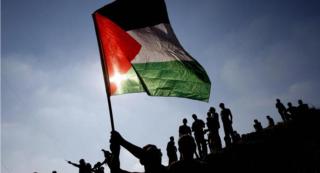
While the Palestinians enjoy broad international support for their statehood bid, there are concerns that a UN vote could inflame tensions and ignite violence at a time of regional upheaval.
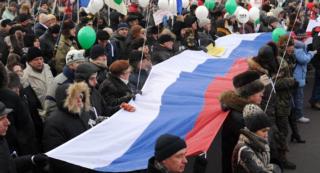
In Russia, an increasing number of personnel changes are taking place in anticipation of the upcoming presidential election in March.
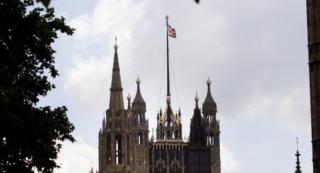
British Prime Minister David Cameron’s visit to Moscow resolved few of the fundamental issues afflicting UK-Russian relations. Yet by moving the relationship on beyond politics, the visit proved to be a rather useful one.

One year after 9/11, seventeen Carnegie experts assessed the significance of the attacks and their aftermath. Ten years after 9/11, the same Carnegie experts revisit their original findings and analyze the impact of the historic moment.
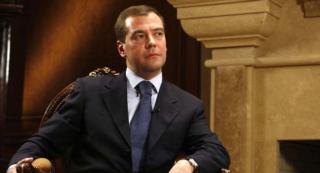
Moscow’s evolving policies toward the Nordic-Baltic region are an important part of Russia’s larger approach to Europe and the Atlantic community.

A decade after September 11, terrorism has not undermined the foundations of modern society, but it has forced people in Europe and America to take a closer look at Islam and has helped draw people in the Arab countries into the global processes.
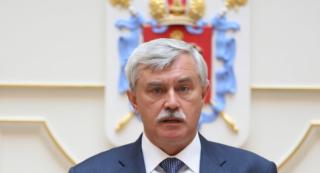
The political logic behind the decision to replace St. Petersburg Governor Valentina Matviyenko with Georgy Poltavchenko, the non-charismatic presidential envoy to the Central Federal District, remains unclear.
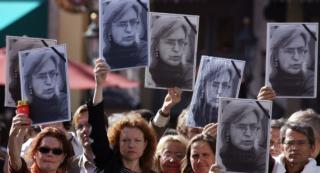
The mysterious assassinations of prominent politicians and journalists over the past fifteen years suggest that Russian state security may still be involved in politically-motivated crimes, even if they are not directly ordered by the country’s leaders.

On the twentieth anniversary of the closure of Kazakhstan's nuclear site Semipalatinsk, it is important to recognize the role the former weapons testing facility plays in strengthening the verification regime of the Comprehensive Test Ban Treaty.
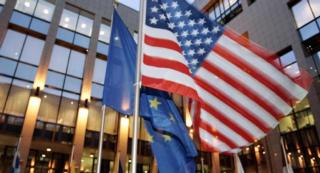
Today, the big economic risks come not from the United States, but from European countries struggling to figure out a long term solution to sovereign debt and the weak institutional underpinnings of the euro.
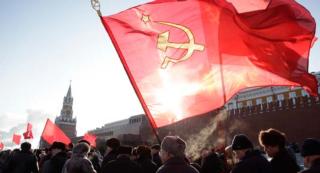
Twenty years after the disintegration of the Soviet Union, Russia’s disinterest in its former empire has been matched by the other former Soviet republics distancing themselves from the former imperial center.
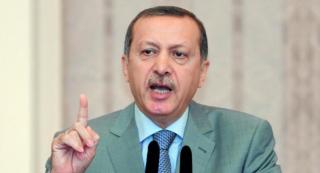
Turkey’s approach to regional tensions and other looming security challenges is shaped by its deep commitment to building stability and cooperation in its neighborhood and the wider Euro-Atlantic community.
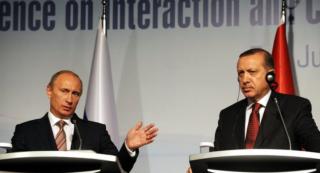
As Ankara’s perception of Moscow as a geopolitical opponent and threat to Turkish interests diminishes, bilateral Russian-Turkish relations are on an upward trend.