Carnegie Moscow Center

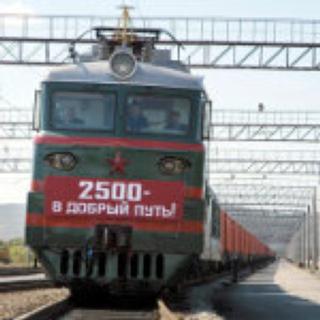
Russia’s accession to the WTO—which would benefit both Russia and the global trading system—has been stalled since June. To move forward, Russia must clarify its accession plan and prove its commitment to the WTO.
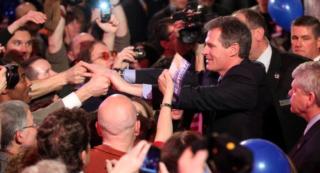
Republican Scott Brown's victory in the United States is an event of both national and international significance. The Democrats have lost the qualified majority needed to pass bills and ratify international agreements without holdups.
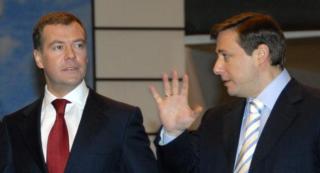
The appointment of Khloponin as envoy for the new North Caucasus Federal District is an attempt by Moscow to tackle growing instability in the region. But while Khloponin has strong business credentials, he lacks experience in federal governance.
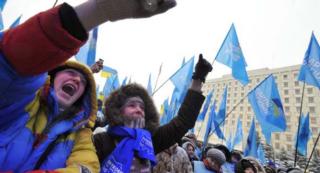
The first round of the Ukrainian presidential election brought no particular surprises. Regardless of who wins in the second round, Russian-Ukrainian relations will get a positive new boost.
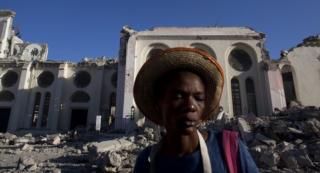
Haiti can become a model for how the global community can help prevent future natural disasters from becoming megadisasters by providing Port-au-Prince with essential infrastructure and early-warning technologies and regional and international disaster response training.
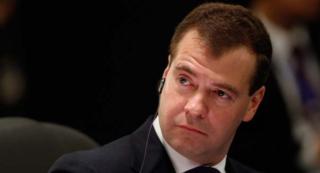
Medvedev’s recent gubernatorial nominations demonstrate both the Kremlin’s support for existing governors who have supported regime policies in the past as well as a new model for nominations that fills gubernatorial posts with members of the local political elite.
The Central and East European states integrated into liberal Europe because their ruling elites were able to reach a consensus, and because the European Union readily accepted them. By contrast, Russia has reverted to personalized power.
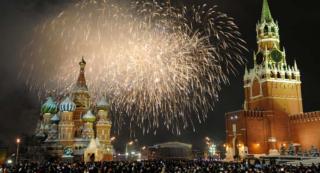
Russian policy makers need to open space for public debate and engage in substantive discussions on critical global issues, and Western governments and institutions need to open the door to independent Russian voices.
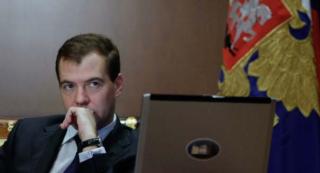
At some point Putin and Medvedev will have to decide between giving priority to the survival of the current system and accepting Russia's steady marginalization, or supporting modernization by opening up the system and putting its survival at risk.
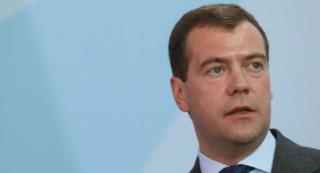
Russian President Dmitry Medvedev's proposed European security treaty has its flaws, but it is a first step toward an important conversation that must take place if a viable and undivided Euro-Atlantic security space is to be created.
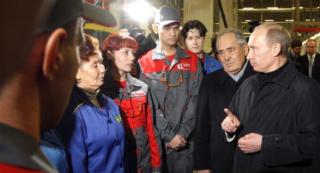
To the dismay of Russian reformers, a consensus seems to be growing among Western policymakers and intellectuals that Russia is not ready for liberalism and that there are even certain advantages to dealing with the illiberal political order built by Prime Minister Vladimir Putin.
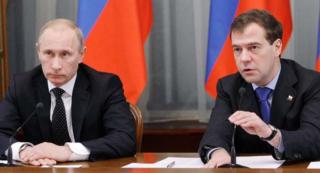
To dismiss Medvedev as a mere Putin puppet would be a mistake; Medvedev was chosen to recruit an internet savvy and generally more liberal Russian constituency to the Kremlin’s program of conservative modernization.

Although Putin has the coercive power of the state firmly in hand, Medvedev plays an important role in the governance of Russia, and his appeal to a younger, generally liberal demographic is key to the Kremlin’s goal of conservative modernization.
A broad array of military, political, and legal issues exert an increasing influence on the issue of nuclear nonproliferation, and they must be taken into account in any effort to strengthen the nonproliferation regime.
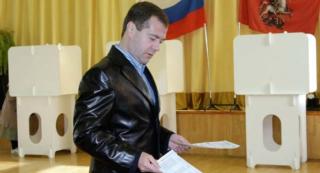
A new procedure in Russia’s gubernatorial elections that allows the party dominating the regional legislature to nominate gubernatorial candidates only perpetuates the worst problems of the previous system of appointments.
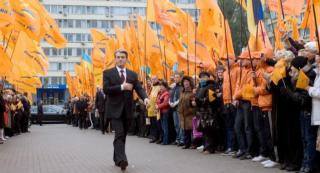
Whoever wins the upcoming presidential election in Ukraine must lead a country divided by identity issues and hit hard by the global financial meltdown, while maintaining a delicate balance between Western integration and Eastern cultural roots and affinities.

President Obama has had some major accomplishments in the past year, but serious challenges still lay ahead: strengthening the nonproliferation regime, climate change, Israeli-Palestinian conflict, Iran, and Afghanistan.

As the war in Afghanistan begins to enter a new phase, it is important to reexamine some of the premises of U.S. policy in the Central Asian region and to consider whether the conditions in the region have changed in the last decade.
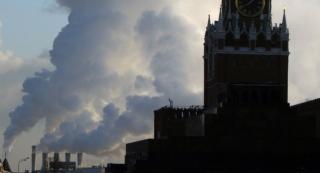
As the world headed to Copenhagen to talk about climate change, Russians were largely silent on the subject; by most accounts, the average Russian citizen doesn’t think about global warming at all.
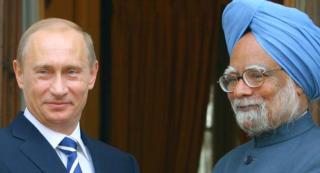
Clearly it is in Russia's interest, while maintaining its strong positions in India, to search for a way to move beyond the traditional spheres of cooperation, in order not only to maintain the strategic nature of their bilateral relations in the long run, but, using these relations, to enhance the innovative character of its own economy.