Carnegie Moscow Center

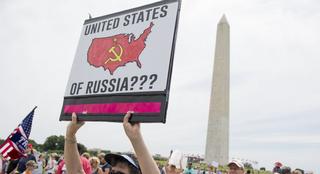
Russia’s interference in American and European elections constitutes a serious offense. But by treating Russian President Vladimir Putin and his cronies as an existential threat, Western leaders are playing directly into the Kremlin’s hands, and validating its false narrative about Russia’s place in the world.
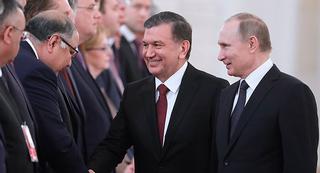
President Shavkat Mirziyoyev is growing closer to Uzbekistan-born Russian oligarch Alisher Usmanov, who could help the president solidify his power as he continues to struggle against the Uzbek National Security Service (SNB) and its chief, Rustam Inoyatov. However, any belief that oligarchs will help modernize Uzbekistan is naïve. They will simply assume the power once wielded by the SNB.

Russian new regional governors are being given a version of Western-style management training perfected by Sberbank boss German Gref. They are like managerial special ops forces deployed behind enemy lines by Moscow.
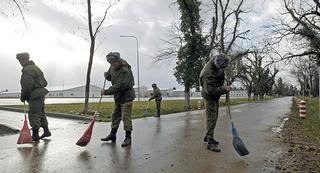
Russia and the West have a choice in the South Caucasus. They can either treat the situation in Abkhazia and South Ossetia as being isolated from other conflicts—such as those in the Donbas and Transdniestria—or they can use it as an additional argument in their overall confrontation.

Ksenia Sobchak’s run for the Russian presidency is not meant to siphon votes away from Alexei Navalny. The Kremlin’s aim is to create a pseudo-opposition, which will channel the discontents of the liberal urban electorate.

Russians are surprisingly interested in the developments in Catalonia. Oddly enough, the running theme here is related to democracy. “Incompetent” democracy results in instability, so Russians take pity on the Spaniards and Catalonians: they no longer have the kind of stability that Russians do. The price of stability, however, is not up for discussion. Among other things, this approach contributes to sustaining the negative trend in relations between Russia and the EU.
The non-system elite makes a mistake by still treating Putin and the formal state as one and the same. We are witnessing a new era in which the powerful and ambitious non-system elite will face a solid, technocratic, and emotionless power vertical stuffed with “little people.” Putin’s associates will have to learn to adjust, or they’ll find themselves in deep trouble.
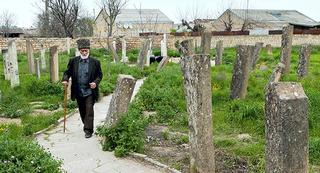
Recent speculation that Russia wants to topple the “traditional” clan system in the North Caucasus misses the point: the clan system is in no way traditional, and it is collapsing on its own. The real question is whether the federal center will find other allies in the region when it falls.
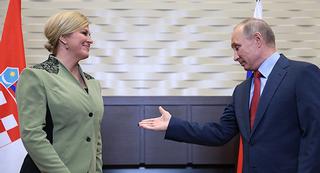
Despite a large-scale visit by the Croatian leadership to Russia, we shouldn’t expect breakthroughs in bilateral collaboration, or to see Croatia turn into a close Russian ally. Sanctions, falling oil prices, and long-term stagnation in both countries can’t be overcome by presidential meetings, and real economic ties between the two countries are still modest.
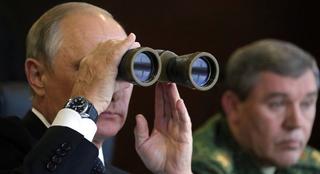
Moscow’s new grand strategy is still in gestation. It seeks to maximize connectivity with all, while putting Russia’s own interests first. Managing a large number of very different partners is difficult, but not impossible, as Moscow’s recent experience in the Middle East shows.
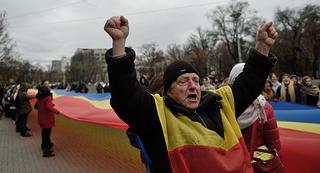
To prevent further escalation, international actors should not play into Moldova’s divides. They must stop seeing Moldovan politicians as either friends or foes, and instead promote greater competition in the country’s politics. Otherwise, while pursuing their own geopolitical interests, Russia and the EU could both fall victim to manipulation by local politicians.
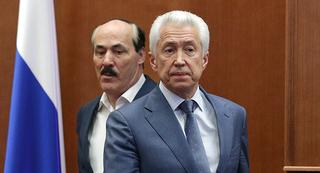
Dagestan’s outgoing leader was also once presented as a figure who would instill order in the republic and combat clan rule. Indeed, Ramazan Abdulatipov tried to reform the regional elite. But clan rule, nepotism, corruption, and the threat of terrorism are still there four years later. It has proved impossible to modernize Dagestan without changing the Russian system as a whole.

Watching the drama of Russia’s private banks collapsing one by one naturally triggers fear: of more than 3,000 registered banks, about 2,600 have already lost their licenses. After the bailout of Otkritie and BIN, the government’s share in Russia’s banking system assets exceeds 80 percent. Fixing Russia’s banking system requires addressing the deep and systematic flaws in the central bank and the financial sector at large.
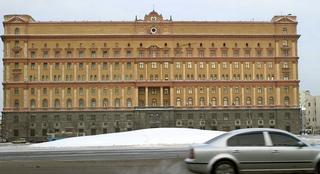
By refusing to open the archives of the interrogation of Raoul Wallenberg, the Russian intelligence service is proving that it aspires to be the heir of Stalin’s NKVD.
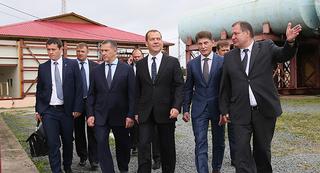
In theory, the seizure of a greater share of Sakhalin’s resource wealth by the federal authorities could lead to a fairer distribution of wealth throughout the Russian Far East. The fear, however, is that further centralization of budgetary revenues will merely encourage the pursuit of vanity projects that will not come to fruition for over a decade, if ever.
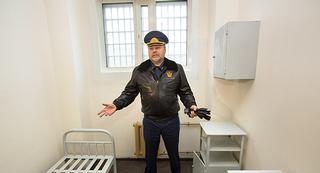
The story of the arrest of Oleg Korshunov, deputy director of Russia’s prison system, looks at first glance like a victory in an anti-corruption campaign. But the truth is much more complex. Korshunov merely operated too blatantly, his detention is unlikely to change much, and he may eventually get free on parole.
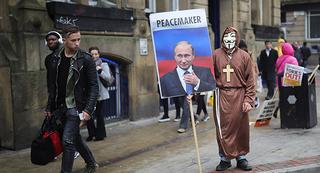
The UK’s future security relationship with the EU will be of the utmost concern in light of Brexit. This will likely mean consistency in its foreign policy approach to Russia. That is not to say that constructive dialogue is not a genuine shared interest, but it will be in small measure at first rather than any post-Brexit grand agreement.

Recent firings of regional governors have dealt yet another blow to Russian federalism. Russians are again being taught that regional autonomy is unnecessary because Moscow knows best.
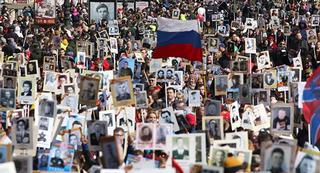
How does the Russian state manipulate history in its relations with society? Whom do Russians consider heroes, and what are the most sensitive historical topics in modern Russia? Andrei Kolesnikov explains how and why history is politicized in Russia today, and why this trend is unlikely to change.
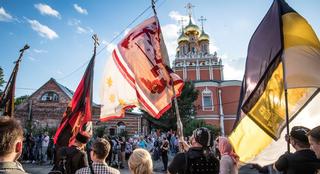
Supporters of a free Russia have long dreamed of a day when the Orthodox Church is separate from the state and when elected officials are unafraid to oppose Kremlin ministers. The latter is certainly happening, but among those who are taking advantage of this new freedom first are zealots who speak in a language of aggressive and intimidating conservatism.