Carnegie Moscow Center


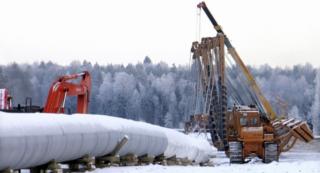
Calling time on the South Stream pipeline project, Putin announced a new Black Sea pipeline to Turkey instead. The new project could be a competitor to Azerbaijan gas ambitions, but, at the same time, it may require more collaboration in the future.

By reactivating its policy on Pyongyang, Moscow is sending messages to Seoul, Tokyo, Washington, and Beijing, which should be properly understood.
In reduced economic circumstances the big test for Russia is whether it will be forced to retrench, or whether Vladimir Putin will take his chances on expansionist foreign policy at a moment when there’s less money to go around to combat legitimate threats.

Russia needs to use every opportunity to inform the Indian government and public about Moscow’s priorities in regional and global politics and about its views on all issues which are relevant to Indians.
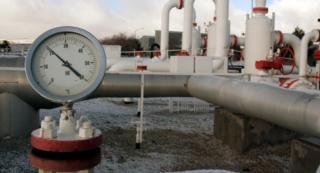
Vladimir Putin’s trip to Turkey could help him recover from the cold-shouldering at the G20 summit in Brisbane, but it will not make Ankara abandon its great strategic goal to become an indispensable supplier of natural gas to Europe and a major competitor for Gazprom.
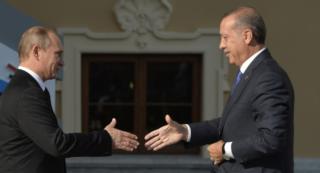
In view of Russian President Vladimir Putin’s visit to Turkey, <i>Eurasia Outlook</i> asked a few of the authors of the recent paper on Russian-Turkish cooperation what to expect from this visit.
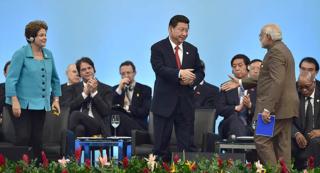
The BRICS countries are establishing the New Development Bank to expand economic assistance to developing countries beyond that offered by the Bretton Woods institutions.

Recent events in Russian-American relations are often compared with events during the Cold War. There is no doubt that, along with other factors, information will play a key role in the new form of Russian-American confrontation.
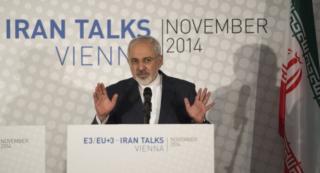
An agreement between Iran and the P5+1 will not deal a significant blow to Moscow’s relationship with Tehran. While the nuclear issue remains the most important aspect of Western relations with Tehran, the Russian-Iranian agenda is much broader.
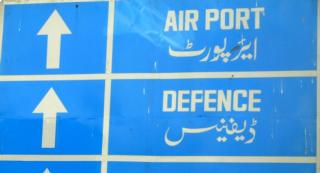
Military cooperation between Russia and Pakistan will be very specific and driven by concrete, pragmatic, and limited goals. At the same time, India remains Russia’s priority partner.
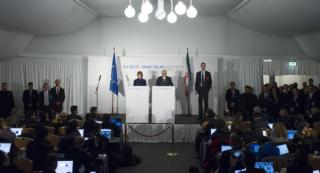
Washington and its allies should strategically continue patient diplomacy unless Iran resumes provocative nuclear activities.
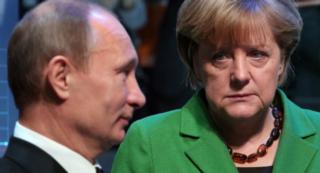
In character and attitude, Germany and Russia are the antipodes in today’s international system. That could explain perhaps both the closeness the two countries have felt for years and the growing confrontation which has come with the Ukraine crisis.

As Russia and the West enter a period of prolonged mutual resentment and distrust, the post-Soviet space remains the most volatile issue in their relationship.
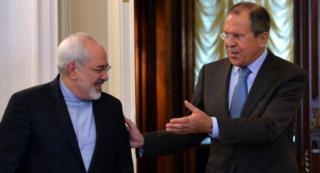
On November 11, Russia and Iran signed a package of documents paving the way for Moscow to construct up to eight nuclear power units. With this agreement, Russia and Iran have established a solid economic foundation for political dialogue.

With Russia—for better or worse. That is the message society in Abkhazia is receiving now that a new Abkhaz-Russian treaty has been drafted which could be signed as early as next week.
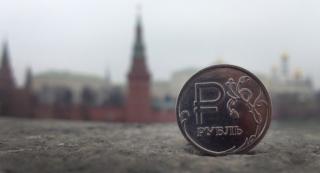
The financial troubles of the ruble represent the most striking and dangerous strategic challenge facing the Russian state since the conflict in Ukraine began.
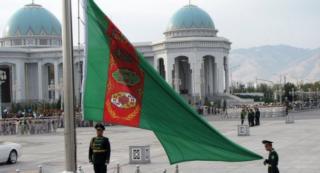
Turkey sees the acute energy market competition as an opportunity to establish itself both as an influential energy state and as a central Eurasian power. In this regard, choosing Turkmenistan as the site of one of the first state visits by the new Turkish president was not accidental.
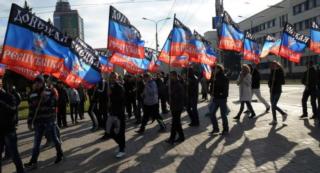
In Donbas, there is mostly a tactical operation aimed at reinforcing rebel positions, not preparation for a full-fledged war. The West may not have a better solution than to accept to freeze Donbas for the winter.

The crisis in Ukraine has betrayed fault lines in the Visegrad Group. Unless Poland, Hungary, Slovakia, and the Czech Republic change course, the “golden age” of Central Europe may come to an end.
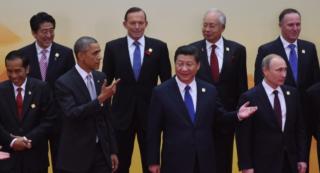
Pax Sinica has come. Countries in China’s orbit will be given security guarantees and trade preferences as long as they remain allegiant. Thus, the pivot to Asia will only drive Russia to unnecessary dependence on China.