Carnegie Moscow Center

Sixty years after his death on March 5, 1953, Joseph Stalin still commands worryingly high levels of admiration in the post-Soviet space.
Internet regulation is particularly critical for two issues: protecting children from harmful Internet content and fighting extremism.
Current political trends could have a significant impact on Russia’s future development. Russia in 2020: Scenarios for the Future analyzes the potential impact of these trends.
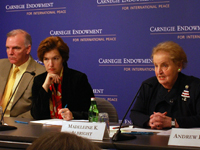
Two decades after the fall of the Soviet Union, Russian, Ukrainian, and Lithuanian views of democracy, free markets, and political leadership have changed.
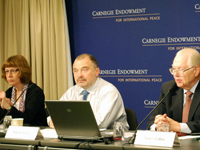
As Vladimir Putin prepares to return to the presidency in the 2012 elections, the prospects for Russia’s future are unclear.
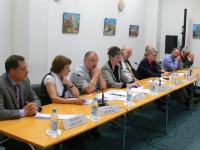
The fall of the Berlin Wall in 1989 ushered in a time of momentous social and political change, including in Russia, but Russia’s development followed a different path than that of many Eastern European countries.
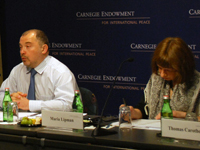
Russia faces a range of challenges as it attempts to modernize and effectively use its power on the global stage in the coming decade.
A number of major domestic challenges, including violence in the Caucasus, anger over this summer’s wildfires, and the need for significant police reform, face the Russian government as the country moves towards the 2012 presidential elections.

The institution of parenthood is undergoing a transformation in Russia today as parents, bypassing the state and cooperating independently amongst themselves, are quietly helping to undermine statist paternalism.

Under President Putin, Russia’s government was a hybrid regime that combined elements of both democracy and authoritarianism. Two years into Medvedev’s presidency, the basic structure of government has not significantly changed.