Carnegie Moscow Center


The second trial of Mikhail Khodorkovsky and Platon Lebedev is overtly political and aims not only to justify then-President Vladimir Putin's brand of Russian governance, but also to show that Putin is not ready to step down from power.
Near-term expectations for a partnership between the United States and India too often overlook how the interests, policies, and diplomatic style of the two countries sometimes diverge.
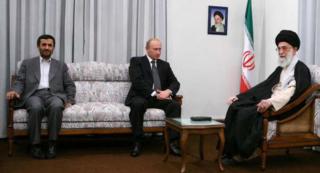
Although Iran and Russia have substantial economic and military ties, Moscow is increasingly wary of Tehran’s growing nuclear ambitions, which have the potential to threaten Russia.
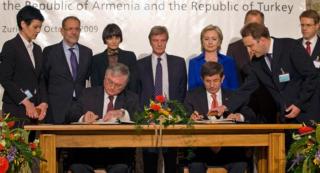
A revival of the Turkish-Armenian Protocols would benefit the entire region, but it will require increased effort to convince both the Turkish public and Azerbaijan to support the normalization process.
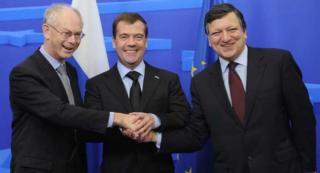
The recent summit between France, Germany, and Russia led to no major developments, but it laid the path toward further improving Russia’s relations with its neighbors and toward a serious discussion about creating a security community spanning North America, Europe, and Russia.
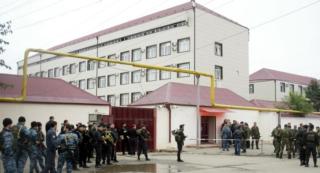
The attack by militants on the Chechen parliament is a new blow to Chechen leader Ramzan Kadyrov. It is becoming increasingly clear that Kadyrov’s heavy-handed methods for suppressing opponents are no guarantee of long-term security.
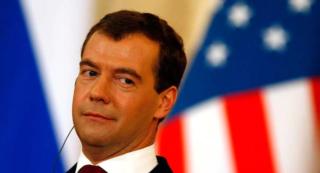
To promote political change in Moscow, the West must hold Russia’s elite accountable and provide incentives to help encourage true democratic behavior in Russia.
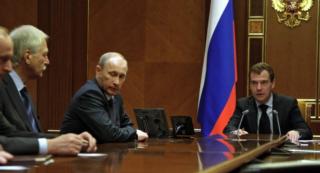
In spite of the tight administrative controls that the Kremlin used to influence the recent regional elections, United Russia may soon realize it needs to change its strategy and consider allowing greater diversity and political freedom.
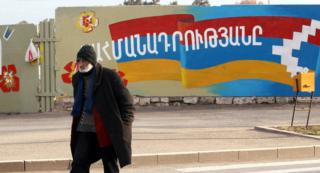
Diaspora Armenian politics are playing a significant role in holding up U.S. diplomatic nominations to the countries of the South Caucasus, which risks undermining U.S. engagement and influence throughout the region.
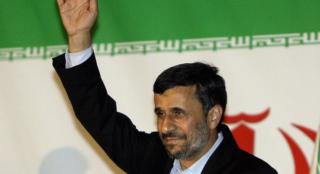
President Ahmadinejad’s meeting with the leader of Hezbollah is further evidence of Iran’s efforts to gain a foothold in the Middle East as one of the key regional players.
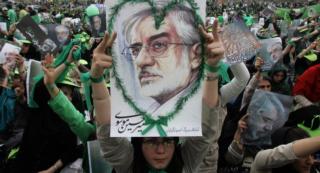
In order to convince Iran to use its eventual nuclear weapons arsenal only for deterrence and regional power politics, the Obama administration must work to empower the moderates in the Iranian leadership.
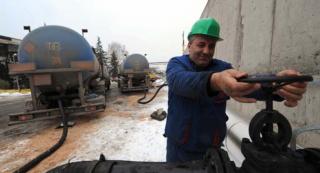
Consumption of natural gas is growing rapidly and now accounts for nearly one-quarter of the world’s energy supply. While natural gas is relatively clean compared to crude oil and coal, its ability to assume a greater role in meeting the world’s growing energy demands will depend largely on price.
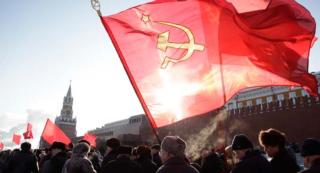
While no historical analogy is perfect, analysts looking to understand Iran’s character and predict its future trajectory can benefit from comparing the Islamic Republic to the Soviet Union.

Last June's ethnic violence in Kyrgyzstan, along with the performance of the country's new parliamentary system of government, will have wide-ranging implications for Central Asia and for regional security.
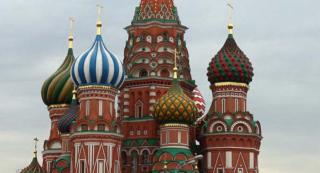
Moscow suffers from a number of fundamental problems that are beyond the ability of any single individual to fix and reform in Moscow would require profound changes to the entire country.
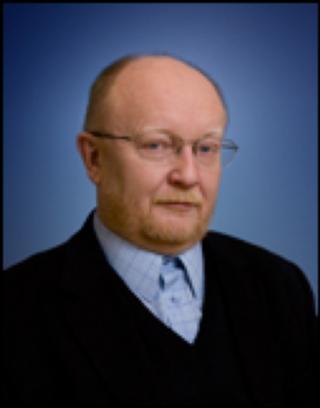
Parliamentary elections held in Kyrgyzstan on October 10 were the first under the country’s new constitution, which institutes a parliamentary system with a relatively weak president. They have shown the level of awareness in Kyrgyz society, demonstrating that people take an interest in their future.

The Egyptian parliamentary elections in 2010 and the presidential succession question offer a valuable opportunity to understand the regime’s preferences on striking a balance between stability and the urgent need for reform.
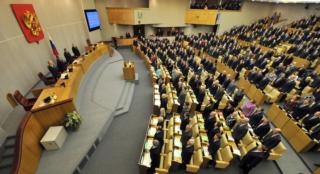
The series of United Russia interregional conferences are clearly part of a larger election campaign and will likely be used to help hasten early State Duma elections.
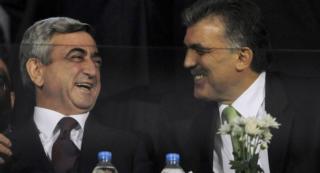
While there is virtually no hope that the 2009 Armenian–Turkish Protocols will be ratified soon, both parties should take steps to rebuild confidence and affirm their faith in the process.

Prominent Russian political scientist Georgy Arbatov, founder and first director of the Institute for U.S. and Canada Studies and a member of the Russian Academy of Sciences, passed away on October 1, 2010. He was 87.