Carnegie Moscow Center


The inflow of coronavirus cases entering China from Russia won’t ruin the two countries’ flourishing relationship based on pragmatic interests. The Chinese are more disappointed in the anti-China rhetoric coming from the White House than in Russia’s inability to swiftly combat the coronavirus outbreak.

The 50-year-old arms control regime that helped keep the Cold War cold is beyond repair. It's time to begin discussing ways of moving toward a new global strategic regime.
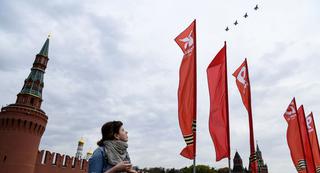
The foundation of the current Kremlin ideology is a defensive narrative: that we have always been attacked and forced to defend ourselves. Another line of defense is history.
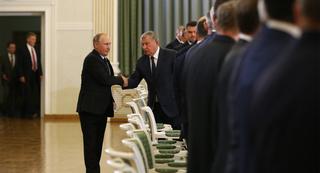
The pandemic has revealed a truth of the Russian government. Vladimir Putin has become increasingly disengaged from routine matters of governing and prefers to delegate most issues.
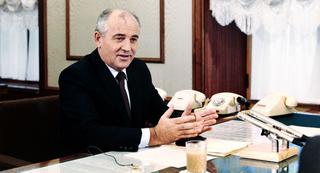
Whereas Mikhail Gorbachev granted his people freedom and suffered a crushing personal defeat, Vladimir Putin is doing exactly the opposite. But, in the end, it is Putin's legacy that will suffer, and Gorbachev who will be redeemed.

For President Vladimir Putin and the Russian leadership, history—in particular, key events of World War II and the Stalin era—are increasingly a political weapon used to legitimize their rule and mobilize the Russian public. As a result, many Russians are now collectively forgetting historical events that were common knowledge two decades ago.

To avoid becoming part of a Sino-centric power bloc and maintain international equilibrium, which is critically important to Russia’s status and self-image, Moscow must reduce its dependence on China by fostering its relations with other large economic and financial players: primarily European countries, India, and Japan.

The longer-term consequences of the coronavirus will include the further intensification of U.S.-Chinese rivalry, and the emerging Sino-American bipolarity. Russia’s top priority should be to carefully maintain equilibrium—though not equidistance—between the United States and China.
Despite border closures, Russia and others may be pushed even closer to Beijing.

Right now, the strength of each country’s negotiating position is determined by its ability to swiftly regulate the supply of oil on the global market. Saudi Arabia has been preparing for this for decades, while Russia has failed to take advance measures that would help, such as the construction of oil storage tanks.

The coronavirus pandemic has prompted renewed global debate over the use of technology to monitor and protect the public. Host Alex Gabuev is joined by Leonid Kovachich, Paul Stronski, and Steven Feldstein.

The slump in gas prices will create plenty of problems, but at the same time it could provide a much-needed purging of an industry that in recent years has seen increasingly absurd projects unveiled for pipelines and LNG terminals.

The coronavirus pandemic is another opportunity that Moscow is using to engage Washington in an attempt to break through the logjams in their relationship.

Alex Gabuev talks to Ivan Zuenko, an expert on the Sino-Russian relationship, about the real scale of the Chinese presence in Russia’s Far East.

Western Europe’s promotion of dialogue and reconciliation between neighbors used to be the dominant approach to engagement with traumas of the past. Eastern Europe’s memory wars have now taken over the debate.

Struggling to hold on to his party’s majority, President Zelensky is increasingly forced to take heed of the influential national-patriotic minority in parliament. Zelensky finds himself held hostage by the old elite, from whom he is buying the last chances for reform at the cost of his own political future.

The fight against the new coronavirus in Russia is being led not by politicians oriented on the public mood, but by managers serving their boss. This is why the authorities’ actions appear first insufficient, then excessive; first belated, then premature.

Putin’s move to extend his rule beyond its expected end in 2024 has worked against the president. Meanwhile, the new coronavirus and falling ruble have proved more effective than any action by the opposition aimed at damaging Putin’s ratings.
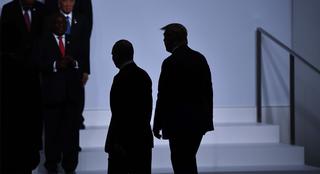
In recent decades Russia has been too focused on the United States. On the eve of the third decade of the 21st century Russians should arm themselves with patience, set their eyes on the domestic affairs, and establish smooth and balanced relations with far stronger China.

Consistency and predictability in Russian politics have all but died. Something extraordinary is unfolding right before people’s eyes: one immutable value (Putin) is destroying another (stability).