Carnegie Moscow Center


The look of Russia’s parliamentary election was different, even if the results were the same. Russia’s ruling regime is trying to preserve its legitimacy by being more flexible and more respectable. This system may eventually contain the seeds of its own transformation.

Russia’s parliamentary election campaign again dealt a crushing blow to the country’s liberal parties, which still believe the key to their success is appearing on television, whether in commercials or in debates. This is a losing strategy; liberals must learn to listen to the Russian people’s needs to garner support.
Modern western leaders might wish to consider that, in the end, what killed the Soviet system was not Reagan’s Star Wars, or even the scarcity of goods in the shops. What actually did it was the loss of public faith in the domestic political system. So, improve or beware of exposure.

The detailed results of the forthcoming elections to Russia’s lower house of parliament are less important than the conclusions the Kremlin draws from them. Vladimir Putin’s system is less and less interested in old-style political competition. The new Duma can become a launching pad for those who want to make their careers in the new Putin elite that forms after the 2018 presidential election.
Though it serves to gain from greater engagement in the Asia-Pacific, Russia’s policy toward the region has been highly inconsistent. Why doesn’t Putin attend the East Asia Summit or participate in other important regional initiatives?
Some degree of isolationism—“sovereignty,” in official political parlance—is necessary for every authoritarian regime to survive. But elites and societies as a whole don’t want full-blown isolationism. In Russia and elsewhere, “authoritarian internationalism”—an alliance of quasi-democracies—has come to the rescue.
Transporting Chinese goods to Europe by rail is far less profitable than sea transport, yet China subsidizes it to achieve its geostrategic goal of making a cluster of countries in the wide Eurasian space from China to Europe dependent on the Chinese economy and capital.

Public expression of atheism can now get a Russian citizen punished by the state. The jailing of a young blogger in Yekaterinburg is symptomatic of a culture of intolerance in which church and state work hand in hand.
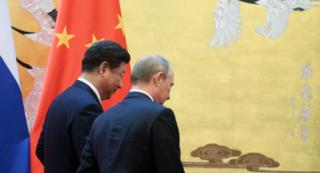
Moscow should reconsider its own position in the region and within the EEU. Central Asian republics are not passive actors anymore, vying for advantageous bargaining positions with China.

Events in the Middle East and Russia’s participation in the Syrian conflict have left the majority of Russian Muslims indifferent and have not inspired them to take any particular action, let alone protest. Even the hundreds of militants who have returned from fighting for the banned Islamic State terrorist organization in the Middle East are behaving passively.
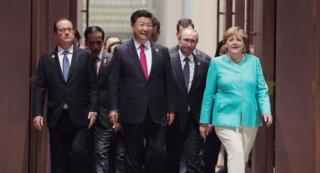
Chinese and Russians now better understand both the potential and the limitations of their relationship. They need to move ahead on concrete issues, making sure that what is agreed upon at the top actually gets implemented.
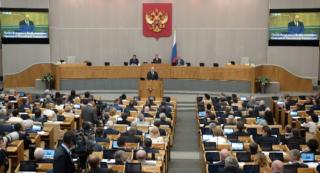
The 2016 parliamentary campaign isn’t just a test run for the 2018 presidential race. Russia’s political regime is in search of a governing model that will help it sustain the status quo for the foreseeable future.
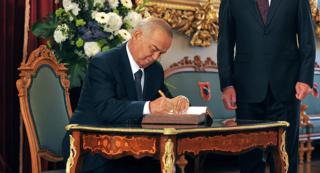
The struggle to succeed Islam Karimov is heating up. Rustam Inoyatov, Shavkat Mirziyoyev, and Rustam Azimov—three of the most powerful men in Uzbekistan—are the leading contenders to assume the throne in Tashkent.
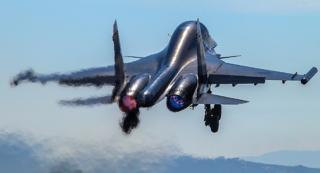
Perhaps Iran’s leaders would have suppressed popular indignation and Russian bombers would still be taking off from the Shahid Nojeh airfield now had it not been for Russian media playing up the prospect of establishing a military base in Iran, no matter how limited its resources and capabilities. The idea of handing over any part of its territory to foreigers is unacceptable to the Iranians
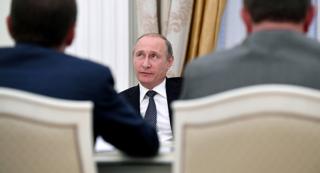
The presidency is the only institution in Russia today that has not been hollowed out, so it is the president who will make all major political decisions. Everyone else is just a liaison officer.
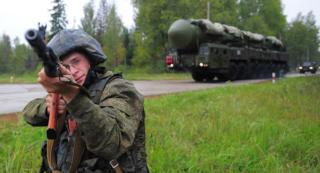
After more than two decades during which Cold War-era visions of nuclear Armageddon faded from public consciousness, alarms are sounding anew as a result of tense relations between Russia and the West.
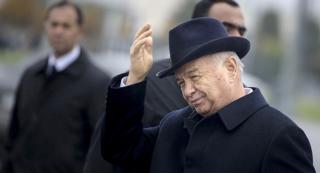
Change is coming to the regimes of Central Asia, with Uzbekistan only the first state to experience a succession crisis. The departure of a long-standing leader can result in regime consolidation, but a struggle for power can also lead to a period of glasnost and democratization.
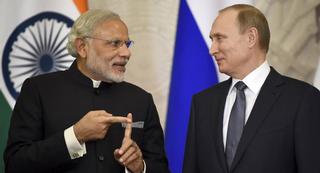
Position of Russia in India is strong in certain niches. At the same time, even in those spheres of the Indian-arms market in which Russia feels quite surely today and it will do both countries good if they maintain it.
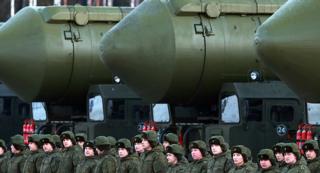
The most advantageous option for Russia and the United States is to sign another START agreement on more cuts in nuclear weapons. However, if that is not possible, it makes sense for the two sides to extend the current treaty signed in 2010.
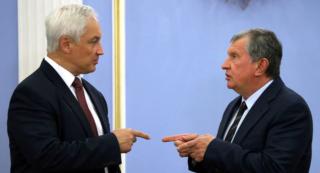
In the past, business deals could be secured if Putin endorsed them personally. Now, the Russian president seems to have stopped making promises to anyone; no deal is ironclad anymore.