Carnegie Moscow Center

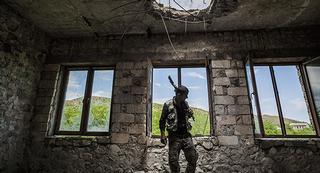
The conflict in Karabakh is the only one in the post-Soviet space where Russia and the West are ready to work together. But none of the mediators are currently discussing the core issues in the dispute.
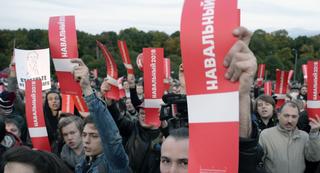
Time is on Navalny’s side. If he doesn’t commit a blunder that disenchants potential voters, and if the authorities don’t take the brute force approach of locking him away for a number of years, he could emerge as a key opposition figure between 2018 and 2024.
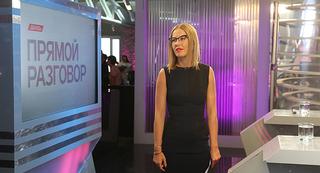
The possibility of TV anchor Ksenia Sobchak as a presidential candidate has morphed from the dream of one of Vedomosti’s Kremlin sources into a political fact and a model for all of Russian politics. It demonstrates the strategy and working style of the president’s administration and of Alexei Navalny, as well as the demand for any candidate other than Vladimir Putin.

The 2018 Russian presidential election will be the beginning of Vladimir Putin’s presumed final act as he seeks to ascend to the pantheon of Russia’s great historical figures. But as Putin loses interest in some of the more down-to-earth details of government, the Kremlin is testing new models of technocratic rule in order to sustain the regime.
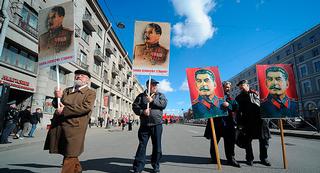
In recent years, the Russian government has formulated a policy on the country’s history that aims to consolidate the nation around a single official version of the past. However, because this single version of official collective memory is not acceptable to all citizens, this policy is causing divisions in Russian society.
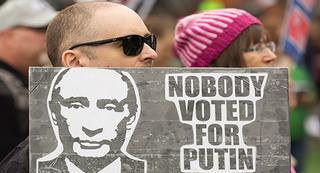
Mutual lack of knowledge of the other and lack of institutional contact between foreign policy elites is promising an era of perpetual mistrust in U.S.-Russian relations.
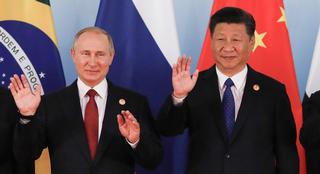
Chinese and Russian leaders won’t always agree, but their deepening cooperation and mistrust of the U.S. is here to stay. Unfortunately, American leaders have shown few signs that they know how to navigate this new reality, let alone manage the competition among great powers as non-Western countries grown in stature.
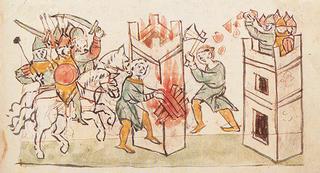
The Kremlin may refrain from curbing ultraconservative activism and Kadyrov’s insurgence because it is afraid of losing popular support. But perhaps more likely is that the regime fears engaging its supporters, as they may prove to be more powerful. The growing strength of radical actors has collided with an impotent regime and generated demand for an alternative force, creating an opening for the opposition.
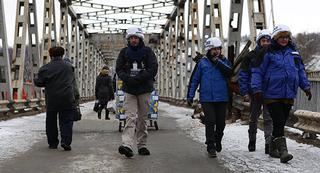
A complete cessation of violence in southeastern Ukraine, the essential first condition of Minsk implementation, requires nothing less than a full-scale peacekeeping operation authorized by the U.N. Security Council.

Russia believes that it only makes sense to develop relations with major European Union powers, as it counts on the further weakening of the EU. But European institutions are designed so that large countries are unable to dominate them. Russia needs to change its attitude to small EU countries because it is they that will strive for greater unity in the spheres of defense and security.
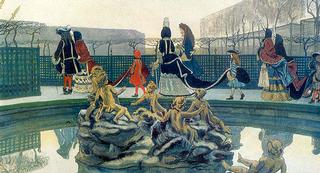
Vladimir Putin’s elite can be called a Politburo 2.0, whose members each have a delegated role in political life. But Putin also has a court, which shuns publicity and exercises informal power in everything from foreign policy to cultural life. This system looks increasingly difficult to manage as Putin approaches his fourth term.
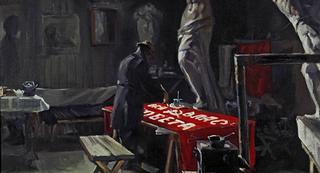
The Russian government is sending out the message that unofficial culture will be tolerated as long as it agrees not to seek state funding. But drawing the dividing line between official and unofficial will not be easy.

Russia’s recent regional and municipal elections saw an increase in voting by the reform-minded minority and a decrease in voter turnout among Putin’s former majority. However, the Kremlin chooses to ignore these trends, turning a blind eye to the possibility that the active minority and the discontented passive majority may eventually meet.
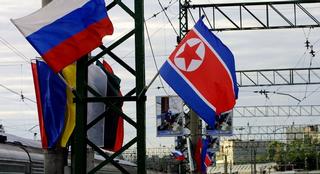
Washington and Pyongyang will eventually need to resume direct talks. With neither party ready for that yet, at first secret contacts will have to be organized in third countries. In the meantime, de-escalation is the order of the day, and Russia one of its unlikely brokers.
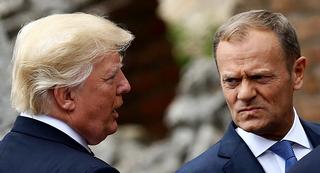
Relations between Russia, Europe, and the United States are in flux as none is able or wants to maintain what it once had. An attempt to revive the Cold War paradigm has failed, and a new framework of relations has not formed. This state of uncertainty will most likely endure until each player achieves a measure of domestic stability.
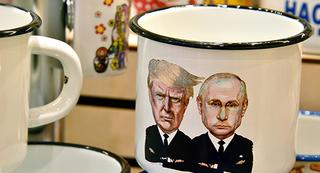
The United States is still the leading power, yet this dominance is no longer uncontested. This contestation is coming in a big way from China and other countries.
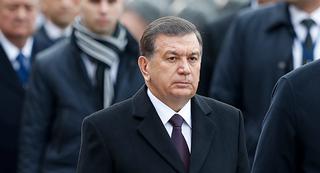
The new leadership in Uzbekistan wants to replace the Soviet-era political-economic model, but Uzbek technocrats are still unable to effectively challenge the entrenched security chiefs. President Shavkat Mirziyoyev is studying the experiences of Russia, Kazakhstan, and South Korea in hopes of bringing Westernized, apolitical economic specialists to Uzbekistan.
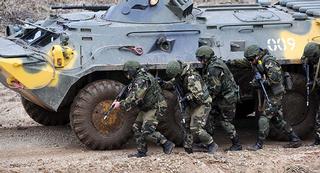
Despite all the reputational risks posed by its war games with Russia, Minsk is trying to reap diplomatic benefits from them. The Belarusian military can show Western observers that Minsk’s guarantees can be trusted. On the other hand, it can convince Moscow that the country isn’t “going down the Ukrainian route,” because it isn’t afraid, despite the West’s concerns, to carry out major exercises with Russian forces.
If Russian judges started acquitting defendants, far fewer suspects would end up in court because cases unlikely of leading to a conviction would be weeded out in advance. That would reduce the burden on judges and lead to a reduction in state funding for the judicial branch—something no judge wants to happen.
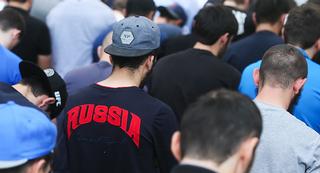
Russian Muslims are protesting the situation in Myanmar. Chechen leader Ramzan Kadyrov is laying claim to a separate regional foreign policy based on the defense of Muslims abroad. It is a broader phenomenon than that and reflects the distinct identity of Russian Muslims and the failure to build a proper nationalities policy in Russia.