Carnegie Moscow Center

Elements of the Soviet political order remain deeply embedded in modern Russian politics, regardless of whether Lenin’s body remains in its mausoleum in Red Square.
With emerging powers such as China, India, and Brazil capturing the limelight at this year’s World Economic Forum in Davos, Ukraine seemed to have little to share with the world and even less to learn from it.
Built gradually on a foundation of growing consensus and electoral support, Moldova’s political change may be more sustainable in the long term than the color revolutions in Georgia and Ukraine.

The failure of the international community to recognize the Caucasus and Central Asia as a region with complex internal dynamics complicates efforts to respond to global challenges ranging from energy security and arms proliferation to humanitarian crises.
The status quo in the Arab world is unsustainable. Arab regimes have a choice: They can either lead a reform process from above or watch it take place in the streets below.
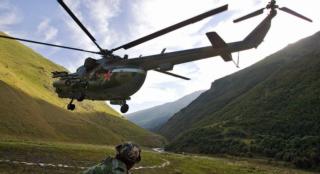
The South Caucasus, a region with a long history of conflict and failed foreign intervention, would benefit from a paradigm shift in the policies of external actors.
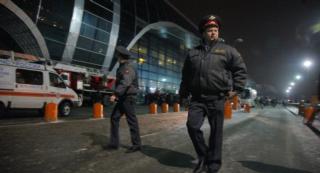
Lasting security in Russia can only be established when the problems of the North Caucasus are resolved. Society itself must initiate serious discussion on the North Caucasus and the ethnic tensions plaguing Russia, formulate proposals, and present demands to the authorities.
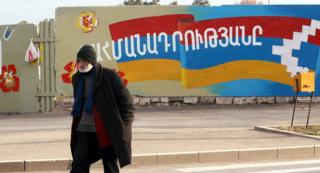
Amid an atmosphere of mistrust and a fragile ceasefire, the conflict around Nagorno-Karabakh could quickly become violent. The international community would be better served to spend extra resources now on preventative diplomacy to prevent tensions from flaring.
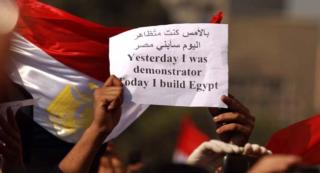
A change in Egyptian leadership would bring to end nearly three decades of uninterrupted rule and have significant implications for the region’s balance of power.
Yeltsin was a revolutionary who destroyed the old order rather than building a new system. As a result, his years in power were often turbulent, but ultimately he managed to help Russia avoid collapse and civil war.

As a revolutionary, Boris Yeltsin was ready to go much further than his predecessor, Mikhail Gorbachev. In the end, however, he returned Russia to a system that put power in the hands of a single person and discredited democratic freedoms.

While Boris Yeltsin did a lot to build a state under difficult circumstances, he built it to suit his own interests and ultimately squandered his nation’s trust by not delivering on the hopes he represented.
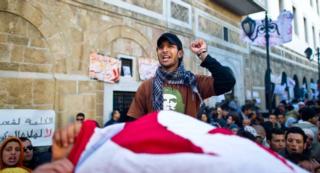
As a new national unity government in Tunisia struggles to gain support, political parties, civil society, and the military will play a critical role in determining whether the country can transition to a more democratic state or will fall back into its old political structure.
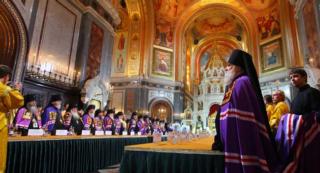
In post-Soviet countries, the leaders of national churches are increasingly exercising considerable influence on their populations and pursuing their own social and political agendas.
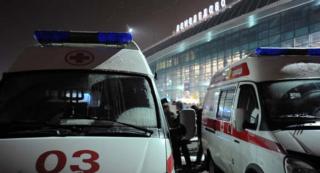
Jihadists in the North Caucasus, spurred by widespread poverty, mass unemployment, and rampant corruption, are likely behind the recent suicide bombing at Moscow’s Domodedovo airport.

The North Caucasus has a long history of conflict with the Russian state and it will take years, if not decades, for the region to become stable and economically viable enough to undermine radicalization among its marginalized inhabitants.
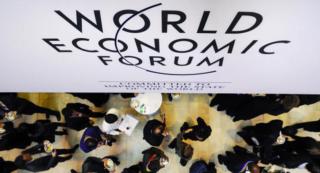
Despite its impressive list of attendees, the World Economic Forum—known simply as “Davos”—is neither as exclusive or conspiratorial as its critics claim nor as world-transforming as its supporters imagine.
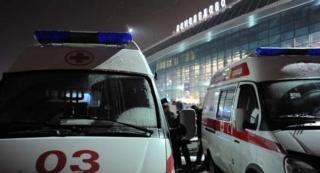
The Russian government must do more to close the security loopholes that enabled the recent bombing of Moscow’s Domodedovo Airport.
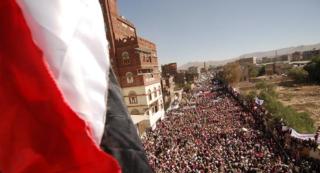
The recent revolution in Tunisia demonstrates that the complete stifling of political opposition does not guarantee longevity for authoritarian regimes.
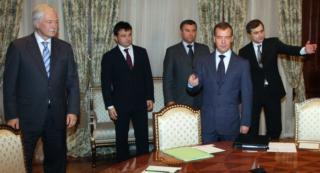
As Russians look toward the 2011 Duma elections in December, whether or not Prime Minister Vladimir Putin heads United Russia’s list could have a significant influence on whether the party sees an increase in national support or a major drop.