Carnegie Moscow Center

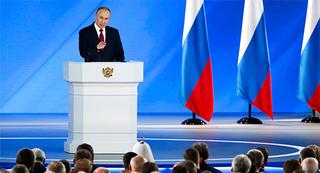
President Putin’s unexpected proposals this week to change the Russian constitution prompted the instant resignation of the Russian government. What’s he trying to achieve, and will he succeed?
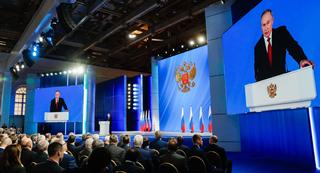
Of the constitutional reforms put forward by Putin, what will really change a lot is the proposal to give the Russian constitution—including repressive Russian legislation—priority over international law. This violation of the usual hierarchy is nothing short of a legal revolution.
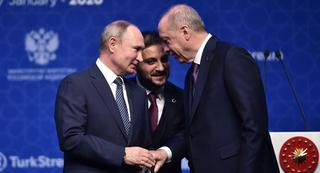
Having declared themselves mediators in the civil war in Libya, Russia and Turkey will try to replicate the model of cooperation and mutual accommodation they developed in Syria.
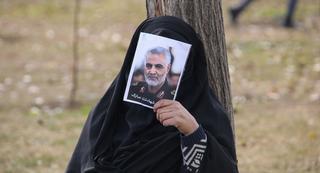
If Syria becomes the setting for a clash between Washington and Tehran, this could be a major problem for Moscow. Until now—and not without Soleimani’s help—Moscow had always managed to find a compromise with the pro-Iran forces in Syria. It’s not clear how the situation will develop now.
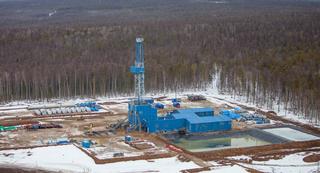
Alexander Gabuev discusses Gazprom's Power of Siberia project with energy analyst Sergei Kapitonov.
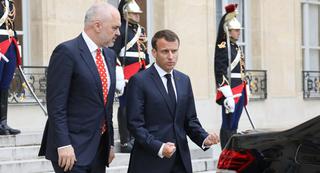
The concentration of pro-Russia gestures in the Western Balkans cement the impression that a major expansion of the Kremlin’s influence in the region is in the cards. But there’s another possible reading of the fallout from Macron’s high-handed behavior.
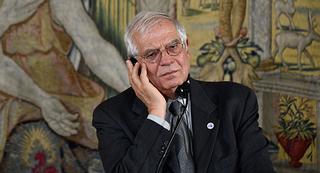
At meetings like ASEM we create the environment and the conditions to enhance the connections we have between our societies and our citizens. This is the real goal of frameworks such as ASEM

The world is probably entering a period of new bipolarity, in which the main players will be the United States and China. The situation will prompt various states to address the question of how they relate to the new central axis of global rivalry, this time between Washington and Beijing.
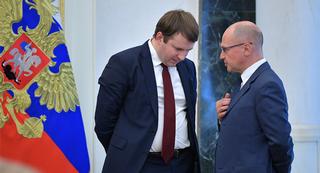
The president’s withdrawal from economic issues leaves politicians of a certain type with room to maneuver. Their hope is to formulate a new economic path that they may even be allowed to put into practice. If they are lucky, and if Putin decides to vacate the Kremlin in 2024, they will be implementing this path from the office of the president.
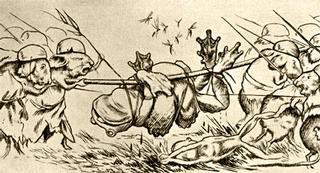
Something has obviously changed in the legal system, and that something is the logic of repression. Despite all the skepticism, it seems that public opinion does play a role in the degree of repression in each particular case.

Although former Moscow Mayor Yury Luzhkov was actually the first senior official to demand the return of Crimea, he remains best known for his signature cap and businesslike approach to managing the capital.
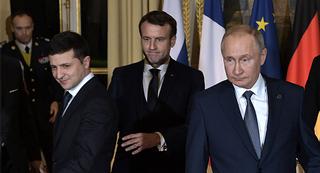
Solving humanitarian problems and stabilizing the area around the line of contact is the bare minimum outcome of talks on Ukraine that all sides consider necessary. At the same time, each side suspects that for its opponents, this minimum is also the maximum in terms of what is politically acceptable.

Moscow never wanted an annexation—it just wanted a bargaining chip. Understanding that is the key to settling the conflict once and for all.

Russia needs Belarus and Lukashenko to serve as an alluring example to other post-Soviet rulers of how beneficial integration with Russia can be. As long as Moscow has the ambition of preserving its influence over the post-Soviet states, any Russian leader will need Lukashenko as a showcase ally.

The Power of Siberia pipeline is a long overdue step in the right direction in developing the strategic relationship with China in the gas sector. Yet plenty of questions remain about the implementation of future pipeline projects.
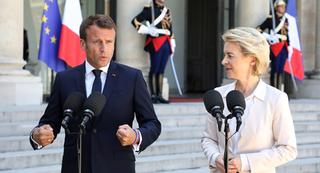
Macron is right about the need to see relations with Russia in the context of a changing international system. At the same time, there must be a sober assessment of what is and is not possible between the EU and Russia.

The combination of aggressive conformism and petty indifference is the basis of the regime’s popular support.

Beijing perceives the U.S. withdrawal from the INF and possible deployment of ground-based missiles to Asia as part of Washington’s broader campaign to contain China. Overall, China can be fairly confident regarding its chances in a potential missile race in Asia, thanks to several advantages.
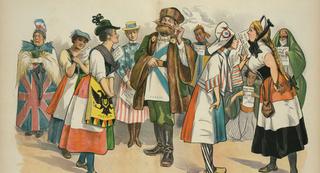
Multilateralism should not be conceived as necessarily cooperative: one set of multilateral institutions can be used to challenge another set.

The ruling party will clearly retain its central place under any future scenario for the transition of power, and anyone who hurries to jump on the bandwagon today will likely come out on top.