Carnegie Moscow Center

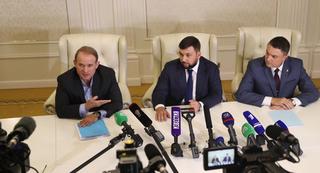
The schism in the pro-Russia camp is preventing the return of the political model of two Ukraines, a model that is the perfect breeding ground for politicians who boost their ratings by fanning the flames of the interregional confrontation in the country. Typically, the same thing is happening in western Ukraine, too, where unity in the pro-European-patriotic camp has been splintered by rivalry between former president Petro Poroshenko’s European Solidarity party and rock star Svyatoslav Vakarchuk’s Holos (Voice) party.
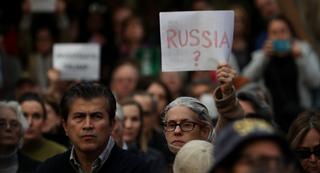
Financial sanctions that limit Russia’s borrowing are for now ineffective, as Russia currently has three surpluses: in the federal budget, balance of trade, and current account. The Russian state and most Russian business (at least the kind of business that could in theory raise investment abroad) simply don’t need major credit lines.
Russia’s brand of exceptionalism is not messianic. It is rooted in the isolation of an Orthodox country and its belief that it possesses the gift of a true religious faith. It has been strengthened by Russia’s successful—if costly—defense of its state sovereignty, and confirmed by Russia’s status as a major global player that refuses to take orders from anyone.
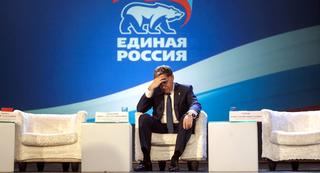
Candidates backed by the authorities are increasingly declining to be nominated by United Russia. The ruling party doesn’t fit well into the technocratic-apolitical worldview of the presidential administration’s domestic policy bloc: after all, corporations don’t need parties. United Russia is approaching the role long played by the All-Russia People’s Front, the aborted party of power from the era of Vyacheslav Volodin.
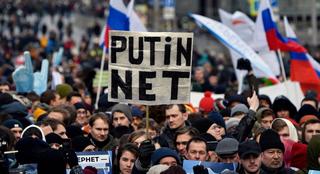
Recent demonstrations in Russia have not been led by a particular group or movement with grand political designs. Instead, protesters in Arkhangelsk – much like those in Yekaterinburg and even in Moscow – are simply people fighting for their government, finally, to treat them with the dignity and respect they deserve.
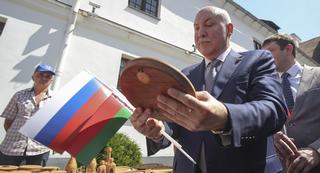
The distrustful, authoritarian regimes of Russia and Belarus are incapable of sharing power. The most the two sides can do without betraying their sovereign interests is to start coordinating their decisions on various sectors of the economy a little more closely, such as agreeing on a unified goal for the inflation rate. Then, if it’s really necessary, this can also be described as integration.
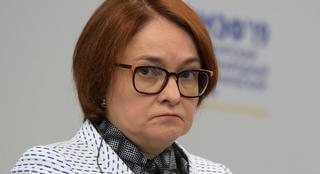
Every step taken by any state manager, including ministers within the government’s economic bloc, is limited by a maze of KPIs, over the achievement of which they often simply have no control.
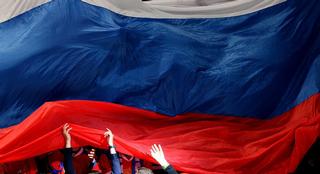
Russian history is a controversial and hotly debated subject, both at home and abroad. Distilling its lessons is difficult, but worthwhile, as many themes from Russia’s past are likely to endure well into its post-Putin future.
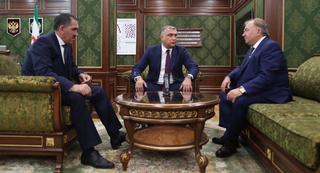
The rich history of law enforcement in the family of Ingushetia’s new head, Makhmud-Ali Kalimatov, contains some hints as to the Kremlin’s new political logic on the North Caucasus. What’s important is that the heightened influence of the Chechen leadership in other parts of the North Caucasus does not figure in the interests of the security services, though when the previous head Yunus-Bek Yevkurov resigned, there was much talk of that growing influence: specifically, that relations between Yevkurov and Chechen leader Ramzan Kadyrov had been strained.
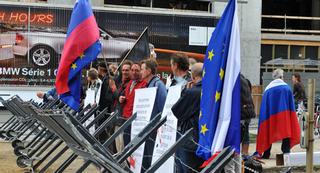
The European Union is taking up a defensive position. This is not isolationism but pragmatism, which signals a revision of the ideas at its heart and a sharp decrease in any desire to project power, including soft power. For Russia-EU relations, this will mean a period in which any kind of ambition will become irrelevant. Efforts will now be focused on reducing expenditure and risks.
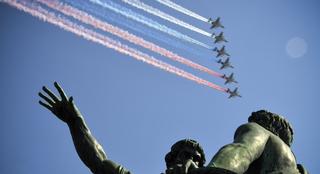
Russia is reputed to be a country whose past constantly changes to suit the purposes and vision of its ruling elite. Yet few would dispute that Russian history is one of extremes.
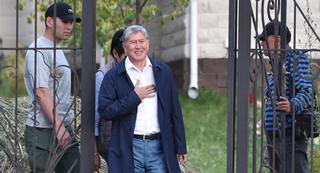
The beleaguered former presidents of Armenia and Kyrgyzstan are both typical clan leaders with notable numbers of supporters. Both cases illustrate clearly how complex and risky the process of handing over power remains in the post-Soviet arena.
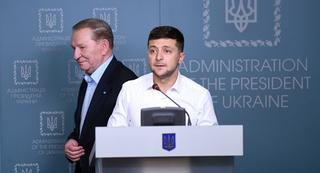
Zelensky is trying to find balance on the incendiary issue of the Donbas. During his visits to Europe, he adhered carefully to the previous foreign policy line, calling on European leaders to keep up pressure on Russia through sanctions. But at home, he is more open to compromise, and is trying to find allies among the oligarchs.
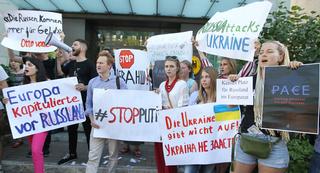
The standoff between European pragmatists and skeptics on Russia won’t end here. The pragmatists will now face heightened political risk for a long time, both in the Council of Europe and in their own countries. Any actions or even statements by Russia that could directly or indirectly confirm the skeptics’ fears will now unleash a barrage of criticism not only of Moscow, but also of those who allowed the Russian delegation to return to the Parliamentary Assembly.
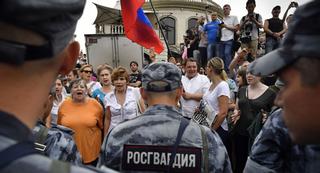
Having lost his leadership, President Putin now has one chance to carry out major reform that would at least temporarily restore the status of national leader to him. The problem is that after twenty years at the helm, he needs to offer society something a little more solid than the national projects. His final reform must in some sense put an end to the way of ruling the president has adhered to since he first came to power: i.e., using brute force to rule the country.
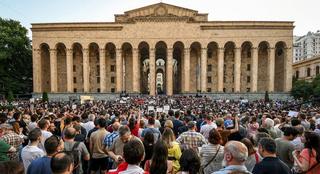
The recent events have both damaged the Georgian government’s domestic legitimacy and spelled an end to its thaw with Russia.
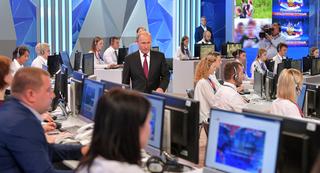
Putin perceives growing discontent with the authorities as a purely emotional reaction, based not on real problems but on society’s failure to understand the true picture. This means that no significant revision of the country’s social and economic direction should be expected. Instead, the president and society will suspect each other of being unreasonable and not understanding what is really going on.
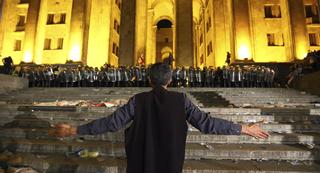
The anger is not all about Russia. The Georgian Dream government is increasingly unpopular with large segments of the population
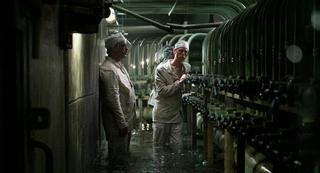
It’s ironic that a show about narratives, and the way they can turn sour, caused Russia’s own narrative machine to show its fragility.
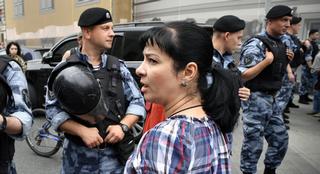
The society of citizens and its representatives in Russia face a dilemma. One option is to cut a deal with the state and work in its interests and on its terms. The other option is marginalisation, to become outcasts destined to be in constant conflict with the state.