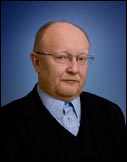
Alexey Malashenko

Scholar in Residence
Religion, Society, and Security Program
Moscow Center
Malashenko is the co-chair of the Carnegie Moscow Center’s Religion, Society, and Security Program. He also taught at the Higher School of Economics from 2007 to 2008 and was a professor at the Moscow State Institute of International Relations from 2000 to 2006.
 

Education

PhD, History, Institute of Oriental Studies of the Russian Academy of Sciences

Languages

Arabic; English; French; Russian

Contact Information


Alexey Malashenko is the co-chair of the Carnegie Moscow Center’s Religion, Society, and Security Program.

Malashenko also taught at the Higher School of Economics from 2007 to 2008 and was a professor at the Moscow State Institute of International Relations from 2000 to 2006. From 1976 to 1982 and again from 1986 to 2001, Malashenko worked at the Institute of Oriental Studies at the Russian Academy of Sciences as a research fellow, head of the Islamic Department, and finally as senior associate. In 1990, he was also a visiting professor at Colgate University in New York. From 1982 to 1986, he was editor of the journal Problems of Peace and Socialism.

Malashenko is a professor of political science as well as a member of the RIA Novosti advisory council. He serves on the editorial boards of the journals Central Asia and the Caucasus and Acta Eurasica and the newsletter Russia and the Muslim World and is a board member of the International Federation for Peace and Conciliation.

Malashenko is the author and editor of about twenty books in Russian, English, French, and Arabic, including: Islam in Central Asia (Garnet Publishing, 1994), Russia’s Restless Frontier (with Dmitri Trenin; Carnegie Endowment for International Peace, 2004), The Islamic Alternative and the Islamist Project (Carnegie Moscow Center and Ves Mir, 2006), Russia and Islam (Carnegie Moscow Center and ROSSPEN, 2007), and My Islam (ROSSPEN, 2010).

  • Op-Ed The Moscow Times April 25, 2013
    After the Boston Tragedy

    The Boston bombing has heightened tensions in Europe and has had repercussions for Russia, especially in light of the need to provide security at the Sochi Olympics.

  •  
  • Sochi
    Article April 10, 2013
    Controversy and Concern Over the Sochi Olympics

    The Russian government’s ability to resolve a host of problems in its preparations for the 2014 Sochi Winter Olympic Games will be a decisive factor in shaping its reputation at home and abroad.

  •  
  • Article February 1, 2013
    The Dynamics of Russian Islam

    The presence of Islam in Russian political life is growing to the extent that its role is now even more pronounced than it was in the 1990s.

  •  
  • Uzbekistan
    Policy Outlook December 20, 2012 Русский
    Uzbekistan: What Changes Can Be Expected?

    Uzbekistan sees itself as a regional Central Asian leader, and in fact the situation in Central Asia is largely determined by the developments inside this country.

  •  
  • Egypt
    Article December 12, 2012 Русский
    Assessing the Implications of New Instability in Egypt

    Developments in Egypt will not only affect the country's own future, but also that of the wider Middle East and the rest of the world.

  •  
  • Paper November 27, 2012 Русский
    The Russian Awakening

    Russian society is waking up and pushing back against Putin’s brand of authoritarianism, with the potential to bring about a transformation of the system into one based on the rule of law.

  •  
  • Article November 19, 2012 Русский
    Where is Dagestan Heading?

    Federal control over Dagestan is becoming even weaker, and federal authorities appear unable to turn the tide.

  •  
  • Op-Ed Russia Beyond the Headlines November 10, 2012 Русский
    Putin, Obama Eye New Agenda

    It is unlikely that Obama will act to worsen U.S.-Russia relations during his second presidential term.

  •  
  • Article October 10, 2012 Русский
    Islam Insulted

    Periodic sparks of mutual discontent and clear frictions between Muslims and Christians are inevitable, and efforts should be made to ensure they are not fomented.

  •  
  • Policy Outlook September 30, 2012 Русский
    Turkmenistan: Has There Been a Thaw?

    While the regime in Turkmenistan remains the most authoritarian of all Central Asian states, its stability depends on the availability of financial resources coming from the gas sales.

  •  
  • Moscow: Carnegie Moscow Center July 5, 2011 Русский
    20 Years Without the Berlin Wall: A Breakthrough to Freedom

    Enormous societal and political shifts 20 years ago opened prospects for a new, united Europe. Despite Russia’s role in this peaceful departure from totalitarianism, the country’s course in the subsequent two decades was not so straightforward. While the demolition of the Berlin Wall is no guarantee of success, democratic transformations are a necessary precondition.

  •  
  • Moscow: Carnegie Moscow Center October 14, 2009 Русский
    Twenty Years of Religious Freedom in Russia

    Post-Soviet Russia has witnessed an expansion of religious freedom and a change in the relationship between religious entities and the state. Religious movements that had all but disappeared under the Soviet regime have been experiencing a revival.

  •  
  • Moscow: Carnegie Moscow Center July 1, 2009 Русский
    Religion and Globalization Across Eurasia

    Each of seven major religions in Eurasia—Buddhism, Catholicism, Hinduism, Islam, Protestantism, Russian Orthodoxy, and paganism—has been forced to develop under the modern pressures of globalization.

  •  
  • Washington October 29, 2003 Washington, D.C.
    Russia's Restless Frontier: The Chechnya Factor in Post-Soviet Russia

    Trenin and Malashenko examine the implications of the war with Chechnya for Russia's post-Soviet evolution. Considering Chechnya's impact on Russia's military, domestic politics, foreign policy, and ethnic relations, the authors contend that the Chechen factor must be addressed before Russia can continue its development.

  •  
  • Boston
    NPR's Tell Me More April 22, 2013
    After Boston Bombing, A New Focus On Chechnya

    The current situation in Dagestan may have more bearing on the actions of the Boston bombers than the situation in Chechnya.

  •  
  • Voice of Russia June 7, 2012
    Turkey: A Bridge Between Two Worlds

    Turkey is attempting to position itself as a more than a regional power, with activity in all its neighboring regions. It remains to be seen, however, whether Turkey has enough forces to be present in so many places.

  •  
  • Alexey Malashenko
    CSIS June 28, 2011
    Implications of the Arab Spring for Central Asia

    The Arab Spring is likely to have little to no impact on the political situation in the countries of Central Asia and may even serve the governments there as a cautionary warning to their citizens against social upheaval and turmoil.

  •  
  • Alexey Malashenko
    Voice of Russia June 27, 2011
    Living in Limbo in Nagorno-Karabakh

    While Azerbaijan is unlikely to ever recognize the independence of Nagorno-Karabakh or sign a treaty with Armenia concerning the contested territory, it is also unlikely that a war will break out over the territory’s status.

  •  
  • RIA Novosti's Russian Angle June 14, 2011
    What Is the Role of Russia in the Middle East Today?

    Russia plays an extremely important role as mediator in the current Libyan conflict. If Moscow can succeed in this role, there would be a clear positive benefit to Libya and its neighbors.

  •  
  • Radio France Internationale August 17, 2009
    Violence in Ingushetia

    Ingushetia’s corrupt officials and extreme Islamists may be behind a suicide bomb explosion at a police station in the capital of Nazran.

  •  
  • Special Forces guard site of two blasts, Makhachka
    May 14, 2013 Washington, DC
    North Caucasus Under the Spotlight

    Since the Boston Marathon bombings, Russia’s relationship with its Muslim minorities has become the focus of intense scrutiny in the West.

  •  
  • April 12, 2013 Beirut
    The Russia-Middle East Connection: The Arab Spring and its Impact on Russia’s Muslims

    Since the Arab Spring first broke out in December 2011, Russian policymakers have viewed regional developments with unease. They now wonder what rising Islamist parties in the Middle East will mean for Russia's relationship with its own Muslim minority.

  •  
  • Rafik Mukhametshin and Alexey Malashenko
    October 4, 2012 Moscow Русский
    The Religious Situation in Tatarstan

    Radicalization is taking place inside Tatarstan’s Muslim community, and internal divisions are among the reasons for the July 2012 terrorist attacks on Ildus Faizov and Valiulla Yakupov.

  •  
  • March 14, 2012 Moscow, Kyiv Русский
    Russia’s 2012 Presidential Elections: Prospects for Russia and the Region

    After the presidential election, which Vladimir Putin won, a significant portion of the population doubts the legitimacy of the election results. These doubts will contribute to the rise of social and political movements in Russia.

  •  
  • February 22, 2012 Washington, D.C.
    Political Islam in the Caucasus

    Islam is increasingly becoming a factor in the politics of the wider Caucasus region, as Azerbaijan experiences a growth of religion in politics and Turkey and Iran compete for Islamic influence on their neighbors.

  •  
  • January 26, 2012 Washington, D.C.
    Russia's Strategy in the Middle East

    Russia’s approach to the Middle East is at a turning point, as the changes associated with the Arab Spring continue to destabilize regimes and alliances and Iran appears to be moving ahead with its nuclear program in defiance of Russia and the West.

  •  
  • November 14, 2011 Moscow Русский
    20 Years After the USSR: Problems of the Military Reform and Interethnic Relations

    Two issues—military reform and interethnic relations in the Russian Federation—seem to have grabbed the most public attention since the Soviet collapse. They have had a big impact on Russia’s public and political life over the last twenty years, and affect the foundations for the country’s future development.

  •  
  • Pavel Shlykov
    September 22, 2011 Moscow Русский
    “Anti-Kemalist” Revolution: Where is Turkey Going?

    Since 2002, when the Justice and Development Party came to power in Turkey, domestic and international observers have found the party’s policies ambiguous at best, and they have questioned the country’s development path and the direction of Turkey’s foreign policy.

  •  
  • Is Religion a Security Threat in Central Asia?
    September 9, 2011 Astana, Bishkek, Moscow, Washington, D.C.
    Is Religion a Security Threat in Central Asia?

    Dialogue, education, and an accepted role for religion in society are critical to countering the possible threat that religious radicalization could pose to state security in Central Asia.

  •  
  • Zubov, Karpets, and Malashenko
    June 14, 2011 Moscow Русский
    Monarchy in Contemporary Russia

    As Russians consider possible development paths for the country, one option that could be explored is the possibility of restoring the monarchy, which is a strong part of Russian historical and political traditions.

  •  
Source: http://carnegieendowment.org/experts/index.cfm?fa=expert_view&expert_id=369

Areas of Expertise

Stay In The Know

Enter your email address in the field below to receive the latest Carnegie analysis in your inbox!

Personal Information
 
 
Carnegie Moscow Center
 
16/2 Tverskaya Moscow, 125009 Russia
Phone: +7 495 935-8904 Fax: +7 495 935-8906
Please note...

You are leaving the Carnegie–Tsinghua Center for Global Policy's website and entering another Carnegie global site.

请注意...

你将离开清华—卡内基中心网站,进入卡内基其他全球中心的网站。