Carnegie Moscow Center

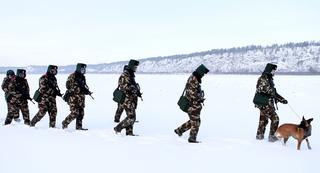
China and Russia act in accordance with their own interests, which are not always identical. For the time being, the creation of a Russo-Chinese military alliance isn’t a viable idea, and cooperation between China and Russia in the Arctic is exclusively economic.
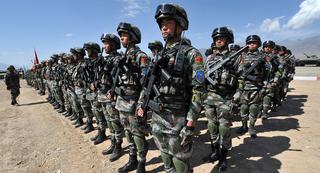
China is gradually laying down the foundations for the construction of a Pax Sinica in Central Asia. This is particularly successful in certain sectors of the economy, but Beijing’s policy has come up against constraints, both within Central Asia and outside of it.
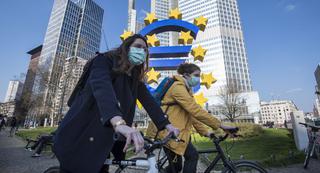
EU moves to coordinate efforts against the new coronavirus, relax regulatory enforcement, and demonstrate solidarity can help to show that the European Union can provide added value to individual EU countries, and that it remains a force to be reckoned with.

In Ukraine, the chaos caused by the coronavirus pandemic combined with the country’s existing political problems could sharpen the appetite for authoritarianism in Ukrainian society.
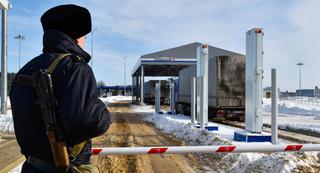
Having closed the border, even for six weeks, Russia has taken yet another psychologically important step in the process of its estrangement from Belarus.
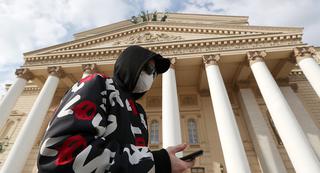
As of March 23, Russia had reported 438 cases of coronavirus and one disputed death. But there is growing speculation in the West over whether official figures can be trusted and whether the Kremlin might be making use of the pandemic to further its own ends.
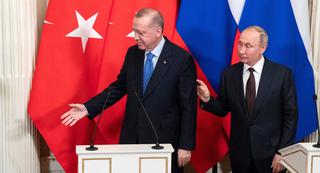
If the relationship between Russia and Turkey is a marriage of convenience, then right now the two sides are staying in it purely for the sake of the children: i.e., the political investments that Putin and Erdogan have made in developing bilateral relations when not everyone approved.

As the Kremlin prepares to manage the public health emergency and an economic slowdown, it’s coming to view the global disarray as affirmation of its ideology.

The current economic turbulence resembles a fire at an explosives warehouse during a flood and an earthquake, all at the same time.
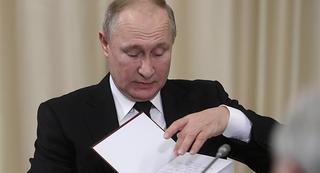
Whether Putin wanted to be persuaded to stay on, was testing his entourage for their readiness for a power transition, or was simply waiting for the right moment, we may never know. But there is no evidence that he was preparing to choose a successor.
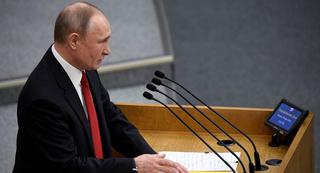
Amid a coronavirus pandemic and looming global economic crisis, Russian President Vladimir Putin has suddenly revealed how he intends to remain in power beyond 2024, when what should be his final term in office ends. In doing so, Putin seems to have bet – not incorrectly – that there is simply no one who can stop him.
Falling oil prices leave no chance Russia’s GDP will grow in 2020—a bleak prospect for both ordinary people and once optimistic investors.
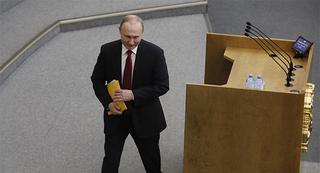
Putin, a man torn by conflicting impulses, has opted for stability in moving to stay on as president after 2024. In doing so, he surprised the elite and even some in the presidential administration, deceiving those around him—though not the public—with his talk of changes in leadership and overhauling Russia’s political system. His real intentions are impossible to know, but his priority is clear: keeping his options open.
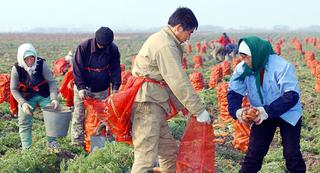
Chinese investment in Russia’s Far East is precisely what it should be given the current level of the region’s development. Most of the Far East is more focused on obtaining subsidies from Moscow than foreign investment.
A new Russian state is taking shape that is unashamedly authoritarian in design. If Russia ever wants to return to the European model, it will have to dismantle the entire political legacy that this regime has built.
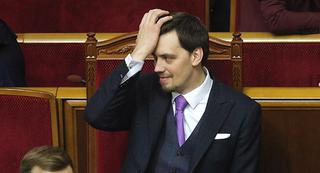
Having dismissed his young government, President Zelensky risks joining the ranks of Ukraine’s failed reformers. The reshuffle is being seen as a victory for business as usual and oligarchic interests.
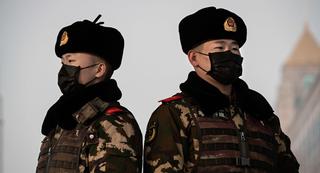
The outbreak of coronavirus in China has exposed the weak spots of the country’s Big Brother system. It turns out that China’s extensive network of facial recognition cameras is useless in the face of a simple surgical mask.

Carnegie’s Alex Gabuev and The Financial Times’ Asia editor Jamil Anderlini discuss coronavirus, the ongoing U.S.-China trade war, and the geopolitical dynamics in Asia-Pacific.
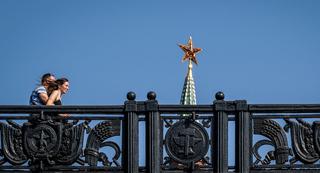
Those looking at Russia’s foreign relations would soon discover that the country is essentially a loner. It is not part of any international large family, whether Europe, the Atlantic community or the West. Asians do not recognize Russia as Asian, either.
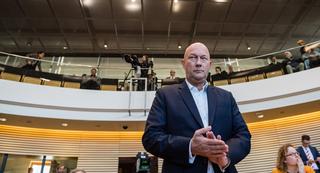
There is little reason to expect that the far-right Alternative for Germany party will become a leading political force. Yet the political landscape will inevitably take on a different form, as Merkel-era centrism gives way to growing ideological polarization.