Carnegie Moscow Center

Russia is reverting to the same economic level it had fifteen years ago. Small and medium-sized businesses, which could boost the economy, are held back by regulation and corruption. As a major economic catastrophe is unlikely, this state of affairs looks set to continue into the long term.
The parallels between the late Soviet era and contemporary Russia are indeed striking. But is this analogy applicable? Not entirely. To assess Russia’s future we should look not to its own recent history, but to the developments in countries that experienced similar transitions.
A new set of economic proposals by Sergei Glazyev defy generally accepted economic theories and historical experience and would probably ruin the Russian economy if accepted. Is there a political rather than an economic rationale to them?

Official statistics suggest that Russia’s oil and gas industry accounts for only a quarter of the country’s GDP. However, when other factors are factored in, the economy is seen to be much more heavily dependent on hydrocarbons. With oil prices looking set to stay low for a long time, this is bad news for the Russian economy.
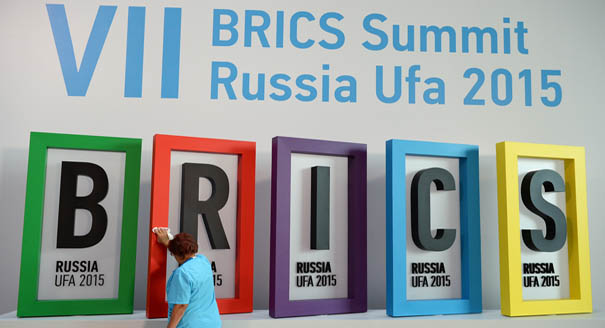
The heads of the BRICS states who gathered in Ufa for another summit have rather different ideas about why their countries are participating in this organization. The Carnegie Moscow Center asked a number of experts to comment on the motivation of BRICS’ key players: Brazil, India, Russia, and China