Carnegie Moscow Center


As the world enters an age of seemingly unconstrained great power competition, arms control between Russia, China, and the United States could help strengthen arms race and crisis stability and provide a platform for strategic dialogue.
Only the continuation of nuclear arms control can create the political and military conditions for eventual limitations of innovative weapons systems and technologies, as well as for a carefully thought through and phased shift to a multilateral format of nuclear disarmament.
Nuclear deterrence can serve as a pillar of international security only in conjunction with negotiations and agreements on the limitation, reduction, and nonproliferation of nuclear weapons. Without them, deterrence fuels an endless arms race, while any serious crisis between the great powers will bring them to the brink of nuclear war.
Breaking arms control agreements is much easier than concluding them, but history shows that rejecting arms control agreements never improves one’s security and always damages it, a lesson that Moscow and Washington should heed. Indeed, the demise of the Intermediate-Range Nuclear Forces (INF) Treaty and, in turn, the collapse of the U.S.-Russia nuclear arms control architecture threaten to unleash chaos and make not only the two countries but also the rest of the world far less safe.
Entanglement, driven by the development of new non-nuclear technologies that can threaten nuclear weapons and their associated systems, is giving rise to the risk that a non-nuclear conflict between the great powers might escalate into a global nuclear war.
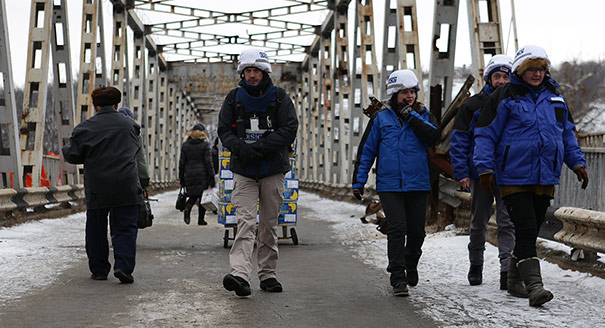
A complete cessation of violence in southeastern Ukraine, the essential first condition of Minsk implementation, requires nothing less than a full-scale peacekeeping operation authorized by the U.N. Security Council.
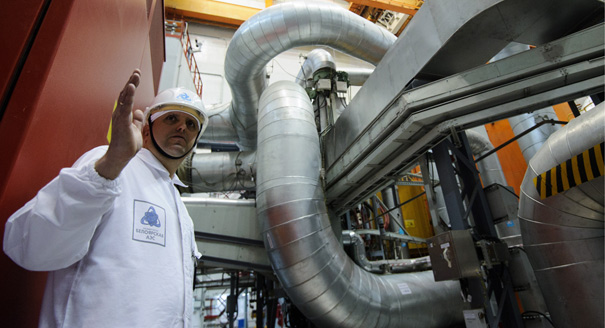
Moscow is trying to rattle Washington by projecting its political and military might as the most dangerous crisis develops in U.S.-Russian relations since the Cold War era. The suspension of the 2000 plutonium agreement may threaten a whole range of nuclear disarmament and nonproliferation treaties.
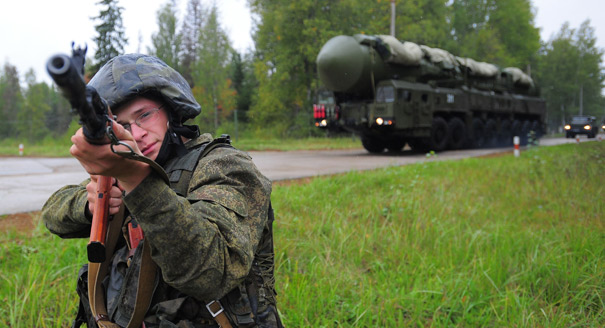
After more than two decades during which Cold War-era visions of nuclear Armageddon faded from public consciousness, alarms are sounding anew as a result of tense relations between Russia and the West.
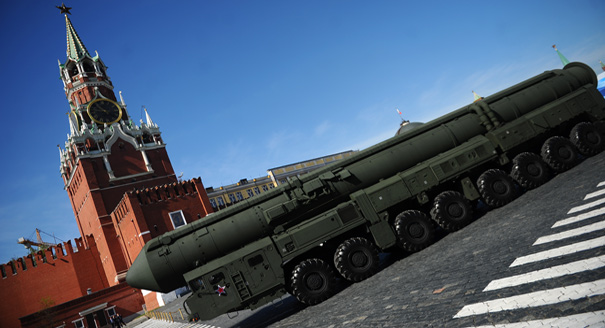
Today, we have vast nuclear arsenals and the number of countries with nuclear capabilities have increased around the world. Current threats are being addressed with temporary solutions. In an even more alarming prospect, the possibility of using nuclear weapons in Europe due to a local conflict is now on the table.
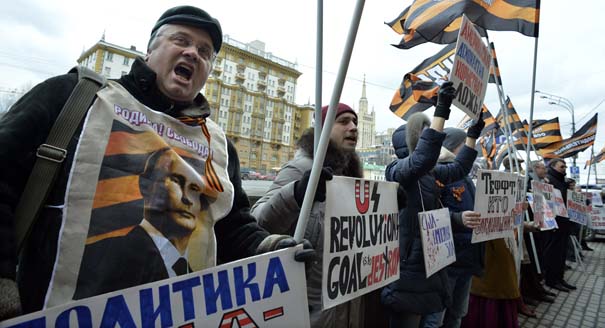
Relations between Russia and the West have deteriorated to levels not seen in a generation. Both Russia and the West accuse each other of making provocative moves, disrupting the balance, and violating each other’s interests.