Carnegie Moscow Center

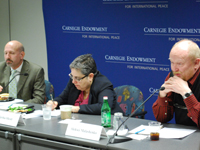
While Kyrgyzstan's newly elected parliament has convened its first session, there is still no ruling coalition and the situation in the country remains unpredictable.
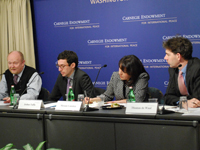
The North Caucasus have been marked recently by renewed instability and violence and Russian officials have publicly acknowledged that the region poses a serious problem for their country.
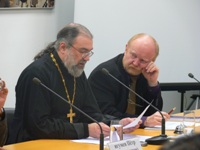
The position of the Russian Orthodox Church in modern Russian society remains unclear. There is a disconnect between the general population—which is disinclined to listen to the Church’s appeals—and the Church, which has a poor understanding of the society it is addressing.
The future for Kyrgyzstan remains unclear and the nature of the political systems in other Central Asian states creates the risk that conflicts such as those recently seen in Kyrgyzstan could break out in neighboring countries.
The circumstances surrounding the exodus of the Russian population of Chechnya and the deterioration of bilateral relations must be better understood if Moscow wishes to cultivate positive relations between Chechens and Russians and to avoid similar developments in other parts of Russia.

The role and importance of Orthodoxy in the Russian media is growing, but journalists and clergy alike have become overly focused on promoting their preferred image of Orthodoxy and demonstrating how they think Orthodoxy should be perceived by the public and portrayed in the media.
The recent resignation of President Bakiyev, in the wake of a popular uprising that removed him from power, has given Kyrgyzstan a chance to avoid becoming a failed state.
The conflicts in the Caucasus are often directly linked to changes in territorial borders. Creating an atlas of the Caucasus is a key to understanding the nature of the conflicts in the region.
The Tulip Revolution did not mark the emergence of democracy in Kyrgyzstan. To the contrary, since 2005, limits on political rights and freedoms and the strengthening of President Kurmanbek Bakiyev’s family rule have only increased.

In 20 years of religious freedom, the Russian Orthodox Church has been unable to create a workable system for preparing its clergy and lay workers to perform social service, including missionary work, charity and moral education at schools and universities.