Carnegie Moscow Center


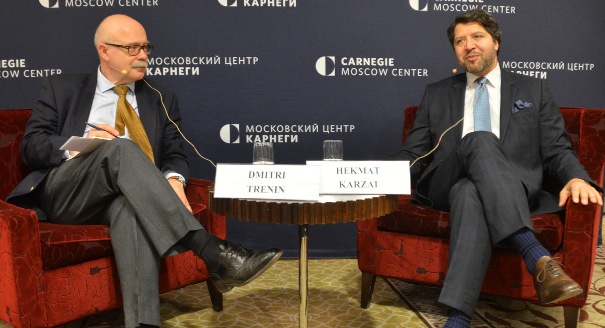
The Carnegie Moscow Center hosted Deputy Foreign Minister of Afghanistan Hekmat Karzai to discuss the country’s political, economic, and military situation as well as future development prospects and security challenges in the region.
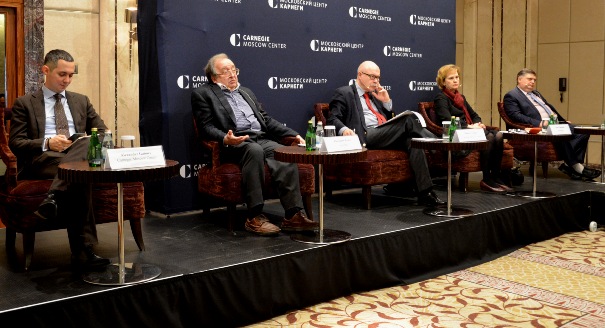
In partnership with the Russo-Japanese Business Council, the Carnegie Moscow Center hosted a panel discussion on the prospects of Russo-Japanese relations prior to Prime Minister Shinzo Abe’s visit to Sochi and his talks with President Vladimir Putin.
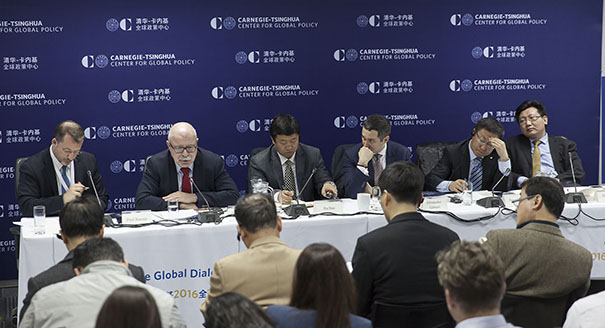
Geopolitical circumstances have prompted Russia to forge closer ties with China, but behind the warming façade, the two countries’ differing goals could create new sources of tension across Eurasia.
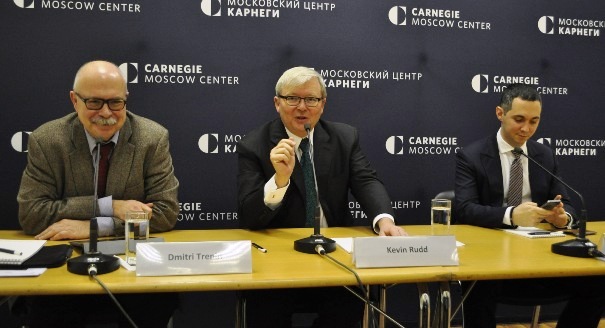
Xi Jinping’s foreign policy is much more proactive than his predecessors, driven by his desire to complete the transformation of the Chinese economy and pursue the China Dream.
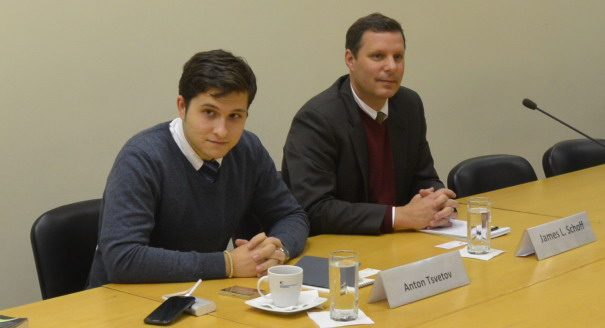
A very firm friendship between the United States and Japan will become stronger in the new regional context.

In light of the crisis in Syria, and as part of its mandate to promote democracy and development in the region, the United Nations Economic and Social Commission for Western Asia (UN-ESCWA) has initiated a program named The National Agenda for the Future of Syria (NAFS).
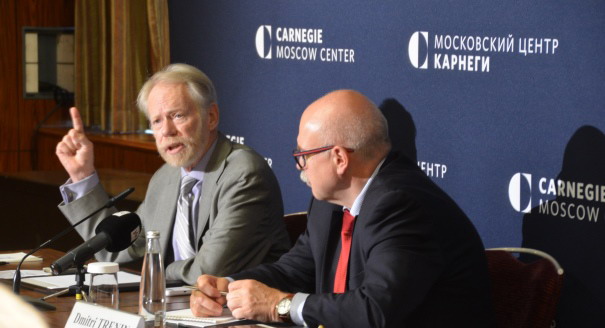
The current downturn in U.S.-Russian relations can be understood as a new Cold War. A new long-term strategic vision is needed to guide the two countries through this challenging period.
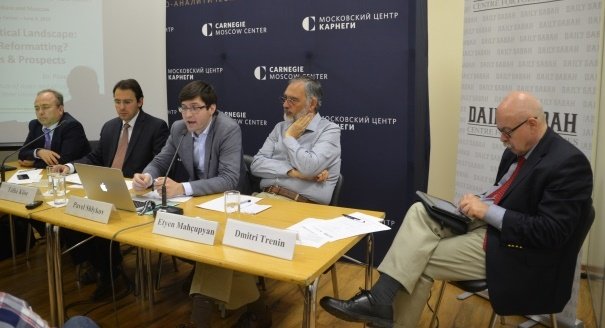
In the new global landscape, regional powers such as Turkey will be crucial for maintaining stability.

Washington and Moscow are considering whether to adopt more assertive conventional and nuclear security postures, a shift which would have far-reaching consequences for global security.
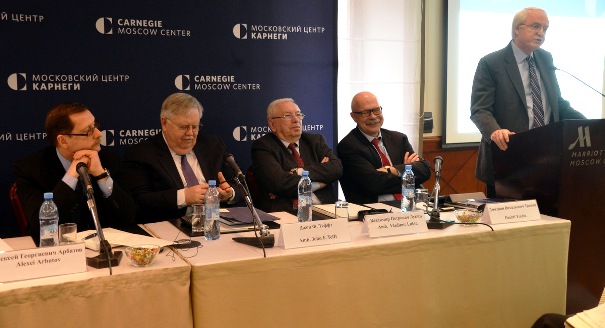
The Carnegie Moscow Center organized a conference to discuss the experience of Russian-American alliance during the Second World War, as well as the experience of cooperation and rivalry after the end of the Cold War.