Carnegie Moscow Center


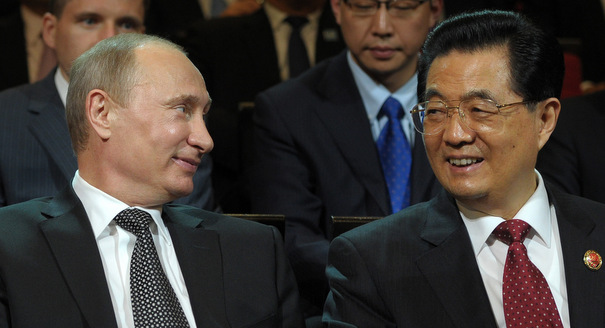
Mitigating lingering distrust among China, the United States and Russia is necessary to forestall derailment of future strategic arms reduction treaties.

Securing nuclear material is one of the biggest problems of contemporary security. The Nuclear Threat Initiative (NTI) released the Nuclear Materials Security Index, which measures the nuclear security conditions in 176 countries.

The fall of the Berlin Wall in 1989 ushered in a time of momentous social and political change, including in Russia, but Russia’s development followed a different path than that of many Eastern European countries.

Even as overall relations between the United States and Russia have improved in recent years, progress has also been made on arms control, a vital aspect of Russian-American relations.
Do the United States and Russia have unique deterrence requirements, or can other nuclear-armed sates provide a model for them?

Nuclear disarmament faded from media attention after the New START agreement was signed, but it remains a challenge for the world.

After the New START Treaty was signed on April 8, 2010, U.S. and Russian authorities turned their attention from nuclear disarmament to other matters. However, crises in the nonproliferation regime and U.S.-Russian relations could arise all too soon, if the two governments do not continue to address bilateral nuclear disarmament.

Despite its decrease in transparency and limited reductions, the new START Treaty is nonetheless a major achievement. Above all, it is an important political accomplishment, and a significant result of the reset in Russian-U.S. cooperation.
Nuclear weapons are again at the forefront of U.S.-Russian relations. The new Strategic Arms Reduction Treaty (START) agreement has been signed, but its ratification still faces opposition in both Russia and the United States.

Two potentially conflicting imperatives drive Barack Obama’s nuclear agenda. On the one hand, he has called for a world free of nuclear weapons. On the other hand, he believes that the United States needs credible nuclear deterrence.