Carnegie Moscow Center



Members of the defense and security community came together with representatives from civil society, NGOs, academia, industry, and the media in an online conference designed to analyze and clarify the changing threats to international peace.
The most crucial areas for U.S.-Russia relations in 2010 include cooperation on Afghanistan and Iran, future developments in Georgia and Ukraine, and discussions of a new European security system inclusive of Russia.

Three months ago, NATO Secretary General Anders Fogh Rasmussen presented the basis for a new strategic partnership with Russia, laying out the specific areas where practical cooperation could be extended. Now, the Secretary General comes to Moscow, reaffirming the preeminence of NATO-Russia cooperation on the Alliance’s agenda.
Recent efforts by both the United States and Russia to reset the bilateral relationship have yielded promising results and deeper cooperation on critical issues, including Iran, the post-Soviet states, and arms control and disarmament.
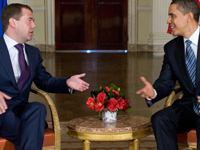
Ahead of the July 6-8 U.S.-Russia summit, Carnegie experts in Moscow discussed expectations for the visit, prospects for START negotiations, and areas for potential cooperation, including Iran, Afghanistan, and energy security.
A panel of experts on Russia, Europe and NATO discussed what a common European security space would look like, and how it could be created.
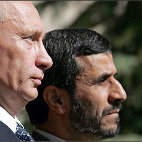
Dmitri Trenin and Marina Ottaway discuss new dynamics and old superpower rivalries between the United States and Russia in the Middle East.
The international financial crisis may help sustain Russia's political and economic system in the short-term or it may usher in rapid change. Regardless, it is unsustainable in the long run.
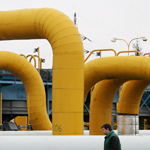
Russia has threatened to cut gas supplies to Ukraine on January 1st if a $2 billion gas debt is not resolved, and both countries stand to lose if they fail to reach a settlement in time. Carnegie experts in Washington and Moscow discuss the implications of the dispute for regional stability, European energy security, and Russia’s relations with the West.

As the international system becomes increasingly multi-polar, Russia and the European Union must find ways to cooperate with one another and engage in dialogue on issues that create strain between them, such as missile deployment in Poland.