Carnegie Moscow Center


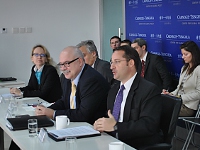
Part of Vladimir Putin’s grand vision for the Russian state includes the formation of a Eurasian Union. Since 2009, his foreign policy strategy has been aimed at attracting foreign investors and integrating the former Soviet states.
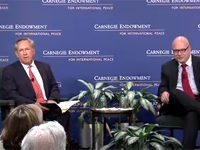
Twenty years after the end of the Soviet Union, Moscow should drop the notion of creating an exclusive power center in the post-Soviet space.
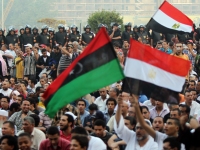
There is an overall lack of structure in the movements that made up the Arab Spring, or the “Islamic Spring,” but Islamist groups are generally better organized than the other opposition groups that made the “Islamic Spring” possible.
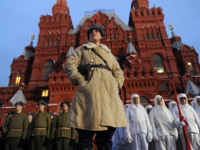
A post-Cold War Russian and Euro-Atlantic strategic partnership must be balanced with a well structured and long term Sino-Russian relationship.
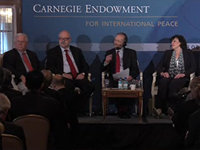
Robin Lustig hosted a radio debate on BBC World Tonight on whether the United States can afford to lead the world.
The fall of the Berlin Wall in 1989 ushered in a time of momentous social and political change, including in Russia, but Russia’s development followed a different path than that of many Eastern European countries.
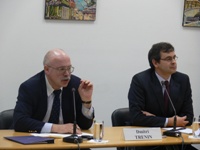
In recent years, Turkey’s foreign policy has undergone a fundamental transformation and the country has begun to play a more aggressive and assertive role.
Recently, NATO and the European Union have made significant efforts to engage with Russia as an important partner for both France and the wider EU.
Corruption in Russia is not a symptom of a disease, but the disease itself. Corruption does not only interrupt or undermine the existing system; it is the way the system functions.
Recent developments in Russia's foreign policy reflect the country's struggle to preserve its status as a “great power” through modernization.