Carnegie Moscow Center

On May 19, 2005, the Carnegie Endowment for International Peace hosted a meeting on the political developments in Kazakhstan. The speaker was H.E. Zharmakhan Tuyakbay, Chairman of the Union of Democratic Forces "For a Just Kazakhstan." Martha Brill Olcott, Senior Associate at the Carnegie Endowment, moderated the session.
The Carnegie China Program invited Andrew Yang of the Taipei-based Chinese Council of Advanced Policy Studies to analyze recent developments in cross-Strait relations and their implications for the future stability of the Taiwan Strait. Michael Swaine of the Carnegie Endowment commented on the presentation and moderated the discussion.
What exactly occurred in Andijan remains unknown. No clear sequence of events can be confirmed since independent media was barred from the city. The non-governmental reports come from questionable sources and their content is sometimes contradictory. It is clear, however, that the event was a tragedy--745 deaths, including women and children, have been reported by credible eye-witnesses.
Russia’s political and economic development after the collapse of the Soviet Union has followed a trend similar to middle income countries like Brazil, Mexico, Indonesia, or South Africa. Its future will look similar as well, but it is uncertain if Russia will ever develop into a fully democratized country.
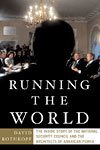
A discussion on the lessons offered by America's past management of its global interests. Discussants examined whether the current organization of U.S. foreign policy around the War on Terror and democracy promotion is sustainable or whether a new set of concerns should be considered.
Carnegie, the Center for Global Development, and Oxfam hosted a forum on the challenges facing the poorest countries with the end of global apparel quotas and potential U.S. policy responses.
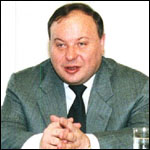
A considerable number of Russian authorities continue to believe in a conspiracy theory in which American imperialism and the CIA play a central role. This conspiracy theory extends to the recent revolutionary events in the post-Soviet countries. However, unless something drastic happens, there will be no revolution in Russia, at least in the short-term perspective.
Unstable states pose considerable risk internationally, leading to an increase in the number of armed conflicts, the transnationalization of organized crime, and the spread of infectious diseases. It is necessary to invest in measures to prevent crises rather than responding after they occur.
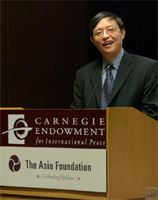
A joint conference on April 18 hosted by the Carnegie Endowment and the Asia Foundation featured leading experts from China and the United States to discuss the efforts that China has undertaken to reform its judicial and administrative systems.
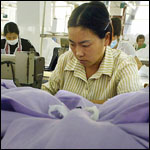
As economic ministers, business and civil society leadership from around the world gather in Washington for the World Bank/IMF semi-annual meetings, the single most important economic issue for most people in the world is employment; an issue that gets little attention from the multilateral communities in the nation's capital.