Carnegie Moscow Center

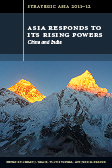
Asian states are adopting new strategies to preserve their national interests, prompted by the rising power of India and China. These strategies have implications for U.S. interests and leadership in the Asia-Pacific.

Lashkar-e-Taiba had developed from a small resistance group to the largest, most feared organization operating in Kashmir, India, and Pakistan today, posing a threat to the region and the West.

Moscow needs to drop the notion of creating an exclusive power center in the post-Soviet space. Like other former European empires, Russia has no choice but to reinvent itself as a global player and as part of a wider community.

Enormous societal and political shifts 20 years ago opened prospects for a new, united Europe. Despite Russia’s role in this peaceful departure from totalitarianism, the country’s course in the subsequent two decades was not so straightforward. While the demolition of the Berlin Wall is no guarantee of success, democratic transformations are a necessary precondition.

As the world’s predominant political, economic, and military force, the United States faces a significant challenge in responding to China’s rising power and influence, especially in Asia. This challenge will require more effective U.S. policies and a reassessment of America’s fundamental strategic assumptions and relationships.

In the years to come, the rise of emerging economies will reshape the global economic landscape. This monumental shift will enhance prosperity but also create great tensions that could stop progress in its tracks.
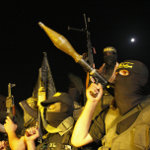
Deradicalization programs will likely remain a necessary part of larger counter-radicalization and counterterrorism strategies. To succeed, deradicalization programs must include affective, pragmatic, and ideological components and considerable aftercare.

Although Russia, the United States, and American allies have been loath to downsize their nuclear arsenals, deep reductions would not undermine a nation’s security since arsenal size has little bearing on effectiveness of deterrence.
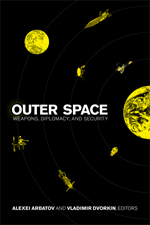
In this global era, the world faces a host of security challenges which cannot be resolved by any one nation, especially through the unilateral use of military force. One key issue that requires urgent international attention is the military use of outer space.

The rise of major non-Western powers makes the avoidance of traditional geopolitical rivalries a must if one wants a peaceful world order. This is particularly relevant to Euro-Atlantic zone, which is still divided on security issues.