Carnegie Moscow Center

This book assesses today's Russian military and analyzes its possible future direction.
Demand for practical knowledge and lessons about how the United States and other countries can more effectively promote democracy around the world has never been higher. This timely book by Thomas Carothers, one of the foremost authorities worldwide on democracy-building, helps meet that need.
John Judis draws sharp contrasts between the Bush administration's policies, especially with regard to Iraq, and those of every administration from Franklin Roosevelt through Bill Clinton.

In this controversial critique of America's role in the world, Lieven contends that U.S. foreign policy since 9/11 has been shaped by the special character of our national identity, which embraces two contradictory features, the American Creed and Jacksonian nationalism.
For hundreds of years, dictators have ruled Russia. Do they still? Did the processes unleashed by Gorbachev and continued under Russian President Boris Yeltsin lead eventually to liberal democracy in Russia?
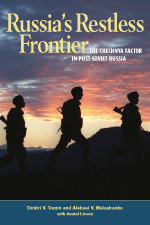
Trenin and Malashenko examine the implications of the war with Chechnya for Russia's post-Soviet evolution. Considering Chechnya's impact on Russia's military, domestic politics, foreign policy, and ethnic relations, the authors contend that the Chechen factor must be addressed before Russia can continue its development.
Drawing on the insights of some twenty-five leading Western and Middle Eastern scholars, Islam and Democracy in the Middle East highlights the dualistic and often contradictory nature of political liberalization. Political liberalization—as managed by the state—not only opens new spaces for debate and criticism, but is also used as a deliberate tactic to avoid genuine democratization.

Demonstrates key trends in an extinct superpower, a troubled country in whose stability, modernization, and openness to the international community the West still has a huge stake.
Europe sees the U.S. as high-handed, unilateralist, and unnecessarily belligerent; the U.S. sees Europe as spent, unserious and weak. The anger and mistrust on both sides are hardening into incomprehension.
With case studies from China, Cuba, Singapore, Vietnam, Burma, the United Arab Emirates, Saudi Arabia, and Egypt, this book tests the assumption that the Internet poses a threat to authoritarian regimes.