Carnegie Moscow Center


The central problem with Iran is not its nuclear technology but rather Iran’s behavior as a revolutionary state with ambitions that collide with the interests of its neighbors and the West.
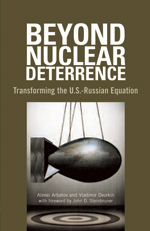
While deterrence as a concept has always been paradoxical, it is poorly equipped to handle today’s most significant nuclear challenges: proliferation and terrorism. Nuclear arms control must move beyond the deadlock of deterrence.

If The White Man’s Burden is too dour in some respects, it does serve as a useful warning to the next generation of utopians.

Human Rights in the Arab World: Independent Voices offers perspectives from those at the forefront of research and debate at the intersection of human rights and Islam, globalization, transnational advocacy, and the politics of key states such as Egypt, Morocco, and Yemen.
Minxin Pei examines the sustainability of the Chinese Communist Party's strategy of pro-market economic policies under one-party rule. China is trapped in partial economic and political reforms, and because the Communist Party must retain significant economic control to ensure its political survival, gradualism will ultimately fail.

The dramatic series of protests and political events that unfolded in Ukraine in the fall of 2004—the “Orange Revolution”—were seminal both for Ukrainian history and the history of democratization. Revolution in Orange seeks to explain why and how this nationwide protest movement occurred.

Promoting the rule of law has become a major part of Western efforts to spread democracy and market economics around the world. Although programs to foster the rule of law abroad have mushroomed, well-grounded knowledge about what factors ensure success, and why, remains scarce.

The acquisition of nuclear weapons by terrorists or any additional states would shake the international system. The more strategically important the state, the greater the potential threat to global security.
Taiwan’s military is clearly modernizing and will improve in the near- to mid-term. A reorientation away from an army-centric focus has led to such improvements as joint warfighting capabilities among branches of the military and improvements in missile defense systems, front-line military units, and naval defense capabilities.
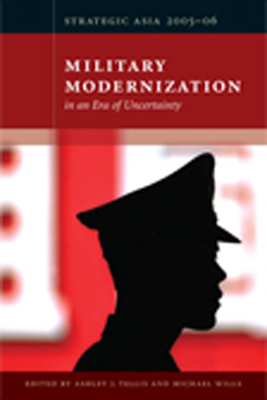
Through a combination of country, regional, and topical studies, Strategic Asia 2005–06: Military Modernization in an Era of Uncertainty assesses how Asian states are modernizing their military programs in response to China's rise as a regional power, the war on terrorism, changes in U.S. force posture, the revolution in military affairs, and local security dilemmas.