Carnegie Moscow Center

Having decided to emphasize military security, India's and Pakistan's nuclear threats must now be complemented by enhanced diplomatic engagement between India and China on one side, and India and Pakistan on another.
Calling for renewed broad engagement and for rebuilding the relationship on a more realistic basis, this work sets key points in the agenda for U.S. and Russian policy makers.
Citizenship policies are changing rapidly in the face of global migration trends and the inevitable ethnic and racial diversity that follows.

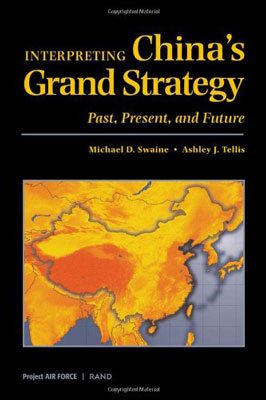
The book reveals why managing the rise of China constitutes one of the most important challenges facing the United States in the early 21st century.
Gordon Smith and Moisés Naím provide practical recommendations for improved governance and for strengthening and reforming the United Nations. They explore the dynamics of globalization and discuss what makes today's globalization distinct.
Many of the countries that have recently converted to a market-based economic system have also experienced an alarming increase in income inequality — a widening gap between the haves and have nots. But to what extent is the increase in inequality also increasing the opportunities for economic advancement — particularly for those at the bottom of the economic ladder?
U.S., Russian, and Chinese scholars analyze the most important issues posed by the relationship between China and Russia, and weigh the prospects for real cooperation between Russia, a severely weakened power, and China, a power on the rise.
This book examines democracy aid programs relating to elections, political parties, governmental reform, rule of law, civil society, independent media, labor unions, decentralization, and other elements of what Carothers describes as "the democracy template" that policy makers and aid officials apply around the world.