Carnegie Moscow Center

This is an important resource for policy makers and others forced to deal with countries where democratic change is both complex and protracted.
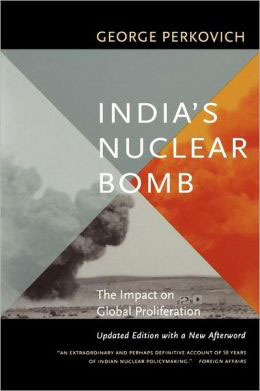
Why did India bid for nuclear weapon status at a time when 149 nations had signed a ban on nuclear testing? What drove India's new Hindu nationalist government to depart from decades of nuclear restraint, a control that no other nation with similar capacities had displayed? How has U.S. nonproliferation policy affected India's decision making?
Belarus, although frequently overlooked in the West, is a country critical to the development of the post-Soviet states and to Europe as a whole. Its location alone points to Belarus's importance as a major geopolitical player. On top of that, the ambitions of its president mean that Belarus will likely have a say in the future of Russia, Ukraine, and other neighboring states.
Experts explore in detail the degree to which private sector firms are beginning to replace governments in "governing" some areas of international relations.
Combining keen political analysis with the unique perspective of a native observer, Lilia Shevtsova offers a valuable assessment of the forces that will shape the post-Yeltsin era.
This inside look at the history and politics of the changing nuclear posture of the People's Republic of China is based on extensive analysis of Chinese and Western documents and interviews conducted in China in the fall of 1998.
The authors of this monograph take a hard look at the complicated issue of perishable-crop agriculture and its workforce.
Written by three of the West's leading experts on the former Soviet Union, this book offers a comprehensive assessment of how and why the Commonwealth of Independent States has failed.
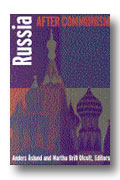
This book features chapters written by pairs of leading Russian and American scholars, and provides an overall assessment of what has been accomplished and what has failed since the collapse of the Soviet Union.