Carnegie Moscow Center

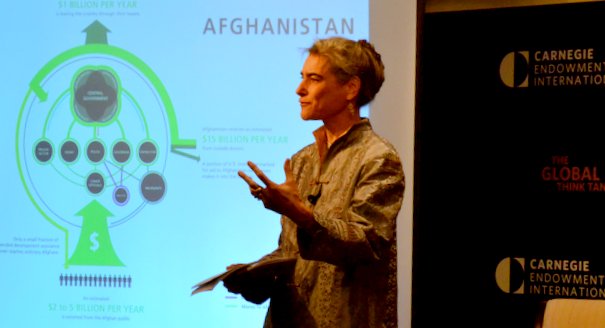
Corruption is an unexpected link in the world’s multiplying security crises.
In 2009, Southeast Asian political leaders accelerated their target date for realizing the ASEAN Economic Community (AEC) to 2015. As the deadline looms, there are competing opinions on what can be accomplished by the end of this year, the AEC’s potential impact, and its near-term priorities.
Four years after efforts to topple authoritarian regimes in North Africa, the road to democratic governance is still incomplete.
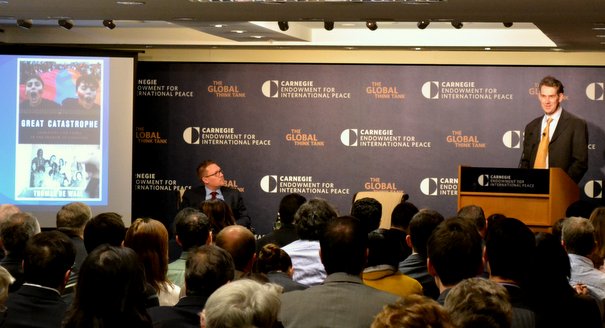
Although the issue of what most of the world calls the Armenian Genocide of 1915 is now a century old, it is still a live and divisive issue that mobilizes Armenians across the world, shapes the identity and politics of modern Turkey, and has consumed the attention of U.S. politicians for years.

Following recent EU leadership changes and the election of a new president and the creation of a new cabinet in Turkey, can the EU-Turkey relationship be revitalized?
New York Times columnist Roger Cohen will discuss his acclaimed new book, a moving memoir of his family’s long struggle with displacement, exile, anti-semitism, and apartheid, and how these same themes continue to haunt the contemporary Middle East.
The steady decline of global oil prices since June 2014 is shifting economic, political, and strategic calculations of key Middle East actors, and adding a new element of uncertainty at a time of increased regional conflict and polarization.
The private and public sectors are already taking steps to increase diversity in workplaces in Japan.
How can Japan play a role in global and regional affairs going forward?
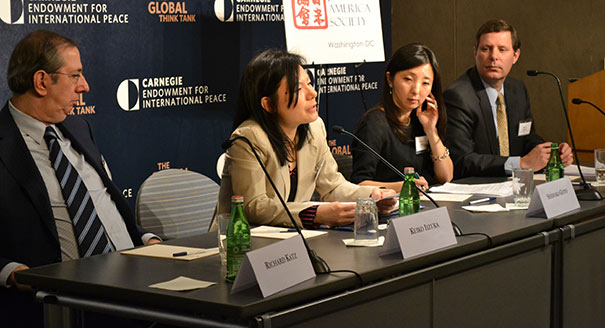
There are a number of key opportunities and challenges facing the Abe administration in 2015.